
• Home
  • Blog
  • Gallery
  • Pricing
  • Home
  • Blog
  • Gallery
  • Pricing
Start creating

Creator blog

Better stories start here

Discover practical AI tools, interactive storytelling methods, and production lessons—from the first idea to a story people can play.

DRAMAFORKStories · Craft · Possibility
Topics
AllProduction PracticeProduct workflowInteractive narrativeCreation tutorialsChoosing toolsGetting started
201 articles

Editorial / 13

Latest articles

Practical methods for narrative structure, visual production, and everything in between.

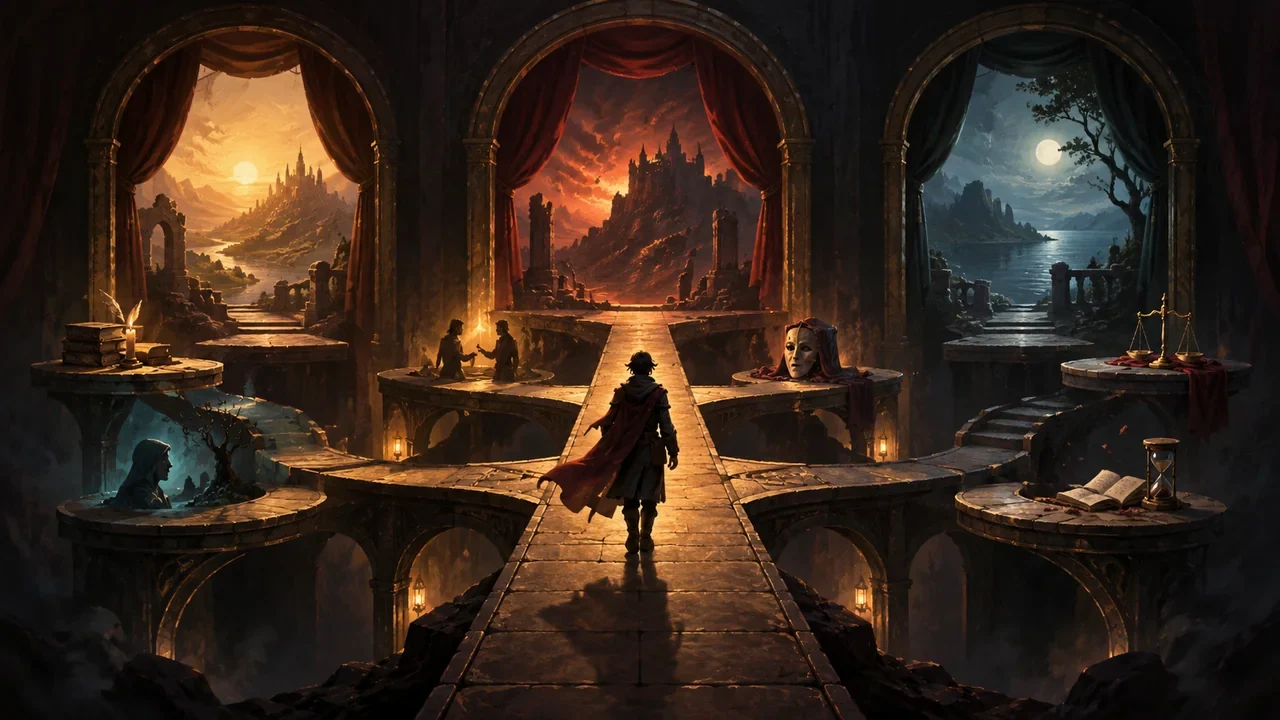
Cover of the blog article “A Character Relationship Map Is Not Enough: What Each Person Knows, Conceals, and Misunderstands”Featured
Interactive narrative2026.08.21

A Character Relationship Map Is Not Enough: What Each Person Knows, Conceals, and Misunderstands

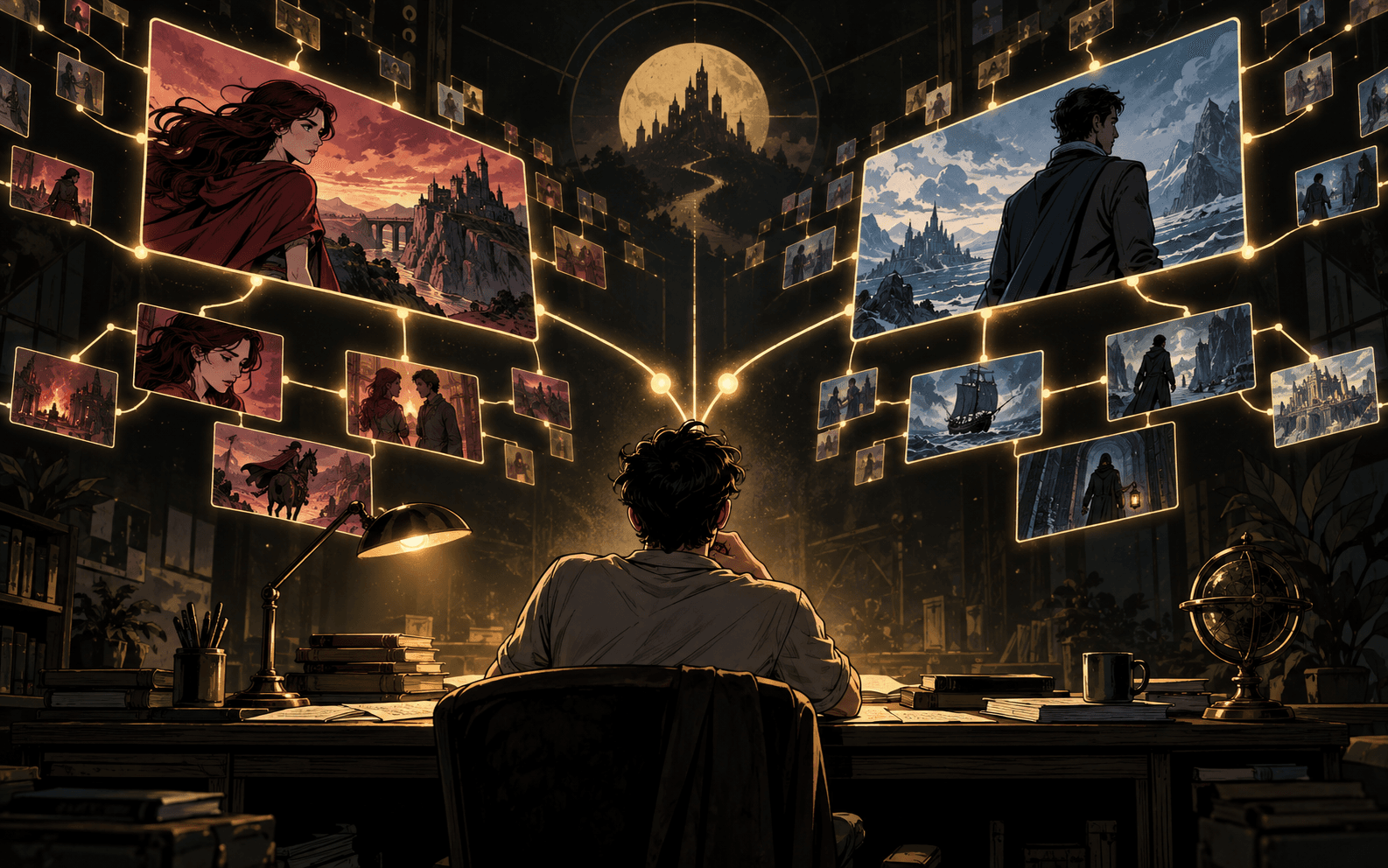
A relationship map only shows who is connected to whom; it cannot explain what makes the suspense work. An interactive story also needs an information gap matrix: which facts each character knows, where they learned them, what they deliberately conceal, what they mistakenly believe, and under what conditions they are willing to speak. Often, players’ choices change the flow of information rather than the events themselves.
DramaFork Editorial Team13 min read
Continue reading

Blog categories

  • All201
  • Production Practice59
  • Product workflow34
  • Interactive narrative49
  • Creation tutorials19
  • Choosing tools33
  • Getting started7

Make your story playable for the first time

Start with one story decision

Create a project

The next move is yours

Make your story playable for the first time

Do not wait for every video to be finished before testing the story. Build the characters, rules, and branches first, then let real choices guide what you make next.

Start with one story decision

Try a playable example

Let agents handle production complexity while you keep creative control.

Start with one story idea, then shape scripts, characters, shots, and branches into a playable first version.

Product

  • Pricing
  • Capabilities
  • Workflow
  • Examples
  • FAQ

Explore

  • Playable gallery
  • Creator blog
  • Creator partnership

Legal

  • Privacy
  • Terms
© 2026 DramaFork/AI interactive story studio
Press Enter to send, or drag away and release.
Blog cover for “Why the Protagonist Follows the Player: Building Character Motivation for Choices”
Interactive narrative2026.08.21

Why the Protagonist Follows the Player: Building Character Motivation for Choices

Choices in interactive film games cannot simply represent what the player wants to do; they must also be actions the character might take in their current circumstances. Character motivation does not restrict interaction; it establishes believable boundaries for choices. The same person can hesitate, lie, take risks, or change their position, but every change needs a reason rooted in desire, fear, information, or relationships.

DramaFork Editorial Team13 min read
Continue reading
Cover of the blog article “Adapting a Three-Act Story into an Interactive Structure: A Fixed Framework and Variable Nodes”
Interactive narrative2026.08.21

Adapting a Three-Act Story into an Interactive Structure: A Fixed Framework and Variable Nodes

The three-act structure can work for interactive film games, but you cannot simply finish a linear script and insert choices between acts. A more practical approach is to retain a fixed causal framework while letting players change the order in which they obtain information, character relationships, methods of resolving the conflict, and the final cost. The framework keeps the story moving, while variable nodes ensure that player actions are remembered.

DramaFork Editorial Team13 min read
Continue reading
Cover of the blog article “An Interactive Film Game’s Theme Is More Than a Slogan: It Must Become a Recurring Dilemma”
Interactive narrative2026.08.20

An Interactive Film Game’s Theme Is More Than a Slogan: It Must Become a Recurring Dilemma

An interactive film game’s theme is not a lesson the author states at the end, but a dilemma the player repeatedly faces. If the theme is “trust,” the work should repeatedly ask players to decide whom to believe with incomplete evidence, making trust a source of both strength and risk; if the theme is “memory constitutes identity,” players should personally choose to preserve, delete, or exchange memories.

DramaFork Editorial Team12 min read
Continue reading
Cover of the blog article “Multiple Endings Do Not Guarantee Replay Value: Four Rewards That Make Replaying Worthwhile”
Interactive narrative2026.08.20

Multiple Endings Do Not Guarantee Replay Value: Four Rewards That Make Replaying Worthwhile

Players will not automatically play four more times just because a store page says “five endings.” The real costs of replaying are watching the same content, repeating actions, and figuring out routes again. A work must offset these costs with new information, relationships, abilities, or perspectives, and provide sufficiently convenient save loading, chapter selection, or skipping of previously viewed content.

DramaFork Editorial Team13 min read
Continue reading
Cover of the blog article “Designing Clues as Resources: How Players Acquire, Misinterpret, and Verify Information”
Interactive narrative2026.08.20

Designing Clues as Resources: How Players Acquire, Misinterpret, and Verify Information

Clues in mystery interactive film games should be more than collectibles. They are resources that change players’ judgments, choices, and ending conditions. A complete clue design records the source, content, credibility, verification methods, mistaken interpretations, and places of use; after discovering a clue, players also need opportunities to compare, question, or apply it.

DramaFork Editorial Team13 min read
Continue reading
Cover of the blog article “Who Exactly Is the Player: Protagonist, Director, Investigator, or Invisible God?”
Interactive narrative2026.08.19

Who Exactly Is the Player: Protagonist, Director, Investigator, or Invisible God?

In interactive film-game design, “who the player plays” matters more than “who the protagonist is.” The player might be the protagonist on screen, a director guiding characters’ actions, an investigator with access to additional interfaces, or an invisible god capable of changing several people’s fates. Different roles change what information the player is entitled to know, what actions they can perform, how choices are worded, and who bears responsibility for failure.

DramaFork Editorial Team14 min read
Continue reading
Blog cover for “How Often Should Choices Appear? More Interaction Is Not Always Better”
Interactive narrative2026.08.19

How Often Should Choices Appear? More Interaction Is Not Always Better

There is no universal rule for offering a choice every few minutes in interactive film games. The right frequency depends on how much information players need to process, whether an emotional response has formed, whether the choice changes a state, and whether feedback from the previous choice is complete. The most practical guideline is that each interaction point should conclude a unit of judgment, rather than interrupt the video at fixed intervals.

DramaFork Editorial Team13 min read
Continue reading
Cover of the blog article “The Core Loop of Interactive Film Games: Connecting Watching, Judging, Choosing, and Feedback”
Interactive narrative2026.08.19

The Core Loop of Interactive Film Games: Connecting Watching, Judging, Choosing, and Feedback

The core loop of an interactive film game is not “play video—display buttons—resume playback,” but “receive information—form a judgment—take action—see feedback—update the next judgment.” Buttons are just an input method. If information, judgment, or feedback is missing, players will feel they are clicking through pages for a video.

DramaFork Editorial Team12 min read
Continue reading
Blog cover for “Landscape or Portrait, PC or Web: Decide the Release Format Before Writing the Script”
Product workflow2026.08.18

Landscape or Portrait, PC or Web: Decide the Release Format Before Writing the Script

The release format is not a packaging option to choose after the script is finished. Landscape or portrait determines actor positioning and subtitle space; PC or Web determines input methods, video storage, loading strategies, and distribution paths. The team should decide on a primary aspect ratio and platform before building the three-minute prototype at the latest.

DramaFork Editorial Team12 min read
Continue reading
Cover of the blog article “Write a ‘Not-to-Do List’ Before Starting: How to Keep Your First Project Under Control”
Product workflow2026.08.18

Write a “Not-to-Do List” Before Starting: How to Keep Your First Project Under Control

The most common failure in a first interactive film game is not a lack of creativity, but putting every good idea into the first version. Characters, scenes, branches, mechanics, and platforms keep multiplying until nothing gets finished. The solution is to establish a “not-to-do list” before writing the full script and define a trigger for each limit.

DramaFork Editorial Team12 min read
Continue reading
  1. 1
  2. ...12
  3. 13
  4. 14
  5. ...19