Reduce animation without losing the story information a radio fault conveys
A shaking radio and flashing light may convey a fault, missing information, and recovery. Use an editorial checklist to separate these meanings, then provide static alternatives when animation is disabled so players retain the information they need to choose.
Preserve the events first, then decide how to show the fault
With animation disabled, players should still know which device has changed and how, which parts of the message are missing, and what they can do now. Removing the radio’s shaking and the indicator’s flashing can reduce the intensity of the presentation, but it must not remove the basis for those judgments. First translate each effect into facts about the event, then give every necessary fact a static form.
Motion animation triggered by interaction can be disabled unless it is essential. This is a Level AAA criterion, not a blanket requirement. Read the related explanation. This article uses it only to define the scope of the discussion. The checklist and dialogue are original teaching examples, not a complete compliance assessment.
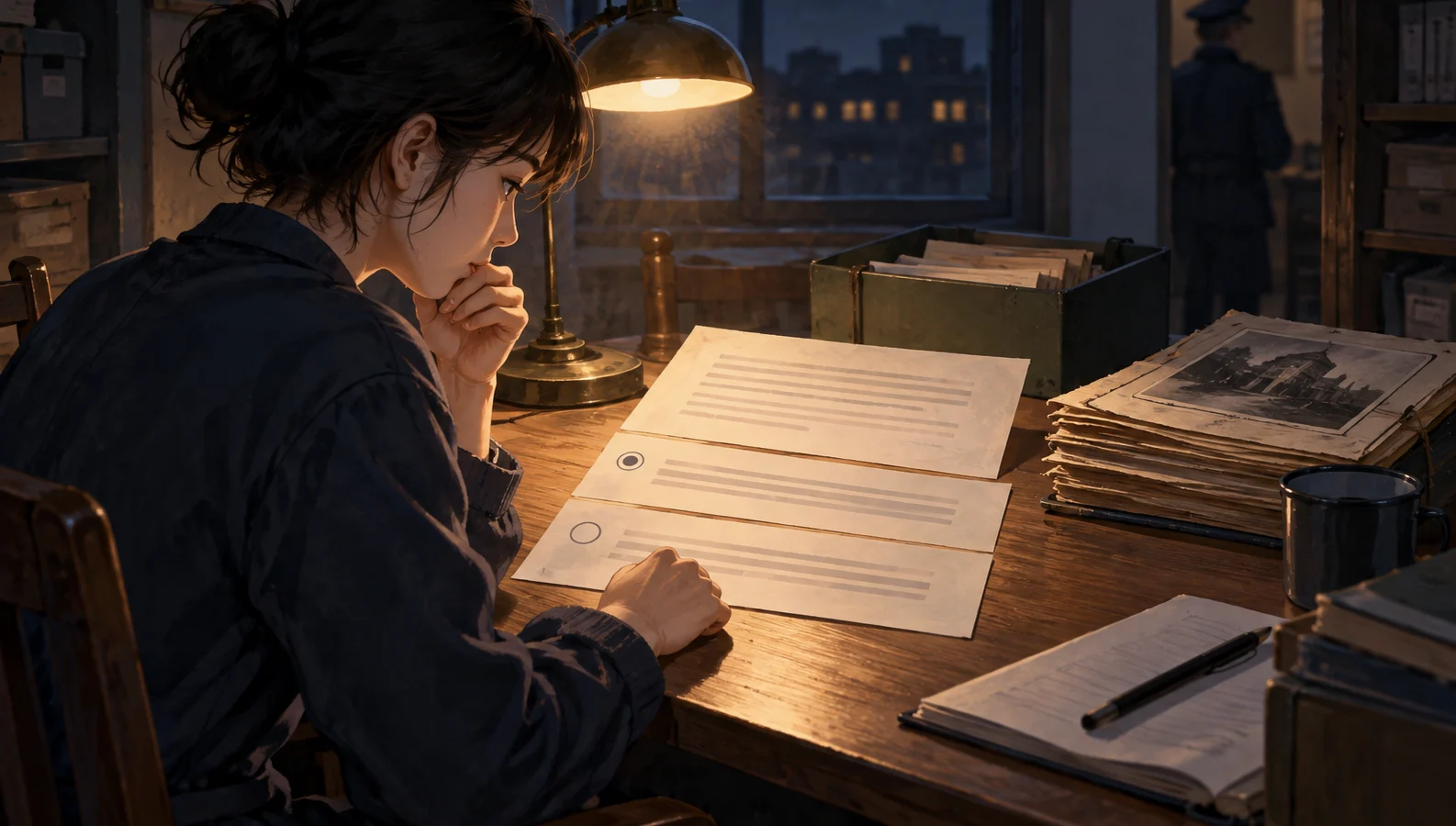
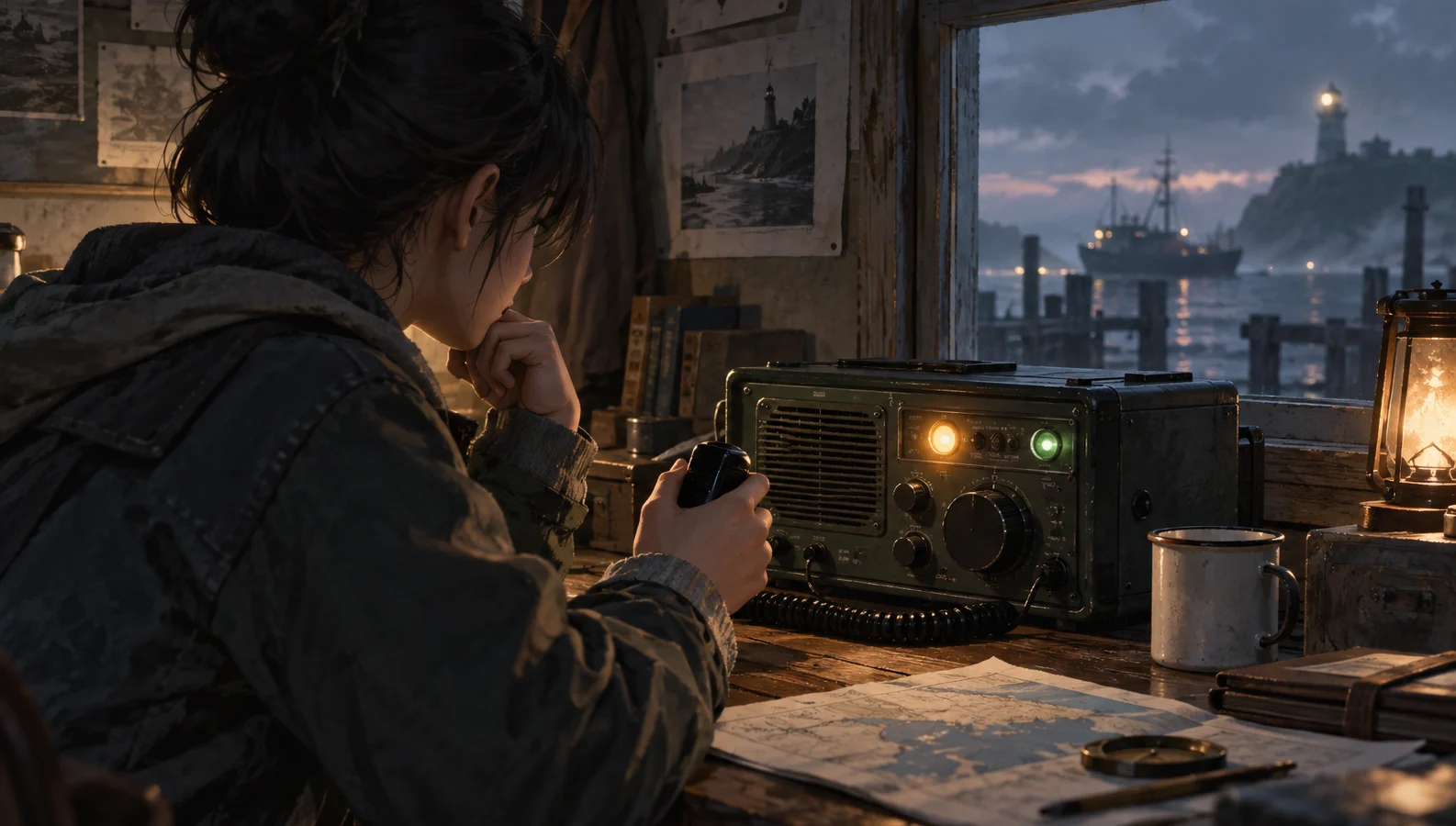
The article uses a fictional story, The Last Radio Message at Fog Harbor: the duty operator, Ahe, presses the receive button. The radio’s casing shakes, its indicator flashes, and a notice cuts off midway through reception. The device subsequently recovers, but the missing content is not filled in. Here, shaking means movement on screen. This example has not undergone real playtesting and does not represent existing DramaFork features.
The narrative condition to preserve is that players know the notice is incomplete but do not know the missing content. A static alternative must neither erase the fault nor decipher the notice ahead of time.
Use an editorial checklist to separate the information carried by each effect
Do not simply write “disable shaking.” List each effect and ask: if it is removed, what might players misunderstand? If no fact, state, or basis for action depends on it, it may serve only as atmosphere. Otherwise, write an alternative.
| Animated effect | Original meaning | Draft static alternative | Keep it until | Information that must not be added |
|---|---|---|---|---|
| The casing suddenly shakes | Something goes wrong during reception | Display “Reception interrupted” beside the radio | The recovery event occurs | The cause of the fault |
| The indicator flashes continuously | The fault is ongoing | A fixed warning symbol with “Unstable connection” | The state changes | Someone is deliberately interfering |
| Words shake and then disappear | Part of the notice was not received | Mark the original positions with “Not received” | Keep it with this record, visible when revisited | The missing original text |
| The indicator returns to a steady light | The device can receive again | Display “Connection restored; earlier gaps remain unfilled” | The next explicit status appears | The notice is now complete |
To reuse the checklist, replace the first column with your own effects and fill in the others for each row. The final column is especially important: interpreting “something went wrong” as “someone cut off communications” changes the mystery.
Also distinguish brief events from ongoing states. “Reception was interrupted earlier” belongs in the record; “reception is still interrupted” describes the current state. Mixing the two can leave a fault message on screen after the connection has recovered, with no indication of when it applied. Update the current status on recovery, but keep the reception record with its gaps. Preserve the locations of the missing content, without supplying the missing original text.
Turn a fault sequence into a static draft ready for editorial review
The original draft might be summarized as follows: Ahe presses the receive button, the radio shakes, the light flashes, and the subtitles wobble before changing to “The last boat will now dock at… Do not go to…” Finally, the light becomes steady and two choices appear: “Leave now” and “Request retransmission.”
A steady light can easily suggest that the problem has been resolved, while an ellipsis may mean either a pause or signal loss. Players cannot tell how much of the message they actually have.
Here is a static draft revised using the checklist. Each passage appears in story order, with no shaking or flashing required:
Ahe presses the receive button.
Radio status: Reception interrupted.
This reception: “The last boat will now dock at [Not received]. Do not go to [Not received].”
Ahe: “Where it’s docking, where I shouldn’t go—I didn’t catch either.”
Radio status: Connection restored. Earlier gaps remain unfilled.
Choice: Request retransmission / Leave now using the available information.
This preserves both gaps and their positions while distinguishing “the device can receive again” from “the old message has been completed.” The dialogue conveys emotion and understanding, but it is not the only explanation of the fault. Even without it, the record remains clear.
If players change presentation settings during the fault, the static version should pick up at the current stage of the event. The design draft can specify separate displays for “while reception is interrupted” and “after recovery.” Switching must not restart the sequence from before the fault every time, nor always show the recovered state, as either would change the chronology.
Choose an alternative that fits the scene and preserves what is unknown
An interface status bar suits stories with frequent device operation. It helps separate the current state from past messages, but adds text to the screen. More literary works could use narration: “Reception cut out at two place names. The connection then recovered, but the gaps remained.” This takes more reading space, but can blend into the narrative voice.
A character can also observe the radio, provided their knowledge remains limited. Ahe can say, “That sentence didn’t come through in full,” but cannot assert, “Someone at the harbor is jamming us,” without other clues. Text that replaces the animated effects should supply what was originally observable; speculation should still sound speculative.
Several easy fixes leave gaps: replacing the flashing light with a steady red light does not explain whether it means a fault or standby; retaining only static noise still makes understanding dependent on sound; freezing shaking subtitles on one frame may leave half a character visible; and a prompt that immediately disappears gives players nowhere to check if they miss it.
There is no need to repeat everything three times. The status area answers “What is happening now?” The reception record answers “What came through earlier?” The choice text answers “What can I do next?” The “Not received” markers in the record should remain identifiable when revisited. They must not disappear with the recovery notification or be replaced by original text the player does not yet know.
If the original draft uses the number of flashes as a code, disabling the effect requires a recognizable sequence to remain. “The light is behaving strangely” is not enough. That is a different information structure and needs its own checklist. This example contains no such code, so one must not be added on the fly.
Review both versions using the same questions
First put the effect descriptions aside and read only the draft with animation disabled. Answer four questions: Did the fault occur before or during reception? Which parts of the notice are incomplete? Has the device recovered now? Why is requesting retransmission an available action at this point? If the answers exist only in the author’s notes, the main text still lacks a way to convey them.
Next, compare it with the version that retains the effects and check whether both provide the same basis for choices. Disabling animation must not make players miss a warning or learn an extra place name. The priority is consistent information boundaries, not frame-by-frame replication.
Finally, simulate three reading positions: entering at the beginning of the passage, switching during the fault, and revisiting the record after recovery. Check that the current status, missing-content markers, and choices agree. When revisiting after recovery, players should find the notice with its “Not received” markers, not the missing original text. This is a suggested manual editorial review method. The article provides no results from carrying it out and does not claim every reader will understand.
At handoff, place the checklist and static draft in the same editorial record, and identify specific gaps for unresolved items, such as “After the connection recovers, the ‘Not received’ markers are not visible when revisiting the reception record.” What needs fixing here is the visibility of the markers or the record containing the gaps. The missing original text remains hidden, as required by this example’s narrative conditions. A fault scene ready for further production should preserve the events, the unknowns, and the basis for action in full after shaking and flashing are removed.