Character and worldbuilding
Build consistent voices, believable relationships and knowledge boundaries across conversations and playable stories.
Guides and making-of notes

Conflicting Backstories in Galgame Routes: Changed Facts or Changed Interpretations?
Break the past into verifiable propositions, then distinguish shared facts, character accounts, and explicit differences between world versions. Use a cross-route backstory review table to establish how the old theater suspended performances for repairs while preserving personal experiences surrounding the funding dispute and leaving with family.

How a Galgame True Ending Can Complete the World Without Making Other Routes Wrong
A final chapter can explain why an island moves, but that does not give it grounds to decide whose love deserves to survive. Use a true-ending meaning-retention table to separate facts that need correcting from commitments that still hold, then revise overreaching endings sentence by sentence.

Can one person also do interactive video games? Interactive Narrative Toolbox for Independent Developers in the AI Era
Five years ago, making an interactive film meant assembling a team, hiring actors, renting locations, shooting for weeks, booking voice actors, and burning hundreds of thousands of yuan. Making a text game or Character IP meant writing hundreds of thousands of words of script. Today, someone who can use AI might produce a playable Demo in a week. This is the "hands-on manual" for indie developers and content creators — how the barriers fell, and how you should start.
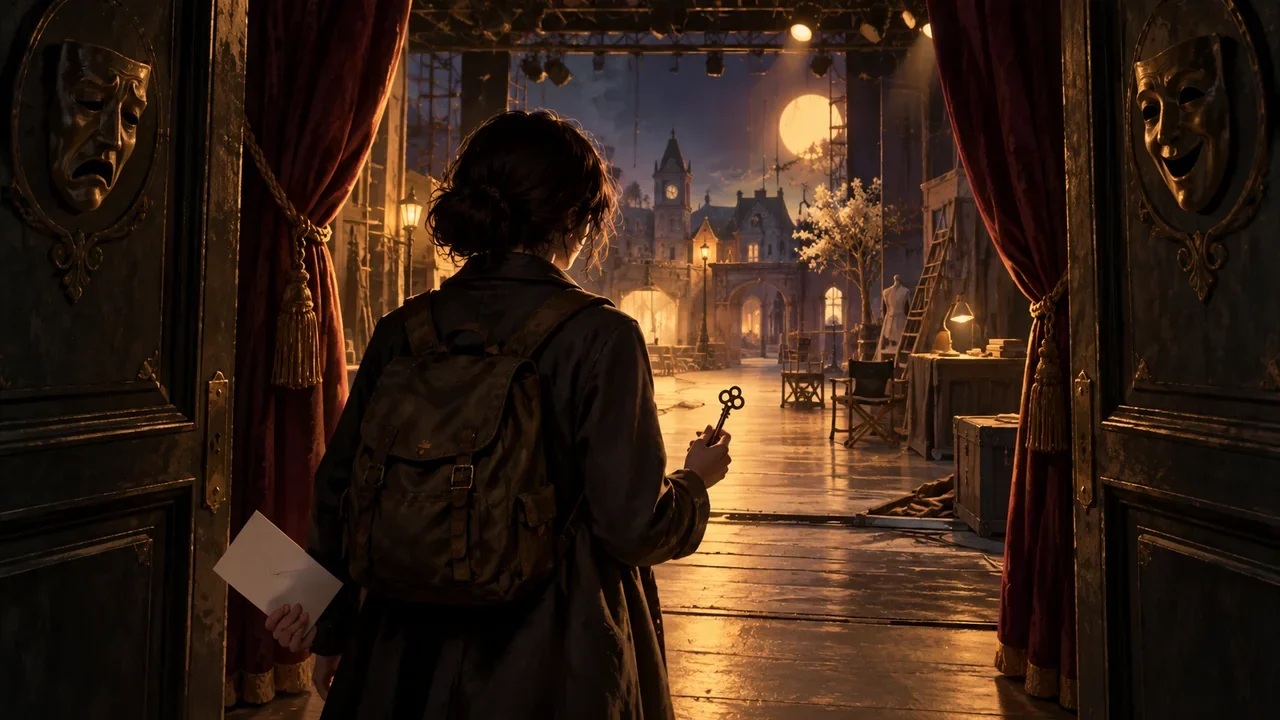
From a One-Sentence Idea to a Player Promise: First Decide What Players Do in the Story
A one-sentence idea sparks interest; a player promise tells people “what I can do, and why my actions matter.” An interactive film game needs both from the outset. “A late-night customer service agent receives a call from twenty-four hours in the future” is only a story hook; “assess whether the calls are genuine, choose allies, and change what happens after midnight” is a player promise that can be verified.

From WEBTOON Rankings to Interactive Film Games: Mechanics for Revenge, Identity Reversals, and Locked-Room Survival
Extract original interactive mechanics from popular WEBTOON motifs and compare state design for revenge, identity reversals, and locked-room survival.

Road to Empress: An Analysis of Public Information on Overseas Reach, Performance, Branching, and Localization
An analysis of Road to Empress’s foundations for reaching overseas audiences through live-action performance, interactive court rules, and multilingual support, based on its public Steam page.

How to Turn a “Sense of Ritual” into an Operable System: Design Methods for Placement, Waiting, Tracing, and Confirmation
Use four types of actions, placement, waiting, tracing, and confirmation, to design ritual interactions that are understandable, provide feedback, and can carry narrative consequences.

Who Decides at the Climax of a Galgame Character Route? Let Players Offer Support and Characters Make Their Own Choices
Separate the final choice in a character route into three layers: the protagonist decides what support he is willing to offer, both people negotiate shared arrangements, and the character decides the direction of her own life. Use a climax decision ownership table to replace “let her go or let her stay” with choices whose consequences each person takes responsibility for.
Play what you just read

The Voice Actor Agency Silence Case
Before the final recording of a hit anime, the lead voice actor's voice begins disappearing from all past works. As a rookie sound director, you use voiceprint comparison, studio scheduling, and character line memory to advance chapters, letting the same event yield different interpretations based on information order and relationship choices.

Seventh Code of Autumn Recruitment
A graduating senior receives a seventh-code offer from a company that doesn't exist. Each onboarding test accepted makes one classmate vanish from the campus recruitment list. Investigate node cards and a classmate relationship web; freely type company names or clue keywords to trigger verification. Phone notifications and campus surveillance dual interface; choosing who to verify first changes the order of disappearance; offer credibility shifts in real time. A 20-minute text loop with three endings.

The Last Train Has No Final Stop
Five passengers wake on the last train. At each stop, you enter one passenger's unfinished memory. As the lost-and-found clerk, you use car-view JUMP, lost-item entries, and station locks to move through chapters, letting the same event yield different interpretations depending on information order and relationship choices. Wake everyone, and one passenger's most precious memory will be erased.

4 A.M. Convenience Store
At 4 a.m., customers can buy back a single line they failed to say the day before. As the night clerk, you combine shelf words, choose at the register, and watch returning customers reshape the story. Sell the truth, or hold it back—your choice changes every relationship.

The Sixth Chatroom at 2 A.M.
Every night at 2 A.M., a sixth account appears in a five-person startup group chat, accurately predicting who will be cut from the company the next day. As a product designer, you navigate real-time group chats, private message choices, and missed message replays to advance the story, where the same event yields different interpretations based on information order and relationship choices. Exposing the model could save a colleague, but it would reveal everyone's private chats.

The Temporary Bride of the Chaebol Wedding
A wedding interpreter is forced to stand in for the missing bride, only to discover the groom is using the engagement to investigate his own chaebol. Over seven days of private chats, family banquet choices, and evidence exchanges, the same events yield different interpretations depending on the order of information and relationship choices.

Room 404 of the Exam Hall
In a cramped exam hall, the nonexistent Room 404 bears one resident's memories of failure each night. You play a civil service exam candidate. Through door texts, resident routes, and memory load, you advance chapters and let the same event yield different explanations depending on the order of information and your relationships. Choose to stay, close the room, or turn it into something else. Closing the room returns all transferred pain at once.

The Bad Review Deletion Agency
A PR firm can delete any bad review online, but each deletion inflicts the same harm on a stranger. As a reputation repair specialist, you navigate the public opinion timeline, client chats, and harm flow charts to uncover how the same event can be interpreted differently based on information order and relationship choices. Can you fix public opinion without breaking your own conscience?