• Home
  • Blog
  • Gallery
  • Pricing
  • Home
  • Blog
  • Gallery
  • Pricing
Start creating

Creator blog

Better stories start hereBetter stories start here

Discover practical AI tools, interactive storytelling methods, and production lessons—from the first idea to a story people can play.

DRAMAFORKStories · Craft · Possibility
Topics
AllCreation tutorialsInteractive narrativeGetting startedGalgame Route DesignVisual Novel ProductionInteractive Fiction DesignNarrative Design for Interactive Film GamesInteractive Film AccessibilityInteractive Film WorkflowInteractive Game BasicsInteractive Film Presentation and DeliveryInteractive Film LocalizationInteractive Film ProductionNarrative MechanicsCreative CollaborationGetting startedFictional Case StudyStory LocalizationMobile and AccessibilityActing and StagingExploring Time and SpaceRelationships and GroupsResources and ConstraintsInformation and CommitmentsProduction PracticeProduct workflowChoosing tools
500 articles

Editorial / 01

Latest articlesLatest articles

Practical methods for narrative structure, visual production, and everything in between.

In a seaside waiting room at dusk, a traveler talks with a clerk. A travel booklet on the table is open only to the current page, with the later pages still held shut by a book strap.Featured
Creation tutorials2026.11.20

What Can a Character Reveal? Keeping Story Chats Spoiler-Free

A player has just returned a key, but the character comforts them about a farewell still to come. A wharf dialogue shows how to set clear boundaries for chat outside the story.


DramaFork Editorial Team13 min read
Continue reading

The next move is yours

From a story to a playable world.From a story to a playable world.

Do not wait for every video to be finished before testing the story. Build the characters, rules, and branches first, then let real choices guide what you make next.

Start with one story decision

Try a playable example

From a story to a playable world.

Create interactive narrative games with DramaFork: connect scripts, characters, shots, and choices into a playable first version.

Explore & play

  • Explore gallery
  • Interactive film
  • Text game
  • Character IP
  • Rankings
  • Works index

Create & collaborate

  • My creations
  • Film studio
  • Text-game studio
  • Character studio
  • Creator partnership

Reading room

  • Creator blog
  • Story topics
  • Article archive

Story guides

  • Interactive storytelling
  • Making interactive films
  • Designing text games
  • Character and worldbuilding

Plans & credits

  • Pricing
  • Credits

Policies & support

  • Privacy
  • Terms
  • Cookies
© 2026 DramaFork/DramaFork · Interactive narrative games
Press Enter to send, or drag away and release.
In a greenhouse after rain, an investigator and a gardener compare a flowerpot photograph, a courtyard sketch, and a blue flowerpot with a chipped corner beneath a bench
Creation tutorials2026.11.20

Can a Key Clue Be Delivered to Players in a Different Way?

Hearing dialogue, seeing a shot, and reading a record may seem to convey the same thing. A moved greenhouse flowerpot shows how to preserve sources, information, and choices.

DramaFork Editorial Team13 min read
Continue reading
A fictional old temple courtyard on a rainy night: a volunteer examines a wet red cord on the bell clapper, while a half-open gate in the wind and a kitten under the eaves leave room for interpretation.
Creation tutorials2026.11.20

One Strange Event, Two Explanations: Writing Folk Mystery Without a Last-Minute Reversal

Three bell strokes at night: wind, a person, or a response? Folk mystery can leave questions open without undermining choices. Fix the facts first, then test both explanations.

DramaFork Editorial Team14 min read
Continue reading
Backstage at an original small-theatre production, an adult prop designer places his stage-name card beside his personal-name card while talking with a collaborator; a projection behind him still displays his original virtual stage persona.
Creation tutorials2026.11.20

How to Write a Character with Two Identities: Where Can the Story Go After the Reveal?

Does your story stall after “It was you”? An original theatre collaboration shows how an identity reveal can change old conversations, disclosure, and future plans.

DramaFork Editorial Team15 min read
Continue reading
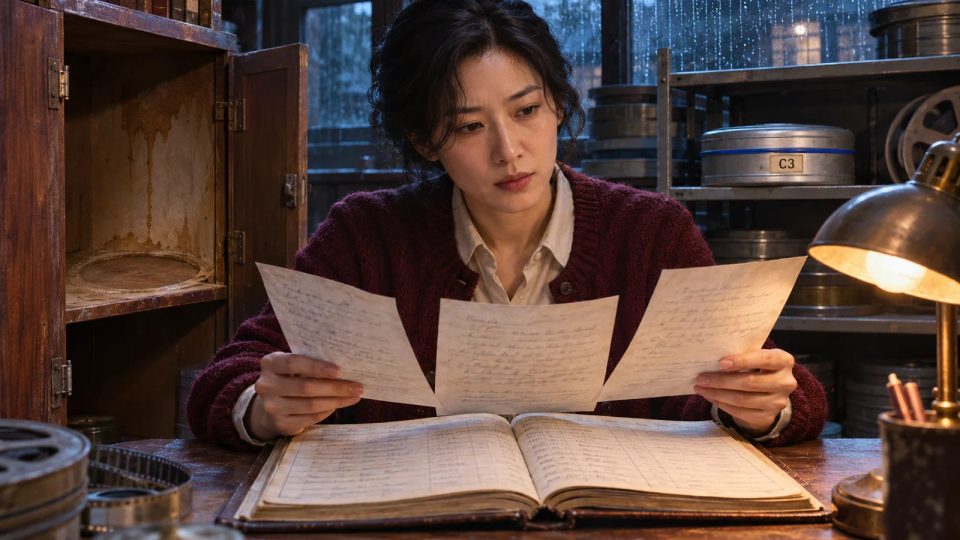
An original cinema archive investigation scene: an adult investigator compares witness notes with a case record. A film canister on the west shelf has a blue identification line, and water marks remain beside the north cabinet.
Creation tutorials2026.11.19

Why Does the Culprit Keep Changing in AI Detective Stories? Fix the Case Record First

When every new suspicion changes the truth, investigation loses its footing. An original missing-item case shows how to separate facts, character accounts, and player guesses.

DramaFork Editorial Team16 min read
Continue reading
An original scene spanning time in a cinema: an adult daughter holds an old family photo. Across the glass, a young projectionist stands beside an old projector; his figure appears in the photo's formerly empty spot.
Creation tutorials2026.11.19

How to Write a Text Game Across Timelines: When the Past Changes, Who Still Remembers?

An old photo now includes her father, yet he says he was home that Sunday all along. A fictional cinema story separates rewritten events, objects, and memories.

DramaFork Editorial Team13 min read
Continue reading
An original three-person relay: teammates spread out a route map in the exchange zone, one takes the baton, another sits down to rest, and the final stretch lies in the distance.
Creation tutorials2026.11.19

Team Competition Text Games: Why a Shared Total Isn’t Enough

The team still has stamina, yet no one can take the final leg. An original three-person relay shows how individual stamina, strengths, substitutes, and rest shape assignments.

DramaFork Editorial Team12 min read
Continue reading
An original delivery contest scenario: contestants compare a new rule board with stamped records of previous rounds while choosing between the Courtyard and Tower routes.
Creation tutorials2026.11.19

When Rules Change Every Round, How Can a Text Game Make Losing Understandable?

When a good move becomes a bad one, will players feel surprised or misled? A three-round delivery contest shows how to announce changes and preserve past results.

DramaFork Editorial Team12 min read
Continue reading
In a rainy old record shop, the owner talks with a visitor across the counter, while a carton of records waits by the door.
Creation tutorials2026.11.18

Why Does the Character Speak for the Player? Separate Identity, Character and Scene

A character agrees on your behalf before you have answered. A fictional record shop shows how to separate player identity, character habits and scene state, then repair an overstepping reply.

DramaFork Editorial Team9 min read
Continue reading
Inside a vessel’s cabin, a coordinator, captain, and mechanic compare what they know using a maintenance notebook, schedule, and toolbox.
Creation tutorials2026.11.18

When Characters Know Different Things, How Do You Keep a Text Game Fair?

Mystery needs unequal knowledge, not a new rule invented at the ending. A fictional repair boat shows how to place clues, assign knowledge and make checking information cost something.

DramaFork Editorial Team9 min read
Continue reading
As a market closes at dusk, a visitor pauses with a borrowed lamp; an illustrated booklet remains on a stall beneath a large clock.
Creation tutorials2026.11.18

Writing Timed Text Games: Create Urgency Through Turn Costs

A countdown does not need a real-time clock. A fictional market closing shows how action costs, visible deadlines and clear endings make detours, missed chances and leaving early meaningful.

DramaFork Editorial Team8 min read
Continue reading
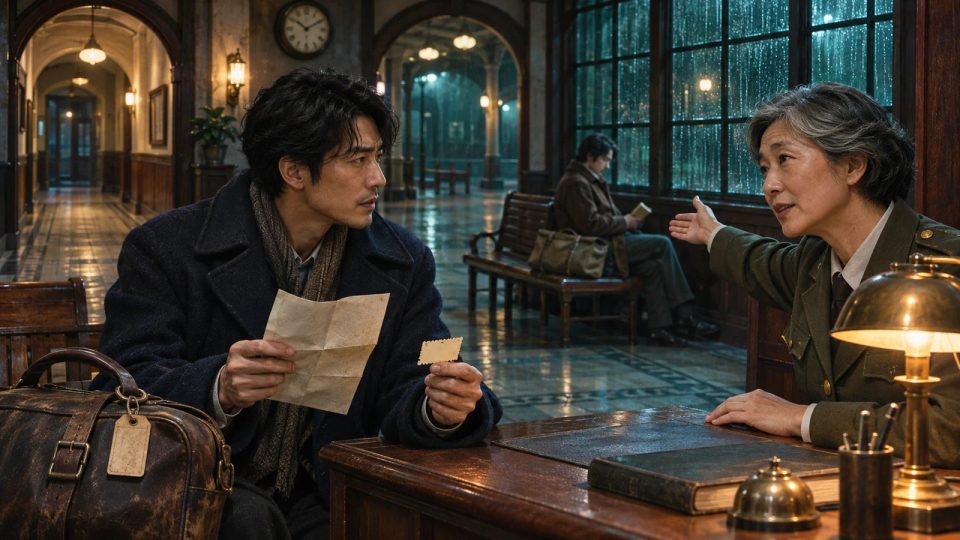
In a nighttime waiting room, a traveler carries a platform notice, luggage receipt, and travel bag while asking an attendant about a passenger seated by the window.
Creation tutorials2026.11.17

When Branches Rejoin, How Do You Preserve the Player’s Earlier Choices?

When routes return to the same place, earlier choices should still leave a trace. An original waiting-room example shows how information, items, and promises survive a merge.

DramaFork Editorial Team8 min read
Continue reading
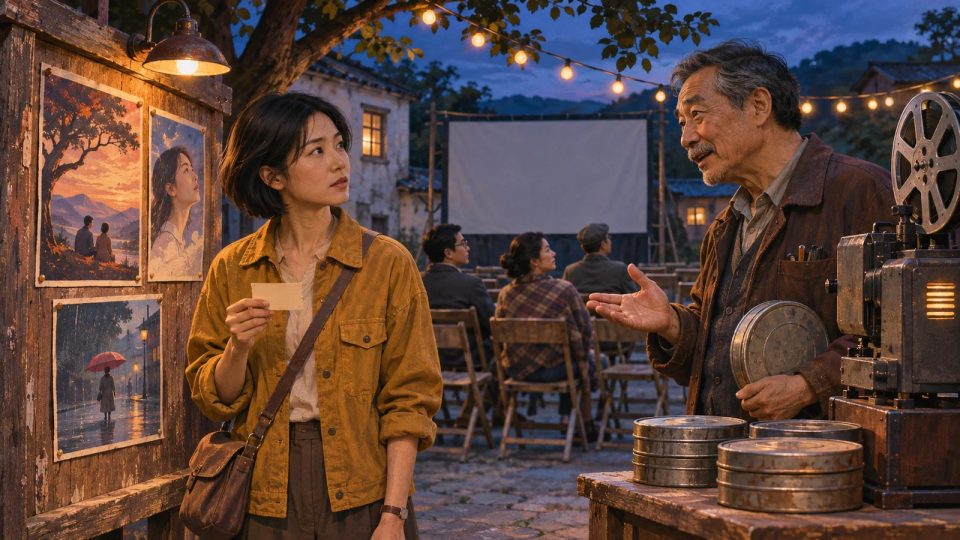
Before an outdoor screening, a coordinator holds a last-minute film-change slip while speaking with the projectionist; seated viewers and a notice board await an update.
Creation tutorials2026.11.17

How to Write an Opening for an Interactive Text Game: Show Players What They Can Do First

An opening need not explain the whole world. A late screening notice shows how to establish the situation, the player’s role, and room to act.

DramaFork Editorial Team9 min read
Continue reading
A rehearsal-room administrator and visitor check a booking ledger and confirmation slip, with a key, clock, and photo envelope kept separately on the desk.
Creation tutorials2026.11.17

How to Write Task Completion Criteria: Replace “Earn Their Trust” with Verifiable Events

“Make them happy” is hard to judge. Using a rehearsal room booking as an example, separate task completion, relationship changes, and permission to share publicly.

DramaFork Editorial Team8 min read
Continue reading
An original small creature beside an empty chair, a leaf album and a paper windmill in a rainy station shelter
Creation tutorials2026.11.16

Writing Companion Characters with an Everyday Life Worth Talking About

Give a character a small shared activity. An original leaf-collecting neighbor shows how personality, progress, pauses and reliable memory can produce the next conversation.

DramaFork Editorial Team9 min read
Continue reading
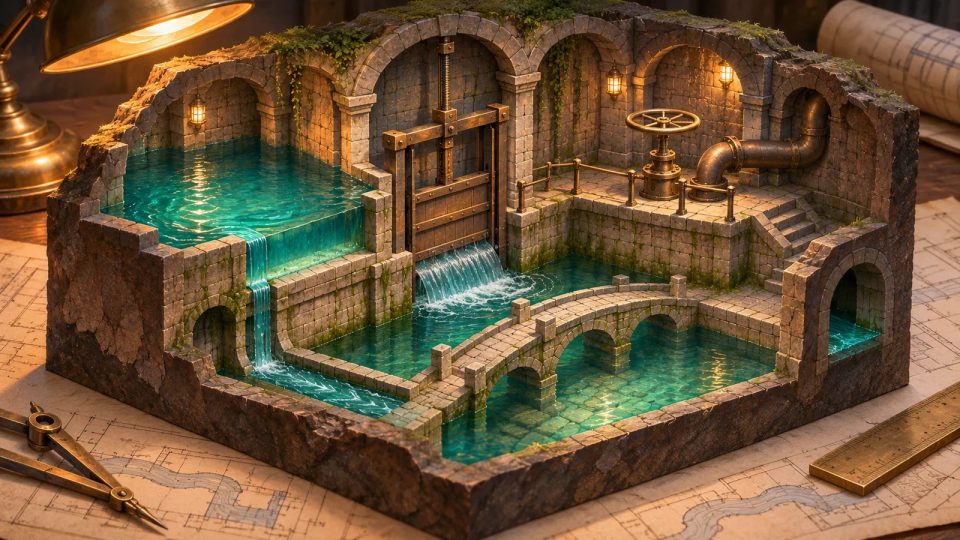
An underground waterworks model with a valve linking pools and a stone bridge that can emerge
Creation tutorials2026.11.16

Designing Text-Game Mechanisms That Actually Change the Map

An invented underground waterworks shows how a valve changes routes. Track before-and-after states, return paths and repeatable actions so players can reason from the text.

DramaFork Editorial Team10 min read
Continue reading
A novel manuscript and two routes of scene cards connected with thread under a desk lamp
Creation tutorials2026.11.16

Adapting a Novel into Interactive Fiction: Where Should the First Branch Go?

Find a useful first branch by separating fixed story facts, character knowledge and player decisions, then reconnect the routes without erasing their consequences.

DramaFork Editorial Team10 min read
Continue reading
An imaginary tidepool creature with translucent fins and a ridged shell stands between bright shallow water and a dark rocky passage.
Creation tutorials2026.11.13

Designing Evolution Text Games: Make Every Upgrade Change How Survival Works

A thick shell should do more than add defense, and a thin fin should do more than add speed. An imaginary tidepool creature shows how abilities, food costs, accessible terrain, and return routes can make evolution a decision worth weighing.

DramaFork Editorial Team10 min read
Continue reading
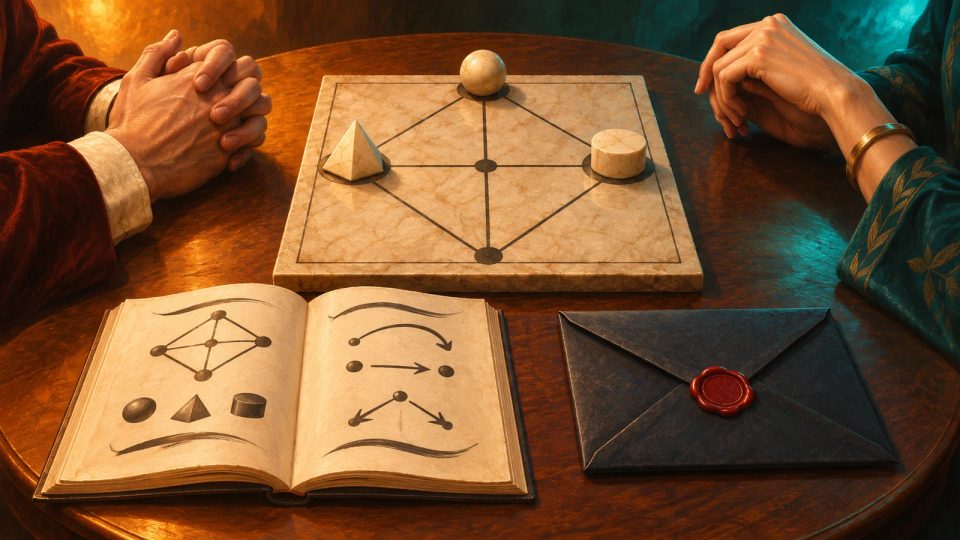
Three differently shaped counters, an open rulebook, and a sealed envelope on a table distinguish public rules from private information.
Creation tutorials2026.11.13

Writing Psychological Text Games: Public Rules, Hidden Information, and Fair Solutions

Suspense can live in a character’s private information, but the rules cannot arrive after the ending. A three-box teaching example separates public rules, private facts, and persuasive dialogue, then tests whether players can reason from what they know.

DramaFork Editorial Team10 min read
Continue reading
  1. 1
  2. 2
  3. ...27

Blog categories

  • All500
  • Creation tutorials40
  • Interactive narrative60
  • Getting started11
  • Galgame Route Design25
  • Visual Novel Production25
  • Interactive Fiction Design25
  • Narrative Design for Interactive Film Games25
  • Interactive Film Accessibility10
  • Interactive Film Workflow10
  • Interactive Game Basics10
  • Interactive Film Presentation and Delivery10
  • Interactive Film Localization10
  • Interactive Film Production10
  • Narrative Mechanics11
  • Creative Collaboration11
  • Getting started1
  • Fictional Case Study10
  • Story Localization10
  • Mobile and Accessibility10
  • Acting and Staging10
  • Exploring Time and Space10
  • Relationships and Groups10
  • Resources and Constraints10
  • Information and Commitments10
  • Production Practice59
  • Product workflow34
  • Choosing tools33

Start with these guides

  • How to Write Silence in Interactive Dialogue: Give the Wait an Intent, Not Just a Blank
  • How to Avoid Conflicting Expressions in Modular Visual Novel Character Sprites
  • Multiple Endings Do Not Guarantee Replay Value: Four Rewards That Drive Replay Rates in Interactive Movie Games
  • How to Write the Credits and Version Notes at the End of an Interactive Story So Feedback Reaches the Right Person
  • After Choosing a Style, How to Write It for the Team: Turn References into Stable Text Constraints
  • What to Clear Before Restarting a Text Adventure: How Authors Check Initial State for Last-Run Information
  • Text Adventures Without Map Images: How Can Players Know Where They Are?
  • When to Reveal a Character's Secret: Writing Three-Layer Disclosure Conditions for AI Dialogue

From a story to a playable world.

Start with one story decision

Create a project