Why Does the Culprit Keep Changing in AI Detective Stories? Fix the Case Record First
When every new suspicion changes the truth, investigation loses its footing. An original missing-item case shows how to separate facts, character accounts, and player guesses.
Introduction
“I think the projectionist took it.” As soon as the player says this, the story produces a cufflink belonging to the projectionist. Two rounds later, the player switches to suspecting the attendant, and the cufflink is explained away as something someone else deliberately planted.
Each sentence seems responsive to the player, but together they fail to describe a case that actually happened. The player is not investigating; they are merely supplying a name for the next twist. To fix this, write down what happened outside the dialogue first, and do not let it change along with the guesses.
The following original missing-item investigation illustrates the method. Its characters, times, and clues were designed for teaching.
Finish Writing What Happened When No One Was Watching
An old cinema is preparing a film exhibition. At 19:10, film canister No. 3 is discovered missing from the north cabinet. Present are Fang Cheng, who handles the exhibition labels; Zhou Yan, the projectionist; and Ling Yi, the lobby attendant.
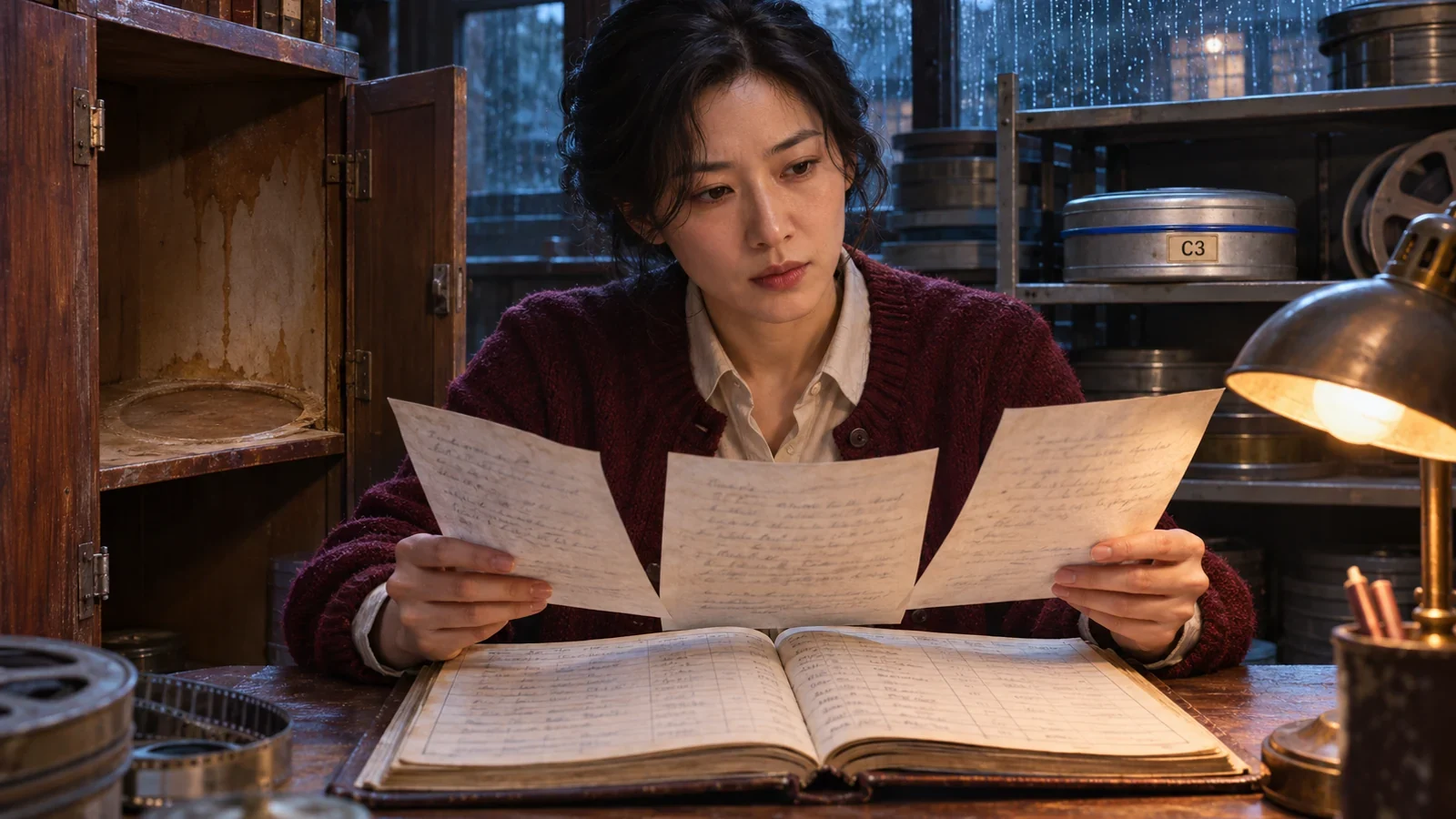
Before the player starts investigating, the author writes out what happened: at 19:05, Fang Cheng discovered a leak above the north cabinet and moved film canister No. 3 to the west temporary storage room, but did not add a transfer entry to the log. The film is still inside the canister, its identifying code is C3, and there is one blue identification line on its lid. Zhou Yan was in the projection room from 19:00 to 19:08 and did not touch the north cabinet. Ling Yi saw Fang Cheng carrying a round canister west, but could not make out its code.
This account is withheld from the player for now, but it must serve as the shared basis for every route. Whom the player questions first, and how politely they ask, will not change who moved the canister. If the story needs an actual theft or a more complex motive, those can be designed separately; first keep this small case consistent across three investigation routes, then increase the difficulty.
The player receives only limited information at the start: the north cabinet is empty, there are water marks beside it, and the log has no new transfer entry; the exhibition inventory specifies the code and blue line on film canister No. 3. The door to the room on the west side is marked “Temporary Storage Room,” and the player can inspect it directly. The author's knowledge of the canister's location does not mean a character has already mentioned it or that the player has already seen it.
Keep Three Types of Content Separate Within the Same Case Record
The first type is established fact: who moved the film canister, when, and where they moved it. This must not be rewritten because the player suspects Zhou Yan.
The second is what characters currently say and know. Fang Cheng knows she moved the canister, but initially says, “I haven't touched the north cabinet since seven,” hoping to conceal her failure to log the transfer. Ling Yi can describe the movement he witnessed, but cannot confirm on the author's behalf that it was film canister No. 3. Zhou Yan can state that he was in the projection room, but his statement itself still needs to be checked through investigation.
The third is the player's guesses, such as “Zhou Yan stole the canister” or “Fang Cheng is just keeping it temporarily.” Guesses can change the next round of questions and the characters' attitudes, but they cannot automatically become evidence.
The author can keep notes in three columns: “Facts,” “Who knows or claims what,” and “What the player currently suspects.” There is no need to record every line of small talk, but before adding a new clue, check which column it belongs in. The case record here is a method for organizing your writing; it does not mean the website will automatically check the case for you.
When the Player Guesses Wrong, Respond Using the Existing Basis First
Suppose the player accuses Zhou Yan. He can say, “I was in the projection room from 7:00 to 7:08. You can start by asking me what I was doing then.” The investigation that follows should unfold according to the events written in advance, without adding a cufflink on the spot to support the guess.
The player can also press Ling Yi: “Was the one you saw definitely film canister No. 3?” His answer should stay within the limits of his observation: “I only saw Fang Cheng carrying a round canister west. I couldn't make out the code.” This testimony can lead the investigation toward the temporary storage room, but it cannot yet establish that the film inside is undamaged, much less establish theft solely from the act of moving it.
To make this exchange more substantial, consult How to Let Players Discover Contradictions in Testimony Themselves. That article addresses how to compare accounts; here, the first priority is ensuring that the author has not quietly changed the past being compared.
Freezing the Past Does Not Mean Stopping Change in the Present
A player who goes straight into the west temporary storage room and finds the film canister marked C3 with a blue line on its lid can establish the item's location sooner than a player who questions all three people first. Do not move the canister elsewhere on the spot just because a planned confrontation has not happened yet.
After finding it, the player can hand the canister to the administrator. Its current location, its custodian, and what those present know will then change; the historical fact that Fang Cheng moved it at 19:05 remains true. Updating the present and rewriting the past should be handled separately.
Characters can also change their accounts. After seeing the log and the canister, Fang Cheng may admit that she failed to record the transfer. The author should preserve the fact that she previously denied touching the cabinet, leaving room in later dialogue for an explanation, an apology, or further questioning. The first denial cannot be erased from the story and followed by a claim that she never concealed anything.
The site's The Third Voice in the Silent Cabin can also serve as an entry point for an investigation experience; pay attention to how information from different sources affects your judgment. The small cinema case in this article is an independent example, not a plot walkthrough for that work.
The Case Record Need Not Fill In the Whole World, but Key Gaps Must Be Decided in Advance
The color of the curtains or the number of pencils on a desk can usually be added later if they do not affect the established plot. Who touched the canister, whether the room can be entered, and whether a character could see the code at the time directly affect the solution and should be settled before the investigation begins.
What needs to remain concealed is how much of the truth the player can see. When authors have not decided for themselves what happened, they often mistake a reasonable new question for an opportunity to add facts. If you do want to make a work that randomly selects the responsible person for each playthrough, choose that playthrough's version at the start and use it consistently for the timeline, testimony, and item records; do not select someone else halfway through based on the player's suspicions.
After Writing, Deliberately Enter Through Another Door
Run through the same case three times: accuse Zhou Yan first, question Fang Cheng first, and go straight to the west temporary storage room. Compare the historical facts across the routes. The order of discovery, relationships, and length of explanations may differ, but the person who moved the canister, the time, and the canister's identity should remain the same. If the item is returned after being found, that new movement should also be traceable.
Then check whether the conclusion goes beyond the evidence: finding the canister bearing the code establishes only its location and identity; determining whether the film is undamaged still requires a corresponding inspection. See How to Write the Hypothesis Confirmation Step to connect “I guessed correctly” to a result that can actually be observed.
Finding the item earlier than expected is also a valid investigation route. Following through on the clues and letting characters respond to actions that have already happened will usually give players more reason to keep asking questions than adding another twist.