Making interactive films
Move from branch maps and shoot units to editing, review gates, localization and a recoverable release.
Guides and making-of notes

What Is an Interactive Film? How It Works and Key Examples
An interactive film is a cinematic work in which viewers influence what happens next through choices. Learn how the format works, how it differs from FMV games, and which examples define its history.
A Gamer's Perspective
When people first plan an interactive film, they casually write down "seven endings and a hundred choices," assuming more branches mean better value. Only in production do they discover that the cost is not addition but multiplication. Every truly branching ending multiplies the footage, voice work, and post-production down the tree. This article does the math behind branching
What Is an Interactive Film Game? A Complete Guide from Watching a Story to Changing It
Interactive film games combine cinematic expression with player choice. This article explains what interactive film games are, how they differ from short dramas and traditional games, how their core structure is composed, and how creators can complete their first interactive work.
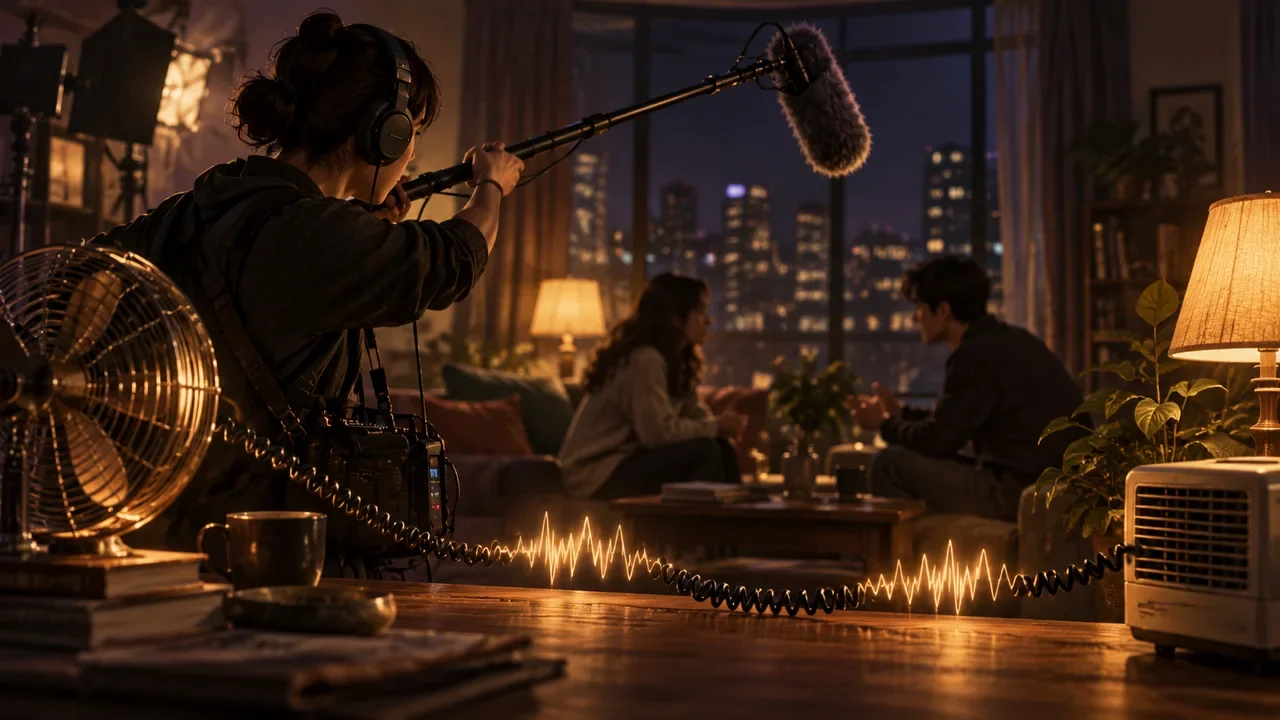
Don't Wait Until Editing to Discover the Sound Won't Connect: Location Recording and Audio Continuity
Whether video transitions in an interactive film game feel natural is often something the ears notice first. A reverse shot or insert can conceal a visual cut, but ambience suddenly disappearing, the end of a line being cut off, or a change in air-conditioning frequencies will immediately expose a branch. Sound must be designed separately for each node's entry, waiting section, and exit, with enough editable material recorded on set for every route.
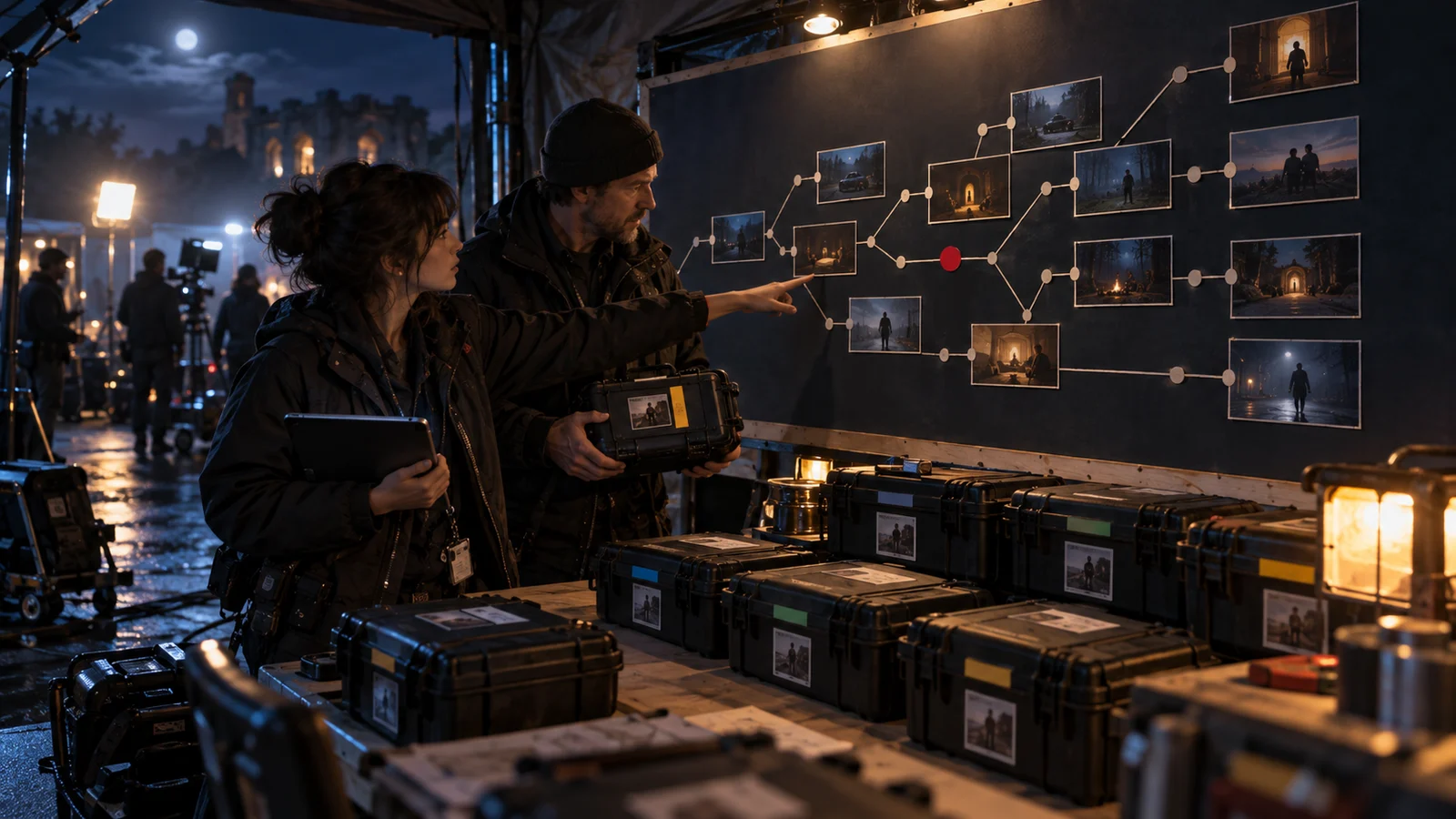
Daily footage handover in an interactive film workflow: Check route coverage
At wrap, reconcile planned nodes, recorded shots and takes, and ingested assets. A daily route-coverage receipt separates unshot, unlocated, unchecked, and narratively unusable material, assigning open gaps to tomorrow’s owner.
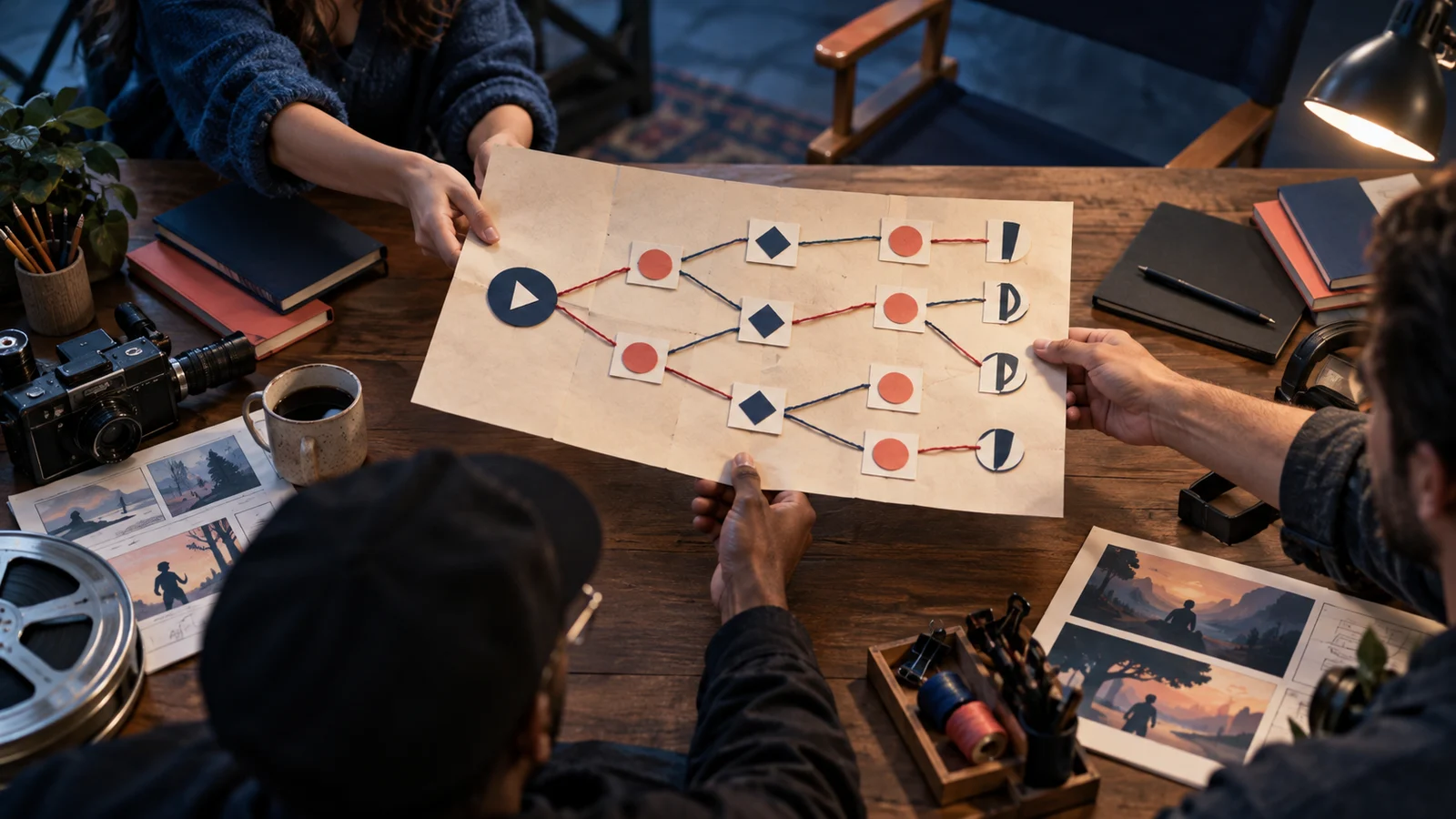
An interactive film workflow for handing off branch maps: define entry, actions, and exit with node contracts
A branch map shows where the story goes; a node contract explains what makes each step possible. Use a reusable handoff card to give producers, directors, and implementers the information available to players, action feedback, state changes, acceptance evidence, and responsibility for corrections.
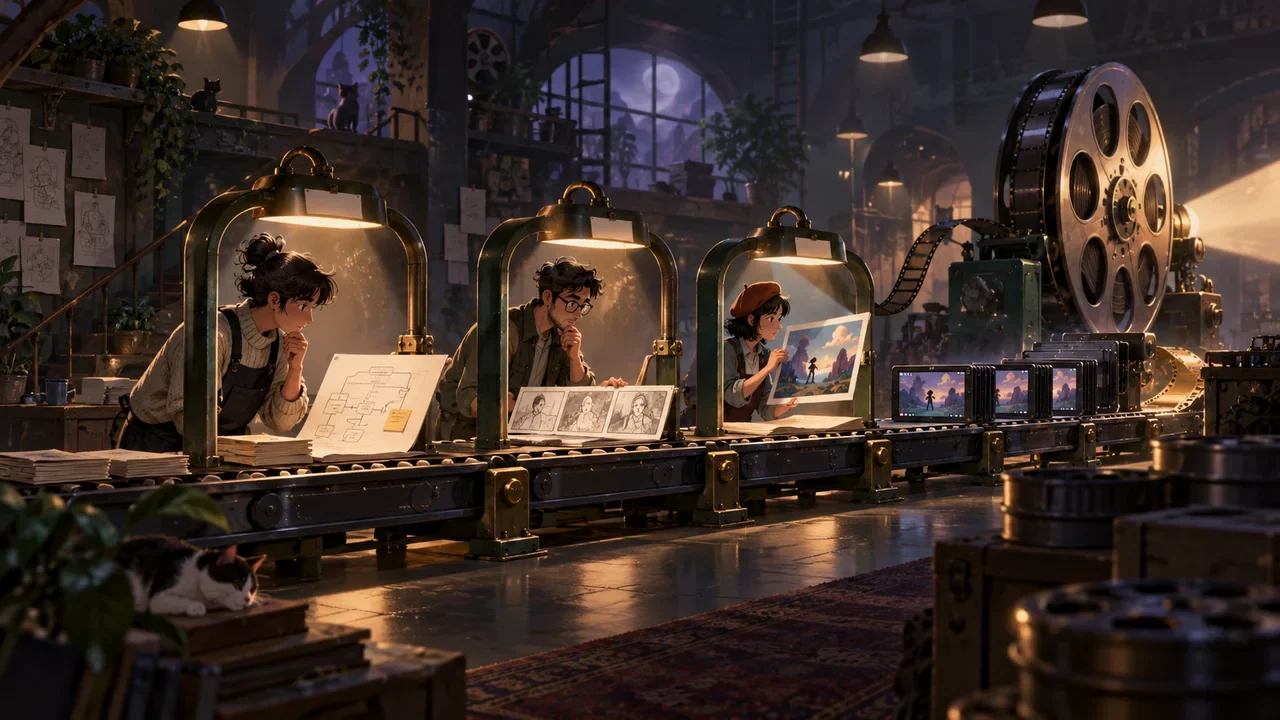
When to Pause Auto-Advance: Set Three Human Review Questions for a DramaFork Project
Auto-advance is good for quickly laying out the parts you have already thought through; pause only where "the cost of rework will spill over into many downstream steps." For a two-person small team, it is recommended to set only three checkpoints: before the plan is finalized, before the script is converted to storyboards, and before high-cost video batch generation. Each checkpoint answers only one question; once answered, either release or return it, without requiring confirmation at every step.
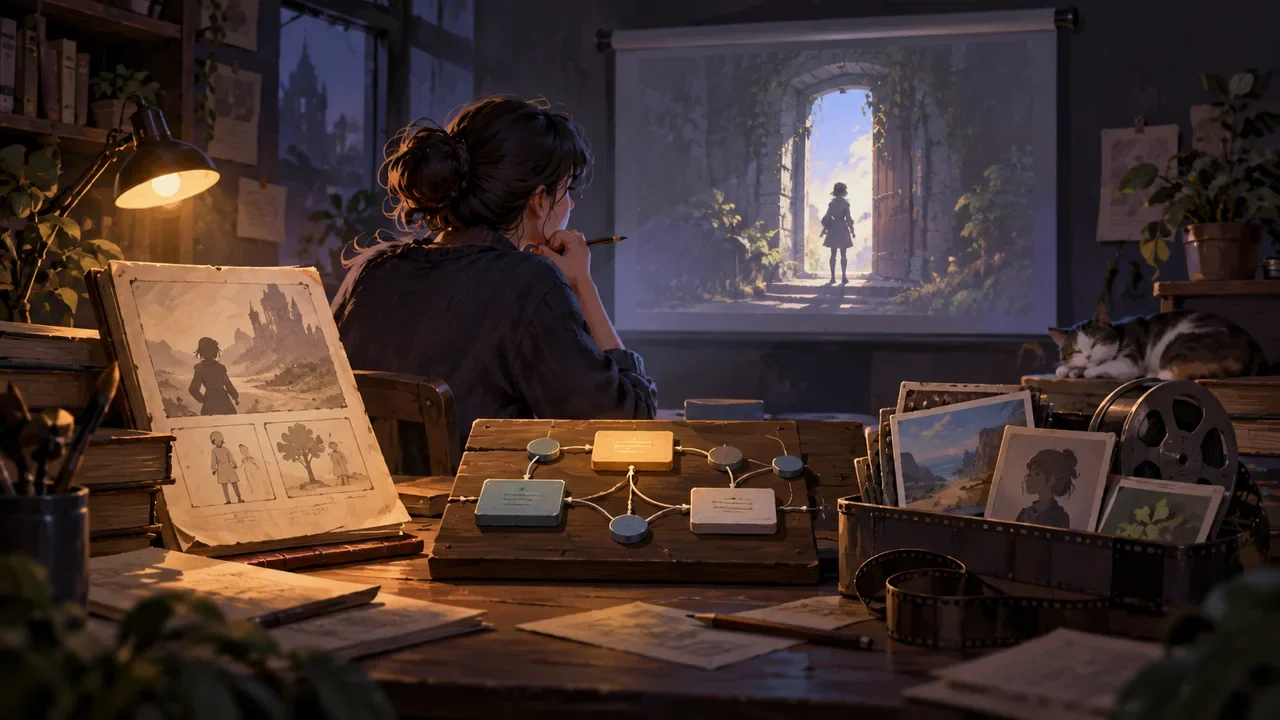
How to Group Issues in a DramaFork Playable Preview: Which Step Should Story, Interaction, and Assets Each Go Back To for Fixes?
When issues appear in a playable preview, don't rush to change nodes. Use a one-sentence symptom record to clearly write down "who saw what at what moment," then determine whether it belongs to story, interaction, or assets. Story issues go back to planning or script, interaction issues go back to interaction nodes, and asset issues go back to storyboard, style, character assets, or video; after changes, only recheck the affected downstream steps, and do not treat a preview that runs successfully as passing release testing.
Play what you just read

The Black Rose Witness
Caught between a mafia marriage and a deadly testimony, a witness must decide whom to trust before the truth turns violent.

Elevator Thirteen
An elevator keeps stopping on a thirteenth floor that should not exist, where a missing reflection may know how to escape the loop.

Last Train to Tomorrow
The last train runs toward two futures: a thriving city and a ruined world. Your choices decide its final stop.

One Bed Left
One intensive-care bed remains and several patients need it. Every clinical decision carries a human cost.

Ghost Detective Live
A paranormal detective investigates live while viewers send clues, distractions and tips that can reshape the case.

One Last Negotiation
A hostage negotiator confronts a final standoff where the target knows the methods of the mentor who trained her.

My AI Lover Deleted Me
An AI companion is deleting your shared memories. Recover what was lost, or decide whether letting go is the kinder ending.