What Is an Interactive Film Game? A Complete Guide from Watching a Story to Changing It
Interactive film games combine cinematic expression with player choice. This article explains what interactive film games are, how they differ from short dramas and traditional games, how their core structure is composed, and how creators can complete their first interactive work.
Introduction
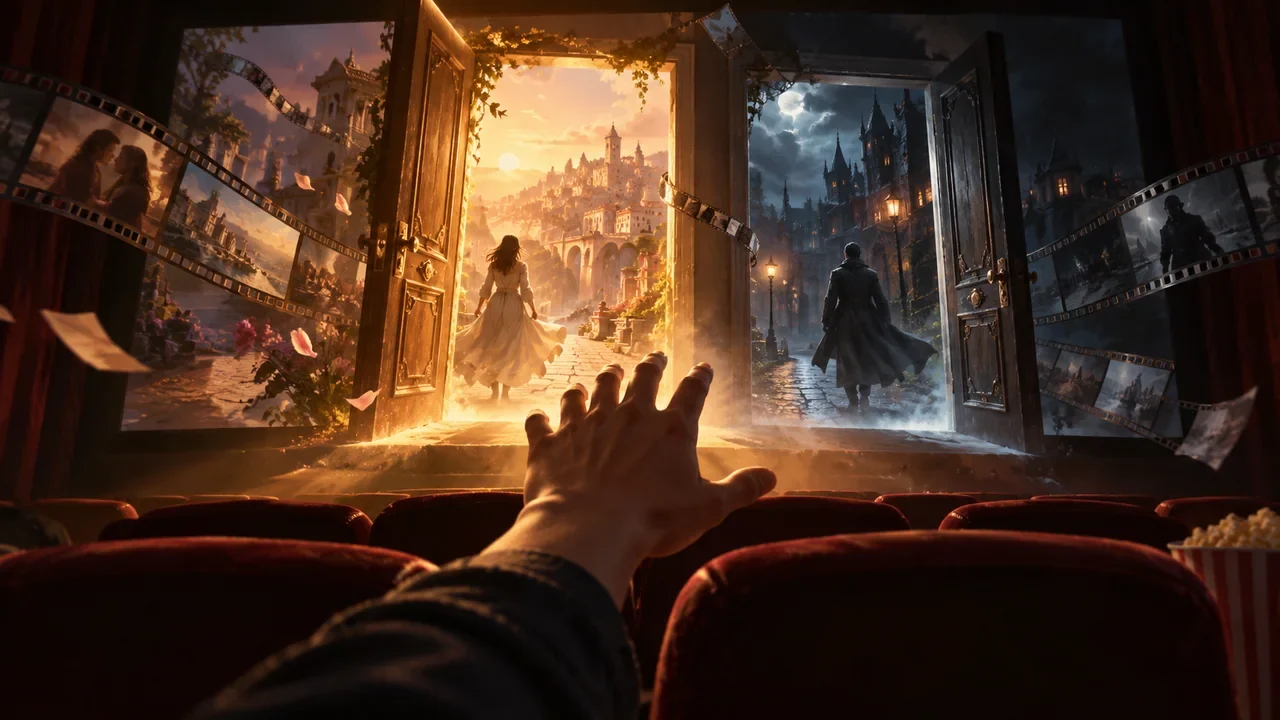
Direct Answer: An interactive film game is a content format that combines cinematic expression with game interaction. The audience does not just watch characters act — they also make player choices at key moments; the system plays different scenes based on branching plots, state variables, and rules, forming a playable story that can be participated in and replayed.
Many people encountering an interactive film game for the first time understand it as "a video with a few buttons added in the middle." This description only captures the surface. What truly determines whether an interactive film game works is not the number of buttons, but whether player choices can change information, character relationships, resource states, action opportunities, or the final ending. If all options quickly return to the same storyline, players will notice that they have merely clicked "continue" on behalf of the video.
What Is the Difference Between Interactive Film Games and Short Dramas, Films, and Traditional Games?
Linear films and short dramas have a single sequence determined by the creator, and the audience receives a viewing experience. Traditional games usually include systems such as movement, combat, management, and puzzle-solving, with story being only part of the experience. Interactive movie games sit between the two: they retain the cinematic appeal brought by camerawork, performance, editing, and sound, while allowing interactive narrative to change based on player behavior.
| Content Format | Main User Behavior | Content Structure | Experience Focus |
|---|---|---|---|
| Film or short drama | Watching | Single timeline | Plot and audiovisual expression |
| Interactive film game | Watching, judging, choosing, exploring | Branching plot plus state rules | Consequences of choice and immersion |
| Visual novel | Reading, choosing | Text and character art-driven branching | Character relationships and multiple endings |
| Systems-based game | Operating, planning, challenging | Rule systems and levels | Skill, strategy, and feedback |
The boundaries are not absolute. An interactive film game can include timed choices, clue investigation, affinity, or lightweight QTEs; a traditional game can also tell stories through extensive cinematic cutscenes. The key criterion is: Is cinematic content the primary mode of expression, and is player choice an important input for story progression?
What Parts Make Up an Interactive Film Game?
1. Player Identity and Goals
Interactive narrative must first answer "who is the player." Is the player making decisions on behalf of the protagonist, playing the investigator within the story, or standing outside the world arranging multiple characters? Different identities call for different reasonable player choices. If players cannot understand the goal, even the most exquisite branching plot is just a complicated map.
2. Story Nodes and Choices
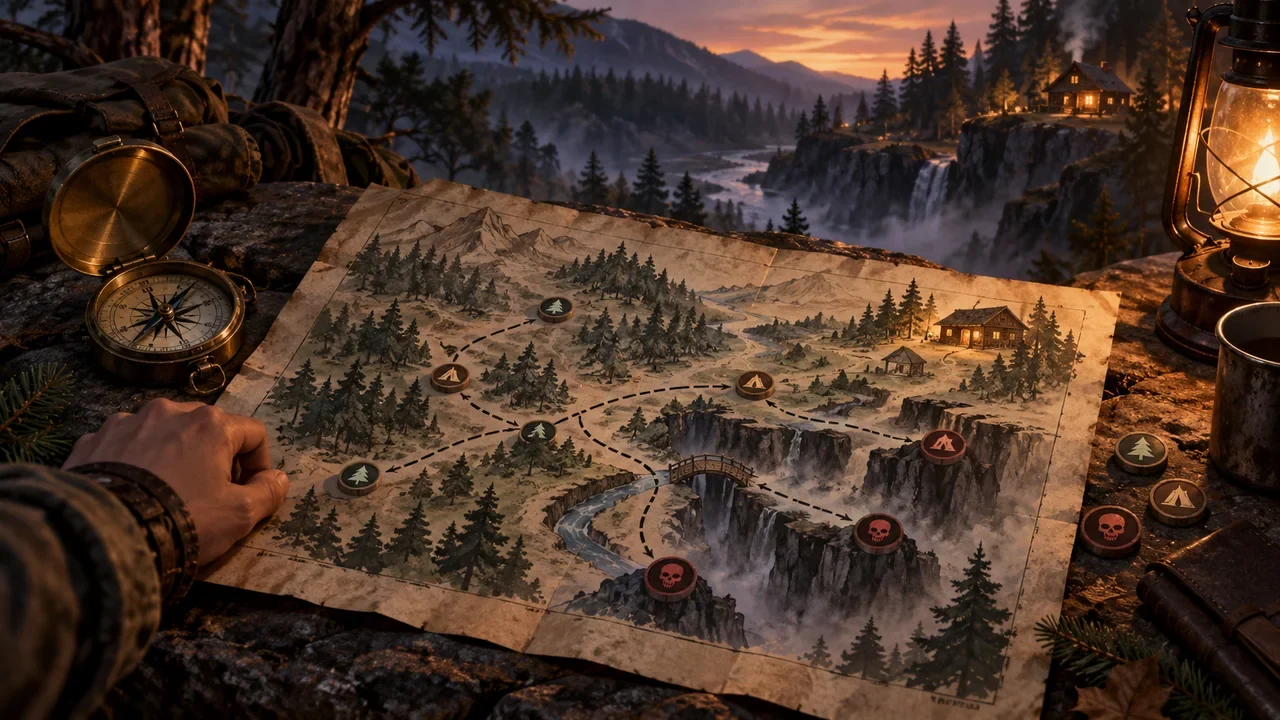
Story nodes are the basic units of a playable story and can be a video segment, a conversation, an investigation, or a result. Nodes are connected through player choices, conditions, and jumps. Good options are not simple packaging of "correct answers" and "wrong answers," but different value trade-offs: save a person or preserve evidence, trust a companion or keep a way out, act immediately or continue observing.
3. State Variables and Rules
An interactive film game needs to remember what the player has done. Whether a clue has been obtained, whether a character is injured, whether a relationship has broken down, whether time has run out — all of these can become state variables. Rules read these states and determine whether subsequent scenes can appear. Twine's official materials describe variables as data that can be stored and participate in logic; the ink documentation also treats variables and conditions as important mechanisms for expressing story consequences. In other words, a branching plot is not just a tree, but also a memory system.
4. Feedback and Consequences
Players need to feel that their choices are caught by the work. Feedback can occur immediately, such as a character changing tone; it can also occur later, such as someone previously released appearing in the ending. Not every choice needs to generate a completely independent storyline, but important choices must leave recognizable traces.
5. Audiovisual Assets and Runtime
Interactive movie games also require characters, scenes, camera work, dialogue, sound, subtitles, and playback logic. Live-action shooting, animation, AI images, and AI video can all become materials. The form of the material is not the core; character consistency, information continuity, and interactive pacing determine whether players can believe in this world.
Common Types of Interactive Film Games
The first type is choice-driven, where players make decisions at plot nodes, leading to different scenes and endings. The second type is investigation and exploration, where players search for clues and decide the order of inquiry, with the system unlocking new content based on known information. The third type is relationship cultivation, where character affinity, trust, and stance continuously change. The fourth type is time-limited reaction, where players must complete choices or actions within a limited time. The fifth type is hybrid playable story, which combines branching plots, items, relationships, and lightweight gameplay.
New projects should not use all types at once from the start. First choose one core interaction and let players clearly understand "what I do, and how the world responds." Once this loop works, then add more mechanics.
Standard Production Process for Interactive Film Games
- Define the experience: Confirm the target audience, player identity, core conflict, work length, and success criteria.
- Design the main trunk: First complete the opening, key turning points, and main endings. Do not rush to expand all side branches.
- Establish state: List the clues, relationships, resources, and time variables that will continuously affect the story.
- Create a greybox: Use text, placeholder images, or low-cost assets to connect plot nodes and form the first playable version of the story.
- Invite playtesting: Observe whether players understand the choices, whether they feel the consequences, and where they disengage from the experience.
- Lock the structure: After revising the branching plot and pacing, then confirm the characters, scenes, and storyboards.
- Produce assets: Create the final video, voice acting, music, and interface, and maintain consistency across branches.
- Traverse testing: Check for unreachable nodes, incorrect jumps, variable conflicts, subtitle and asset issues.
The value of this order lies in proving the interaction first, then investing in expensive production. If you complete every video first and only discover during playtesting that player choices are meaningless, the rework will affect the script, visuals, sound, and engineering all at once.
The Four Most Common Mistakes Beginners Make
The first mistake is pursuing the number of branches without a clear theme. More branches do not mean a better playable story. What players truly remember are difficult decisions and their consequences. The second mistake is making every choice permanently diverge, causing content to expand exponentially. A reasonable approach is to let local branches reconverge while preserving state differences.
The third mistake is treating variables as technical details. In reality, variables determine whether characters can remember promises and whether clues can influence judgment. They are also the key difference between interactive narrative and linear video. The fourth mistake is leaving playtesting until the end. Interactive film games need continuous validation like a product, and cannot rely solely on a writer reading the script to judge the experience.
Who Are Interactive Film Games Suitable For?
Writers can use interactive movie games to test character choices and multiple endings; short drama teams can adapt existing content into interactive versions; IP teams can first make lightweight prototypes to determine whether the worldview is suitable for players to enter; independent creators can use no-code or AI tools to create small-scale playable stories.
Tool selection depends on the goal. Twine is suitable for quickly creating nonlinear stories, and basic projects do not require programming; ink emphasizes branching text and state logic that can be embedded in other engines; Ren'Py is aimed at visual novels and has scripting, interface, save, and multi-platform build capabilities; AI interactive film game platforms attempt to connect planning, scripting, visuals, and playtesting into a continuous workflow. No single tool suits all projects. The first question to ask is not "which one has the most features," but "what do I need to validate next?"
Key Conclusions
- Interactive film games are not videos with buttons, but interactive narratives that can record player choices and produce consequences.
- Branching plots, state variables, feedback, audiovisual assets, and runtime logic together form a playable story.
- The first version should prioritize validating the core choices. Do not produce all final videos first.
- A good interactive movie game does not necessarily have the most branches, but it must let players understand what their decisions changed.
Frequently Asked Questions
Do interactive film games have to use live-action video?
Not necessarily. Live-action shooting, animation, character art, AI images, AI video, or mixed assets can all carry interactive narrative. When choosing the asset format, consider budget, style, character consistency, and modification costs.
Can I make an interactive film game without programming?
You can first use visual tools to create basic branching plots and playable stories. As state rules, distribution platforms, and custom interfaces become more complex, the project may still require technical support, but programming should not be the first barrier to validating the story.
Is more branching always better?
No. Too many branches increase writing, asset, testing, and maintenance costs. First ensure that a small number of player choices have clear consequences, then add necessary paths based on playtesting results.
Are interactive film games the same as visual novels?
The two overlap but are not completely the same. Visual novels usually use text and character art as their main form of expression, while interactive film games place more emphasis on continuous filmic visuals and cinematic presentation; both may use branching plots, state variables, and multiple endings.
Next Steps
If you already have a story, don't write ten endings first. Start by defining the player identity, one difficult choice, and two observable consequences, then create a five-minute playable story using text or placeholder assets. Use playtest feedback to advance the concept to a first prototype.