• Home
  • Blog
  • Gallery
  • Pricing
  • Home
  • Blog
  • Gallery
  • Pricing
Start creating

Creator blog

Better stories start here

Discover practical AI tools, interactive storytelling methods, and production lessons—from the first idea to a story people can play.

DRAMAFORKStories · Craft · Possibility
Topics
AllFictional Case StudyCreative CollaborationStory LocalizationMobile and AccessibilityActing and StagingNarrative MechanicsExploring Time and SpaceRelationships and GroupsResources and ConstraintsInformation and CommitmentsProduction PracticeProduct workflowInteractive narrativeCreation tutorialsChoosing toolsGetting started
10 articles

Editorial / 01

Latest articles

Practical methods for narrative structure, visual production, and everything in between.

A Player’s Guess Is Not a Character’s Conclusion: Writing a Deduction Check — original editorial cover illustrationTopic selection
Information and Commitments2026.10.07

A Player’s Guess Is Not a Character’s Conclusion: Writing a Deduction Check

Turn a guess into a prediction stated in advance, define the conditions for a valid check, and let the observed result determine how far the conclusion can go. Use a deduction check card to write rounds where a guess proves right, proves wrong, or remains inconclusive.


DramaFork Editorial Team17 min read
Continue reading

The next move is yours

From a story to a playable world.

Do not wait for every video to be finished before testing the story. Build the characters, rules, and branches first, then let real choices guide what you make next.

Start with one story decision

Try a playable example

From a story to a playable world.

Start with one story idea, then shape scripts, characters, shots, and branches into a playable first version.

Product

  • Pricing
  • Credits guide
  • Capabilities
  • Workflow
  • Examples
  • FAQ

Explore

  • Playable gallery
  • Creator blog
  • Creator partnership

Legal

  • Privacy
  • Terms
© 2026 DramaFork/AI interactive story studio
Press Enter to send, or drag away and release.
Who Has to Prove It? Turning the Burden of Proof into Story Actions — original editorial cover illustration
Information and Commitments2026.10.07

Who Has to Prove It? Turning the Burden of Proof into Story Actions

A character’s accusation should not automatically give the player a string of investigation tasks. Use an evidence assignment table to clarify who submits material first, which alternatives count, and which story action cannot proceed without enough support.

DramaFork Editorial Team19 min read
Continue reading
When Two Reliable Reports Conflict, How Can You Design a Review Without Forcing a Single Truth? — original editorial cover illustration
Information and Commitments2026.10.07

When Two Reliable Reports Conflict, How Can You Design a Review Without Forcing a Single Truth?

Different water-level reports do not require a search for a liar. Use a time-by-location table to establish how the readings were taken, then let players decide whether to keep checking or submit a record with the disagreements clearly stated.

DramaFork Editorial Team18 min read
Continue reading
A Clue Proves Only Part of the Story: How to Keep Players from Treating Partial Facts as Complete Conclusions — original editorial cover illustration
Information and Promises2026.10.07

A Clue Proves Only Part of the Story: How to Keep Players from Treating Partial Facts as Complete Conclusions

An intact seal is a useful clue, but it cannot establish on its own that no one entered a warehouse. Use an inference boundary table to distinguish observations and rules, required premises, supported conclusions, and unresolved gaps—and show players what to check next.

DramaFork Editorial Team19 min read
Continue reading
Make Withdrawing a Promise an Event, Not a Quiet Dialogue Edit — original editorial cover illustration
Information and Promises2026.10.07

Make Withdrawing a Promise an Event, Not a Quiet Dialogue Edit

When a ferry manager promises to save someone a place but cannot honor that promise, simply saying “You can’t board” is not enough. Use a withdrawal event record to preserve the original words, explain what changed, track whether the news reached those affected, and record compensation offers and their outcomes according to the choices actually made.

DramaFork Editorial Team19 min read
Continue reading
Once the Player Hands Over Information, Who in the World Should Know? — original editorial cover illustration
Information and Commitments2026.10.07

Once the Player Hands Over Information, Who in the World Should Know?

Handing a survey report to the workshop does not mean everyone there—or the council—immediately knows its contents. Use receiving agreements and knowledge records to track who may receive it, who actually read it, what may be passed on, and which events cause leaks. Reading a signature does not reveal who delivered the report.

DramaFork Editorial Team20 min read
Continue reading
Anonymous Messages Should Not Carry Authority: Independently Verifying a Maintenance Warning — original editorial cover illustration
Information and Commitments2026.10.07

Anonymous Messages Should Not Carry Authority: Independently Verifying a Maintenance Warning

Separate an anonymous warning into verifiable claims, requested actions, and identity cues, then check the same proposition through two independently sourced paths. Players can judge which parts hold up without first identifying the sender.

DramaFork Editorial Team18 min read
Continue reading
Choosing Without Enough Evidence: Make Uncertainty Clear with Choice Cards — original editorial cover illustration
Information and Commitment2026.10.07

Choosing Without Enough Evidence: Make Uncertainty Clear with Choice Cards

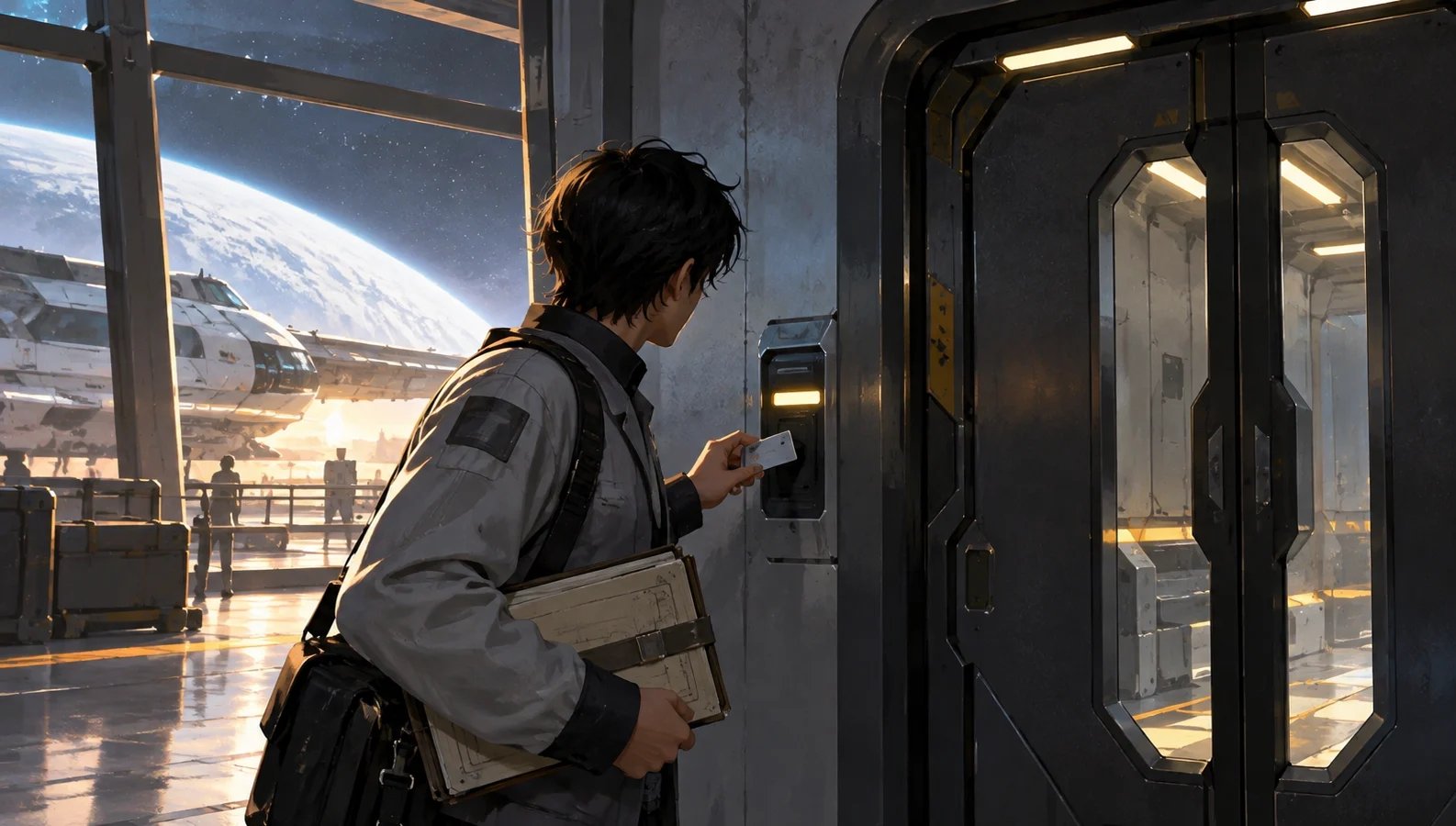
Why a space station door has failed can remain unanswered for now. What players base their actions on, and where they can still stop, must be clear. A choice card covering confirmed facts, unknowns, and action boundaries turns guesses about a fault into reasoned decisions. A door that has not moved does not prove a command was not executed; a receipt confirms only what its record supports.

DramaFork Editorial Team19 min read
Continue reading
How can a message preserve its sources and traces of change across three handoffs? — original editorial cover illustration
Information and Commitments2026.10.07

How can a message preserve its sources and traces of change across three handoffs?

Record what was received, what was passed on, and what each recipient understood, then compare adjacent versions sentence by sentence. A transmission-chain verification table helps trace lost conditions, added reasons, changes from waiting to gathering, and who supposedly made a decision. Also check whether the draft was actually spoken and which instruction the condition governs.

DramaFork Editorial Team21 min read
Continue reading
Information Expires: Give Messages in Interactive Stories an Expiry Time — original editorial cover illustration
Information and Commitments2026.10.07

Information Expires: Give Messages in Interactive Stories an Expiry Time

Even a reliable observation station’s forecast may have expired by the time it arrives. A three-column ledger—when the message applies, how to check it, and what to do after it expires—shows players what old information still supports and what they can do next.

DramaFork Editorial Team19 min read
Continue reading

Blog categories

  • All301
  • Fictional Case Study10
  • Creative Collaboration10
  • Story Localization10
  • Mobile and Accessibility10
  • Acting and Staging10
  • Narrative Mechanics10
  • Exploring Time and Space10
  • Relationships and Groups10
  • Resources and Constraints10
  • Information and Commitments10
  • Production Practice59
  • Product workflow34
  • Interactive narrative49
  • Creation tutorials19
  • Choosing tools33
  • Getting started7

From a story to a playable world.

Start with one story decision

Create a project