• Home
  • Blog
  • Gallery
  • Pricing
  • Home
  • Blog
  • Gallery
  • Pricing
Start creating

Creator blog

Better stories start hereBetter stories start here

Discover practical AI tools, interactive storytelling methods, and production lessons—from the first idea to a story people can play.

DRAMAFORKStories · Craft · Possibility
Topics
AllCreation tutorialsInteractive narrativeGetting startedGalgame Route DesignVisual Novel ProductionInteractive Fiction DesignNarrative Design for Interactive Film GamesInteractive Film AccessibilityInteractive Film WorkflowInteractive Game BasicsInteractive Film Presentation and DeliveryInteractive Film LocalizationInteractive Film ProductionNarrative MechanicsCreative CollaborationGetting startedFictional Case StudyStory LocalizationMobile and AccessibilityActing and StagingExploring Time and SpaceRelationships and GroupsResources and ConstraintsInformation and CommitmentsProduction PracticeProduct workflowChoosing tools
10 articles

Editorial / 01

Latest articlesLatest articles

Practical methods for narrative structure, visual production, and everything in between.

Original warm, text-free cinematic illustration: two friends talk face to face. One shows six small cards depicting a person, letter, hand, key, clock and door; the other listens attentively. A suitcase sits by the table, suggesting a conversation about play. Not a product screenshot.Topic selection
Interactive Game Basics2026.10.13

How to Explain an Interactive Game to a Friend: Describe What You Do

“Lots of choices” does not explain play without concrete actions. Use role, goal, input, feedback, constraints and how a run ends to describe an imaginable experience through a fictional lost-letter game.

DramaFork Editorial Team13 min read
Continue reading

The next move is yours

From a story to a playable world.From a story to a playable world.

Do not wait for every video to be finished before testing the story. Build the characters, rules, and branches first, then let real choices guide what you make next.

Start with one story decision

Try a playable example

From a story to a playable world.

Create interactive narrative games with DramaFork: connect scripts, characters, shots, and choices into a playable first version.

Explore & play

  • Explore gallery
  • Interactive film
  • Text game
  • Character IP
  • Rankings
  • Works index

Create & collaborate

  • My creations
  • Film studio
  • Text-game studio
  • Character studio
  • Creator partnership

Reading room

  • Creator blog
  • Story topics
  • Article archive

Story guides

  • Interactive storytelling
  • Making interactive films
  • Designing text games
  • Character and worldbuilding

Plans & credits

  • Pricing
  • Credits

Policies & support

  • Privacy
  • Terms
  • Cookies
© 2026 DramaFork/DramaFork · Interactive narrative games
Press Enter to send, or drag away and release.
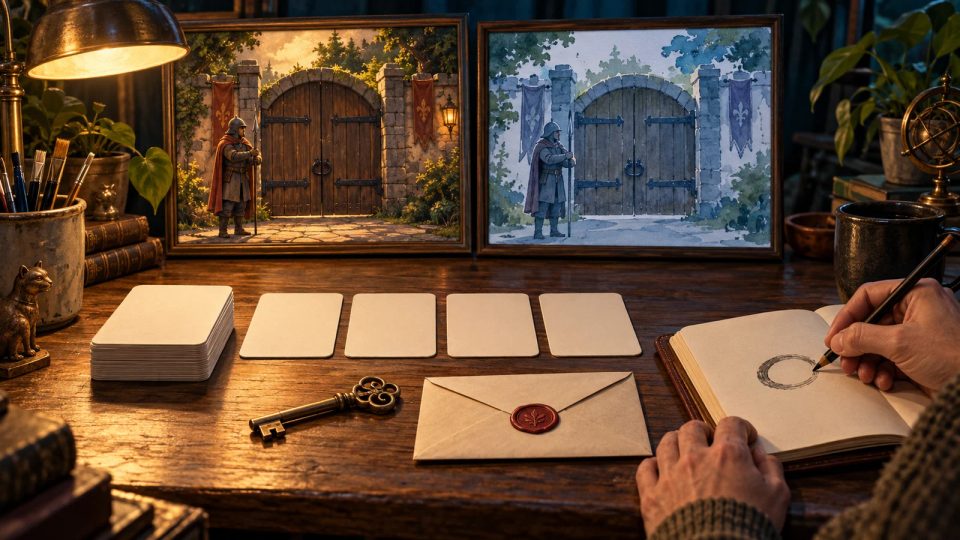
Original cinematic concept illustration: wordless rule cards, a key and an envelope lie on a wooden desk beside a creator taking notes. Two small screens show the same gatekeeper scene in different art styles; both gates are closed. No text, robots, AI symbols, code or real product interface.
Interactive Game Basics2026.10.13

Does an Interactive Game Need AI? Separate Gameplay from Dialogue with a Gatekeeper Rule Card

An interactive game can have choices and consequences without AI. Use a paper gatekeeper rule card to compare two lines under the same state and action: did only the wording change, or did what the player can do change?

DramaFork Editorial Team14 min read
Continue reading
Original cinematic article illustration, no text: four adult friends sit at a living-room table. Only one operates a tablet; others point at blank clue cards. An unbranded fictional station platform on the tablet distinguishes advice from input. Not a product screenshot.
Interactive Game Basics2026.10.13

Interactive Game with One Operator: Participation and Control

One person choosing while friends advise is shared play with one operator and group discussion. Separate who suggests, who submits input, and how to confirm a suggestion became an action in the game.

DramaFork Editorial Team14 min read
Continue reading
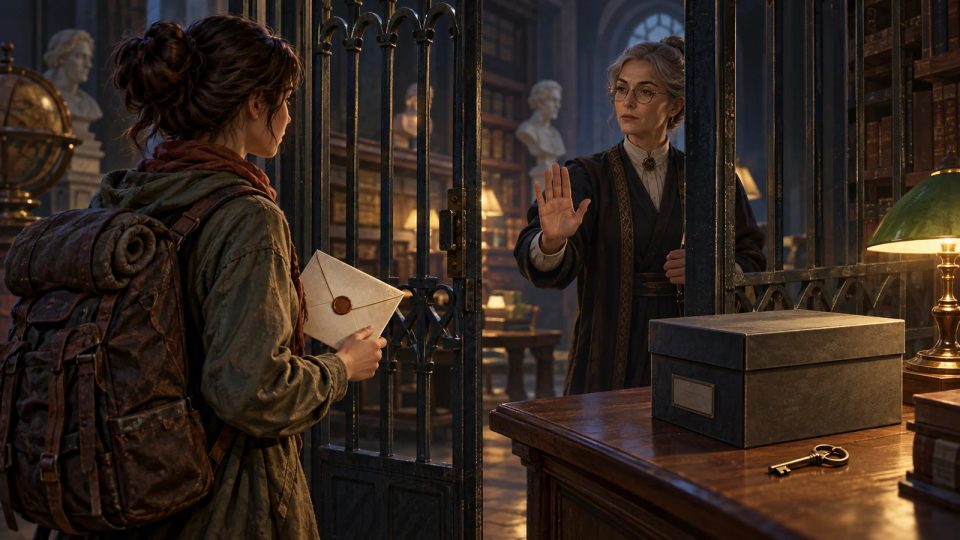
Original text-free cinematic illustration: in an archive reading room, a traveler holds a letter before a half-open barred gate. A calm librarian indicates access conditions; a key and opaque evidence box suggest known limits and unknown information. No danger or frightening elements.
Interactive Game Basics2026.10.13

Why an Interactive Game Can Keep Outcomes Unknown: Separate Risk, Limits and Refusal

You may not know what an archive box contains, but should know access conditions and what to do after refusal. A before-and-after information ledger distinguishes reasonable suspense, clear limits and missing feedback.

DramaFork Editorial Team14 min read
Continue reading
Original cinematic illustration without text: at dusk in a station waiting area, a young traveller bends to inspect a partly visible boarding pass under a bench. A distant staff member, an old travel bag, window light and footprints suggest the next action. Not a product screenshot.
Interactive Game Basics2026.10.13

Starting Your First Interactive Game: Read the Goal, Then Find an Action You Can Take

At the opening text, identify the goal before separating clues from actions available now. A fictional lost-boarding-pass scene takes you through observing, asking, acting and confirming the result.

DramaFork Editorial Team14 min read
Continue reading
Original cinematic article illustration, no text: three miniature roads with clear scale pass a puzzle table, an old archive shelf, and a small bridge toward one warmly lit post office. Three travelers carry archive paper, a letter, and a pass. Not a product screenshot.
Interactive Game Basics2026.10.13

An Interactive Game with One Ending: Look at the Play Process

One ending can still support worthwhile participation. A fictional archive-and-letter task compares differences in information, order, and cost. A process card checks what the player actually changes.

DramaFork Editorial Team14 min read
Continue reading
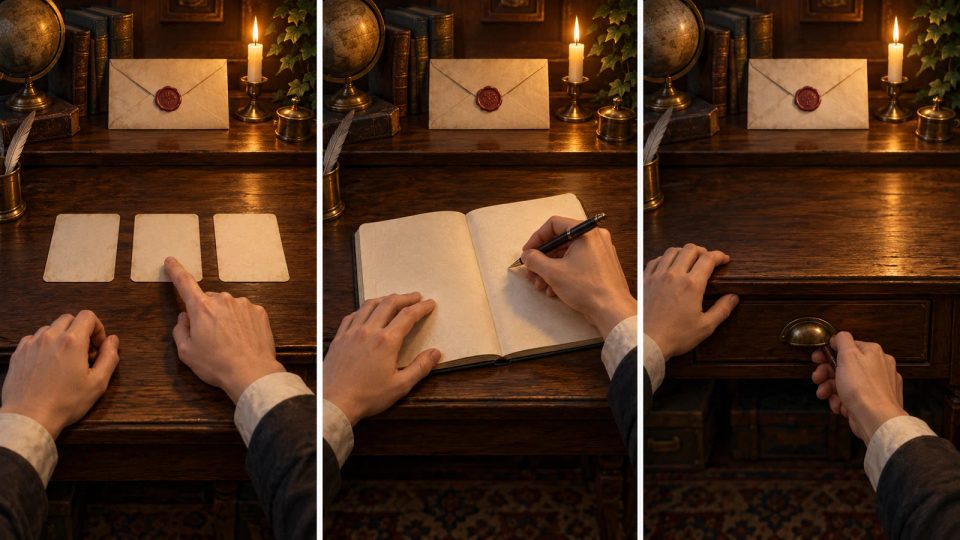
Original text-free cinematic illustration: one sealed letter sits on an archive-room desk. Three sets of hands point to blank choice cards, write in a text-free notebook and hold a drawer handle beside the letter, showing three forms of participation. No real product interface.
Interactive Game Basics2026.10.13

Does an Interactive Game Need Choice Buttons? Compare Three Input Methods

Choosing a line, typing an action and manipulating objects can all express the intent to collect a letter. A comparison card shows what each accepts and distinguishes successful input from successful action.

DramaFork Editorial Team13 min read
Continue reading
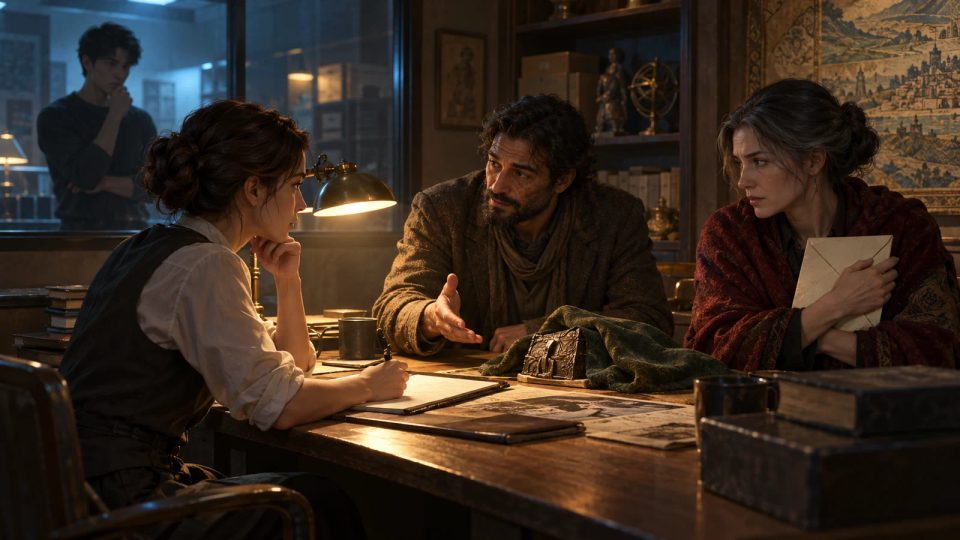
Original cinematic illustration without text: an investigator and two witnesses sit apart at an archive-room table; a young observer stands outside translucent glass. An envelope and partly obscured evidence suggest known and unknown information. No supernatural abilities; not a product screenshot.
Interactive Game Basics2026.10.13

Who Makes Decisions in an Interactive Game? Your Clues Are Not Automatically the Protagonist’s

A camera revealing a secret to you does not make the protagonist aware of it. A fictional scene with two witnesses and one investigator separates control, action and knowledge, with a card for checking current options.

DramaFork Editorial Team14 min read
Continue reading
Original cinematic article illustration: under warm lights in a quiet museum, one visitor faces book pages, a small projection, and a box of puzzle fragments; another watches the projection. Reading, viewing, and handling coexist. No readable text in any medium.
Interactive Game Basics2026.10.13

Interactive Game, Interactive Story, and Interactive Fiction: What Players Do

Text, video, and images tell you how content is presented, but not what players do. Four versions of one fictional museum distinguish reading controls, story participation, and rule-based tasks. An observation card describes how they overlap.

DramaFork Editorial Team15 min read
Continue reading
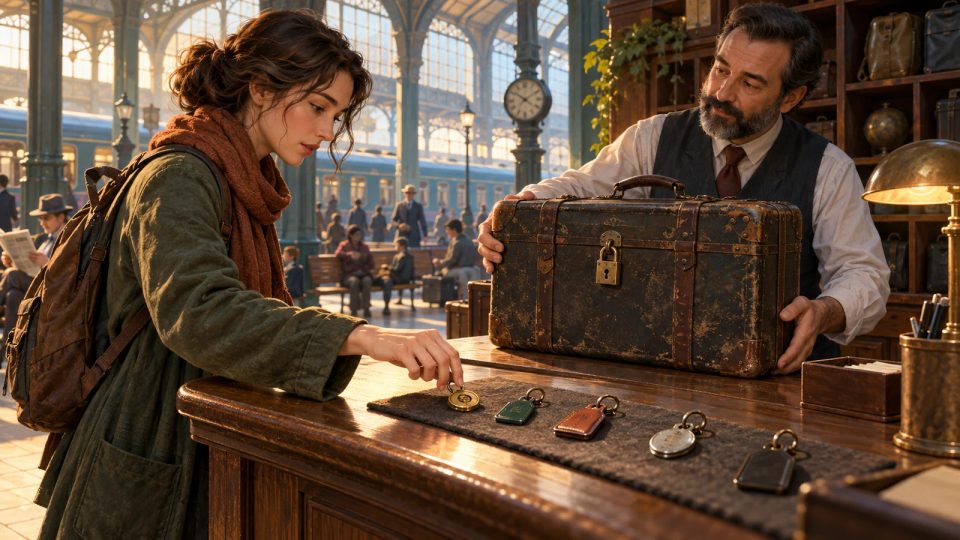
Original text-free cinematic illustration: a young traveler selects a key tag at a station lost-property counter as an attendant turns a locked old suitcase toward her. A waiting hall is visible behind them; physical actions suggest choices, limits and responses. Not a product screenshot.
Interactive Game Basics2026.10.13

What Is an Interactive Game? Separate Playback Controls from In-Game Actions

Pausing, selecting a key tag and submitting a claim all use buttons, but involve different kinds of participation. A fictional station lost-property case uses input, rules and feedback to distinguish controlling viewing from acting within the game.

DramaFork Editorial Team15 min read
Continue reading

Blog categories

  • All500
  • Creation tutorials40
  • Interactive narrative60
  • Getting started11
  • Galgame Route Design25
  • Visual Novel Production25
  • Interactive Fiction Design25
  • Narrative Design for Interactive Film Games25
  • Interactive Film Accessibility10
  • Interactive Film Workflow10
  • Interactive Game Basics10
  • Interactive Film Presentation and Delivery10
  • Interactive Film Localization10
  • Interactive Film Production10
  • Narrative Mechanics11
  • Creative Collaboration11
  • Getting started1
  • Fictional Case Study10
  • Story Localization10
  • Mobile and Accessibility10
  • Acting and Staging10
  • Exploring Time and Space10
  • Relationships and Groups10
  • Resources and Constraints10
  • Information and Commitments10
  • Production Practice59
  • Product workflow34
  • Choosing tools33

From a story to a playable world.

Start with one story decision

Create a project