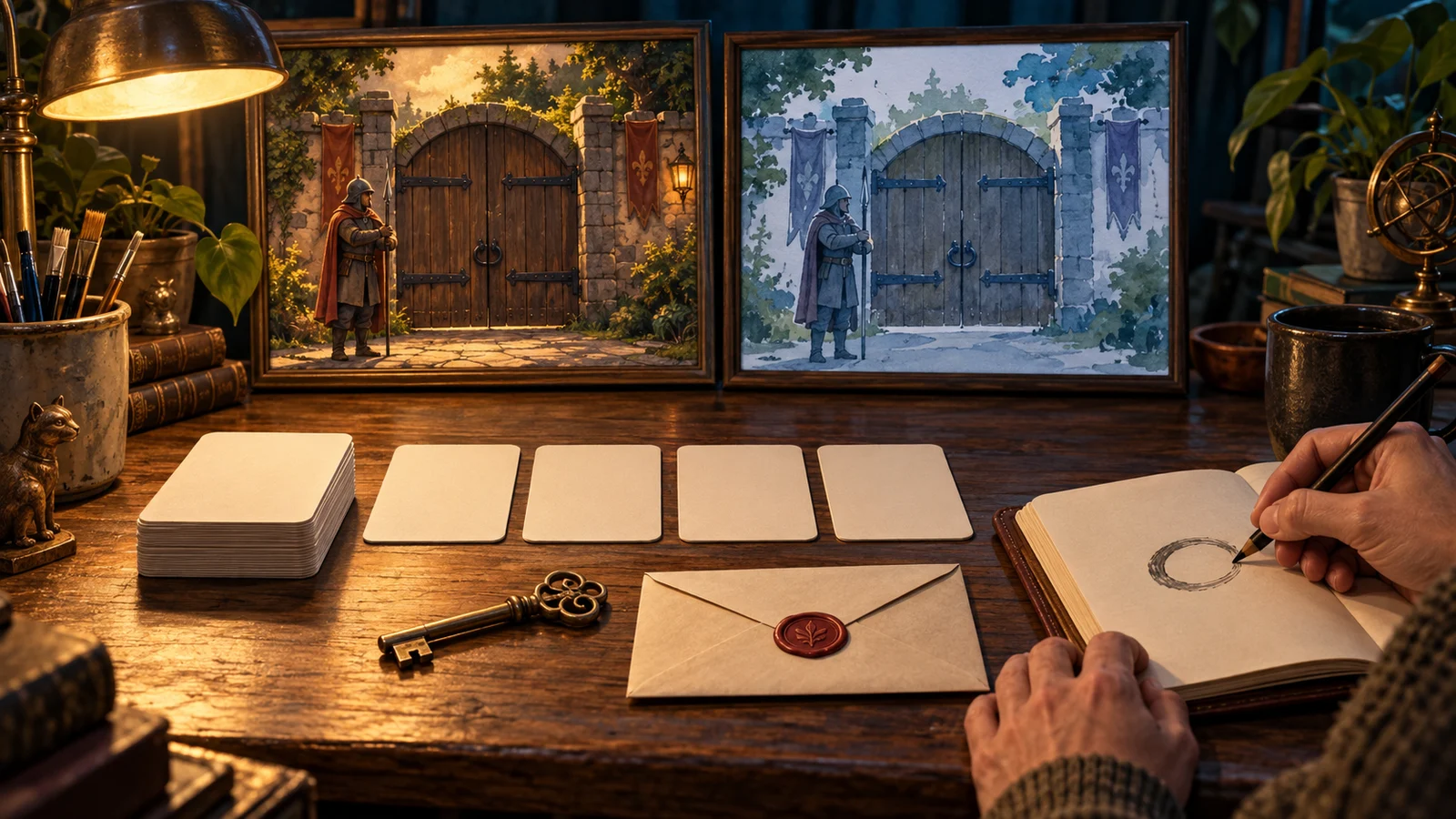
Interactive Game, Interactive Story, and Interactive Fiction: What Players Do
Text, video, and images tell you how content is presented, but not what players do. Four versions of one fictional museum distinguish reading controls, story participation, and rule-based tasks. An observation card describes how they overlap.
Introduction
To understand the relationship between an interactive game, an interactive story, and interactive fiction, first ask what participants do and how the work responds. Then consider whether it uses text or visual media. These labels can overlap; every work need not fit one exclusive category. “Interactive game” is a broad working term, not a universally agreed separate genre. Most games already involve interaction. This series focuses on narrative examples without excluding action games or puzzles.
Labels offer clues; actions explain the experience
“Interactive story” usually emphasizes how participation affects a narrative’s unfolding, viewing order, or characters’ situations. “Interactive fiction” often refers to works in which text is an important expressive foundation and readers operate something to participate. It can include command input, exploration, and puzzles. There is no universally applicable boundary between them. Plenty of text does not mean little gameplay; video does not mean watching is the only activity.
Record four things separately to understand a work: how the story is expressed, what participants can do, what goals it invites them to achieve, and which rules constrain those actions. The first two concern media and interaction. The latter two describe playable tasks, but they are not a universal test of every work’s identity.
For example, “click to enlarge an exhibit photo” describes a viewing method. “Find the exhibit that was swapped in the photo” describes a goal. “Submit a judgment only once” adds a rule. The same click can perform entirely different work. Button counts cannot replace these descriptions.
One museum can have four presentations
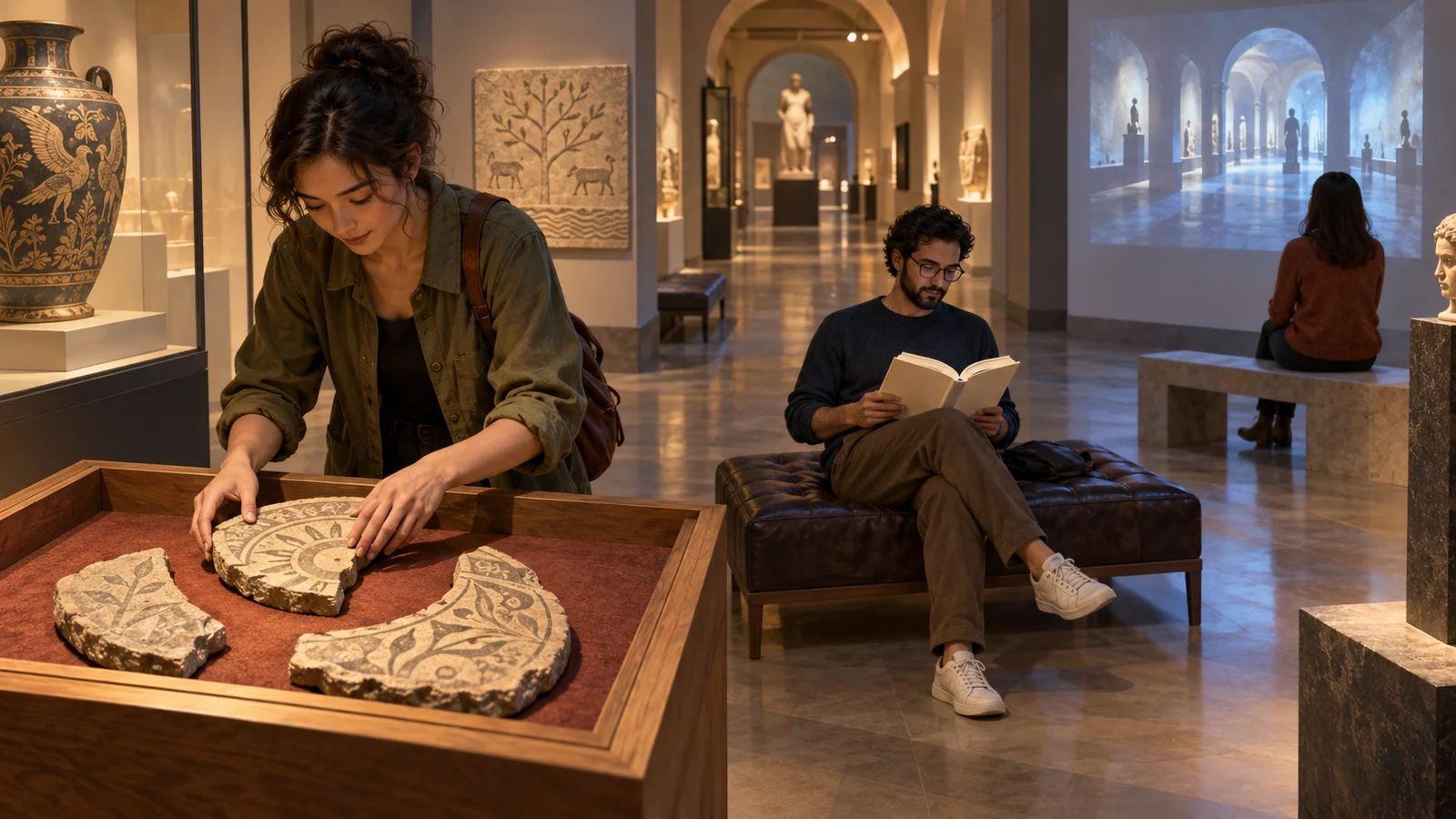
“Dusk Light Museum” and its lost-item search below are fictional teaching designs, not real user cases, tested outcomes, or existing product features. They share a premise: before closing, a visitor notices her moon-shaped brooch is missing, with several clues left in the gallery.
| Presentation | What participants actually do | Where the response occurs |
|---|---|---|
| Video tour | Play, pause, and scrub while watching how the item went missing | Playback position changes; the character’s experience does not |
| Choose-your-exhibit tour | Click pages, projections, or photos to choose the order of learning | Read material and information order change |
| Branching text story | Act for the owner, choosing to ask the custodian or the companion first | Subsequent dialogue and character reactions change |
| Lost-item task | Compare records, assemble a pattern, and submit the brooch’s location | Rules judge whether the answer is right and provide feedback |
The first has controls, but pausing the film does not make the owner inside the story stop walking. The second lets readers explore material freely without necessarily providing a lost-item task. The third can be described as both an interactive story and interactive fiction; with explicit tasks and rules, it can also be introduced as a game. The fourth can be a puzzle experience even if mostly completed through text.
These are contrasting designs for one subject, not a ladder from inferior to superior. Quietly watching a tour may fulfill the creative purpose. Do not force in choices merely to obtain a label.
Replace genre guessing with an action observation card
Copy this card for any work. Fill it in for one specific experience first, then decide what the description should emphasize.
Presentation: What do I read, see, or hear? Action: What can I inspect, choose, enter, or operate? Response: Does the action change playback position, known information, a character’s situation, or task state? Goal: What does the work require or encourage me to accomplish? If no explicit goal is given, say so. Rules and feedback: Which actions are valid? How are results judged or presented? Provisional description: This experience uses __, lets me __, and responds through __.
Avoid writing only “affects the plot” or “increases immersion.” Write “asking the companion reveals when he left the gallery,” so others can judge the nature of the effect. If an introduction says only “your choices decide everything” without showing a process, mark the response as “insufficient material; not yet clear.” Do not invent branches for it.
Distinguish tasks arranged by the work from readers’ self-imposed wishes. Wanting to remember every exhibit does not mean the tour includes a memory challenge. Describe corresponding rules only if the task is actually arranged. The card describes experiences accurately; it does not issue certificates deciding what qualifies as a game.
Fill in the search, then complete one judgment
Give the fourth design specifics: an entrance photo shows the visitor wearing the brooch on arrival. A storage record says she later checked her coat. Assembled fragments reveal the brooch alongside the coat lining’s pattern. The table offers three locations to submit: “bench,” “beside the display case,” and “checked coat.” The teaching example’s answer is the checked coat.
Enter “written records, photos, and movable fragments” under presentation; “inspect material, rotate and assemble, submit a location” under action; “pattern revealed, then feedback on correctness after submission” under response; “locate the brooch” under goal; and “material can be reviewed repeatedly; a wrong submission allows further judgment” under rules. Beginners can already understand how to play without debating the label first.
Walk through once: use the entrance photo to rule out loss before arrival, assemble the lining pattern, and combine it with the storage record to choose the coat. Correct feedback can show a short clip of the brooch being removed from inside the coat, answering the preceding judgment. Choosing the bench first gives “This judgment does not yet explain the lining pattern,” then returns to the material page to continue searching.
The pattern clue is designed for this exercise; it does not simulate a reliable real-world method of finding lost objects. Without the connection between pattern and storage record, the three locations could become answer guessing. If wrong-answer feedback names the correct location outright, comparing material is weakened too. The issue is the relationship between evidence, action, and feedback, not visual polish.
A different purpose needs a new description of the boundaries
If the purpose is simply to introduce the collection, keep free viewing, remove the lost-item task, and call it an explorable museum tour. To portray the owner’s relationship with the companion, let “who to ask first” alter the tone of dialogue while the brooch is ultimately still found in the coat. One ending does not mean the process lacks narrative response, but the introduction cannot promise different lost-item endings on that basis.
Conversely, a rule-based task can exist even if solving the puzzle always plays the same video. An absence of story branches does not automatically remove gameplay. Dodging in action games and arranging pieces in puzzles need not become character decisions to work.
Another mistake is presenting page-turn buttons as story decisions. If “continue” only reveals the next page, describe reading progression honestly. If readers choose which display to investigate and learn different information first, interaction does exist; its effect is mainly on the exploration path.
For hybrids, write directly: “A lost-item puzzle presented through text and short clips, with free access to material and dialogue choices when questioning characters.” This states media, actions, and tasks together, helping readers decide whether to try it more than an isolated genre label does. Names may overlap; the concrete experience should still be clear.