Reduced motion for interactive film: redesign transitions, shots, and choice feedback
Create a reduced-motion mode by separating essential from decorative movement and preserving route information through stable transitions, static feedback, and flash review.
Introduction
Reduced motion is not every animation at half speed. Identify interaction-triggered movement that can cause discomfort and provide an alternative that keeps the information. Interface transitions, camera language, and choice feedback need one review.
Interactive film accessibility cannot be reduced to a subtitle check before launch. The choice interface, playback controls, branch state, and media content form one complete journey. If any layer cannot be perceived, operated, or understood, a viewer can lose the means to continue. WCAG 2.2 defines the principles of perceivable, operable, understandable, and robust web content. This article translates relevant guidance into a production method for interactive film. It does not claim that following one article proves conformance; teams still need to confirm platform, market, and user-testing requirements.
Write an experience promise that can be accepted or rejected
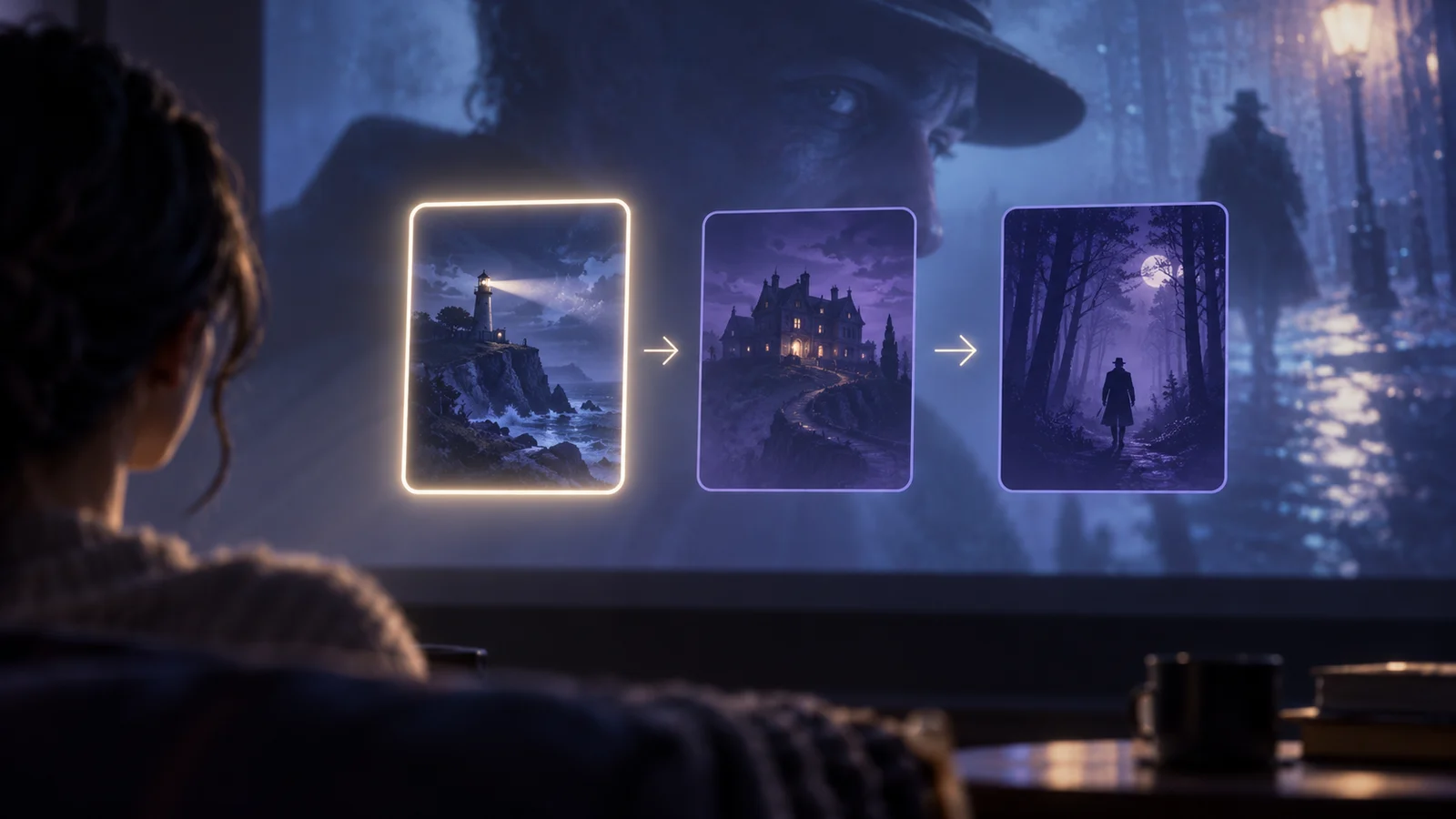
After H03 selects the lighthouse, the interface flies through a rotating tunnel and a handheld shot rapidly searches for a signal. Disabling web animation does not remove movement inside video, so interface preference and media assets need separate treatment.
The examples use a fictional short film, The Letter from Fog Harbor. A viewer investigates a swapped letter at night and chooses among a warehouse, a waiting room, and a lighthouse. All people, routes, test records, and asset IDs are original teaching material. They are not real user research, completed test results, or automatic DramaFork features.
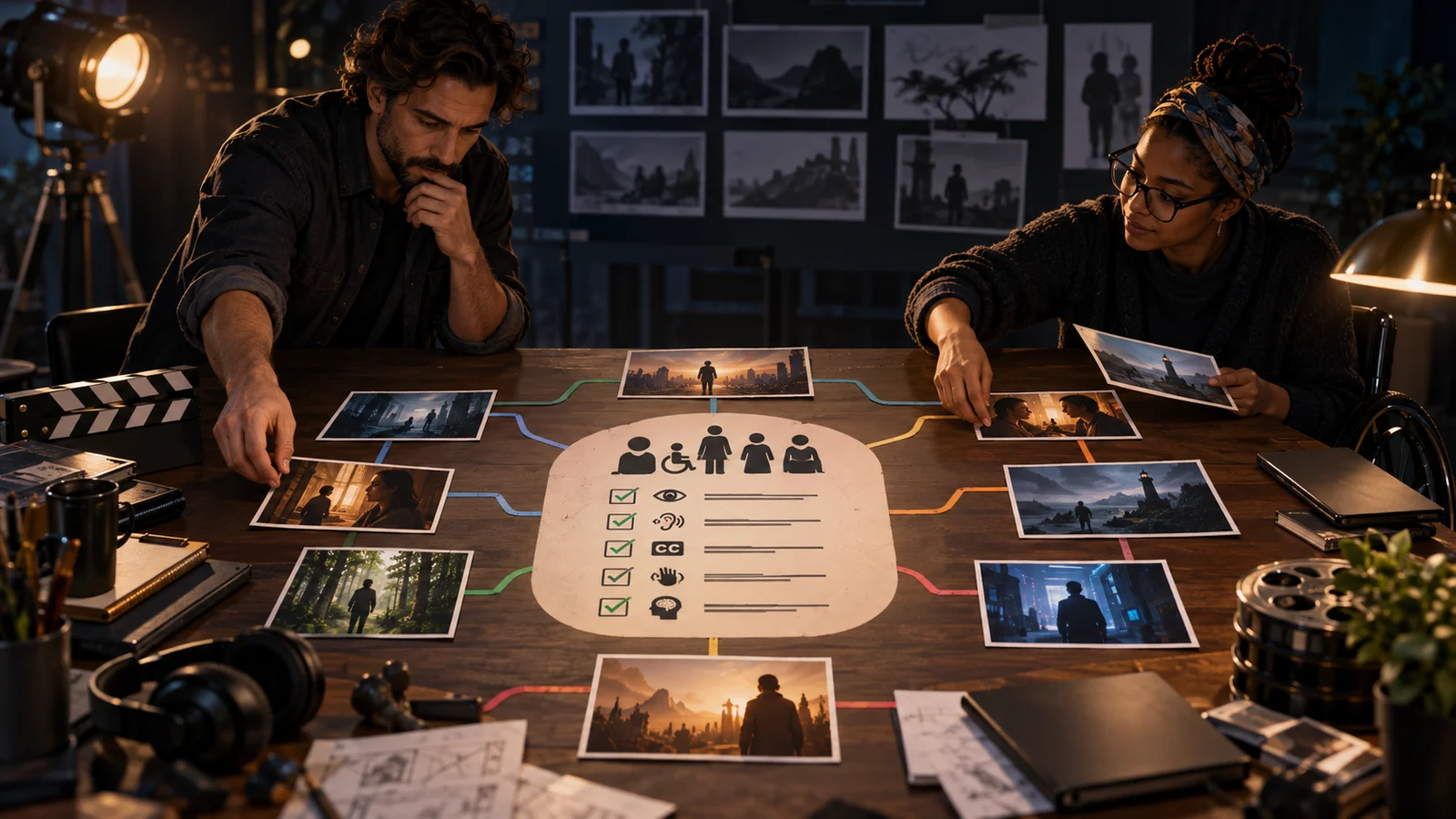
Start with one experience promise and one failure condition. The promise names who must complete which task, on what device, and under what condition. The failure condition identifies the point at which release must stop. “A keyboard-only viewer can complete every choice” is testable; “keyboard friendly” is not. Classify motion as narratively essential, directional, or decorative. Keep the result of essential action but replace large zoom, parallax, and rotation with dissolves, stable frames, or concise explanation. Offer an alternate cut or warning for intense movement embedded in footage.
Connect requirements, implementation, and evidence
| Field | Question | Evidence |
|---|---|---|
| Viewer task | What must the viewer perceive, decide, or control? | A concise task and context |
| Interaction rule | Does the default and alternative path reach the same result? | Input, focus, timing, or presentation rule |
| Branch effect | Do settings, backtracking, and re-entry preserve story state? | Entry, exit, and retained-state record |
| Acceptance | Who tests which device, and where does a failure return? | Route ID, action log, and owner |
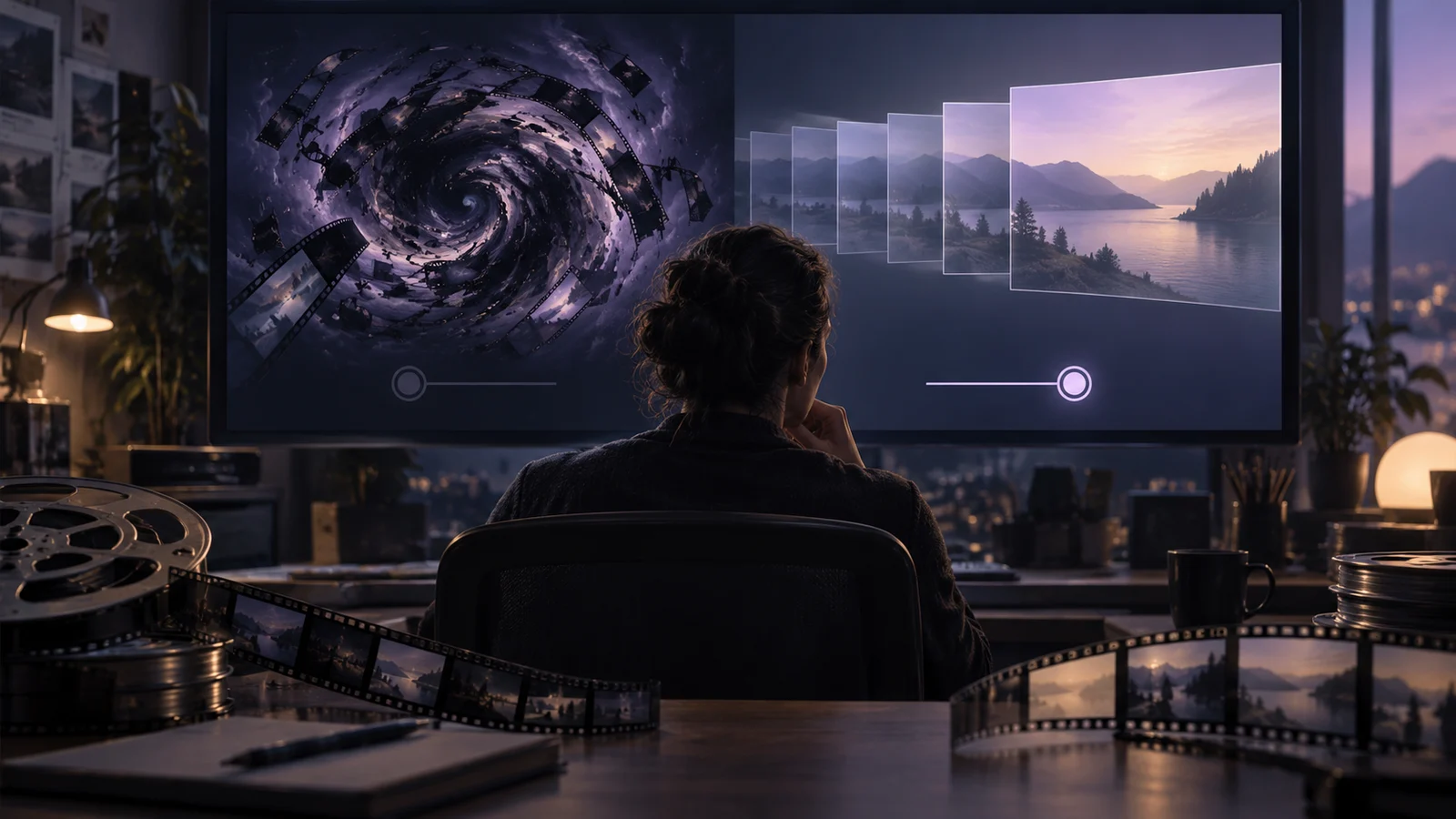
Default H03 rotates into the lighthouse; reduced mode dissolves to a stable wide shot. Both write destination=lighthouse and start H04 with the same line. The setting is available before the choice and does not require replaying the previous segment.
All four fields must refer to the same version. Updating a mockup without the route record makes it impossible to tell whether an old defect is fixed. Updating code without the experience promise turns “the control responds” into a false claim that the viewer understood it. Editorial, interaction, engineering, and QA are accepting a repeatable journey, not a screenshot.
Put the requirement into the production workflow
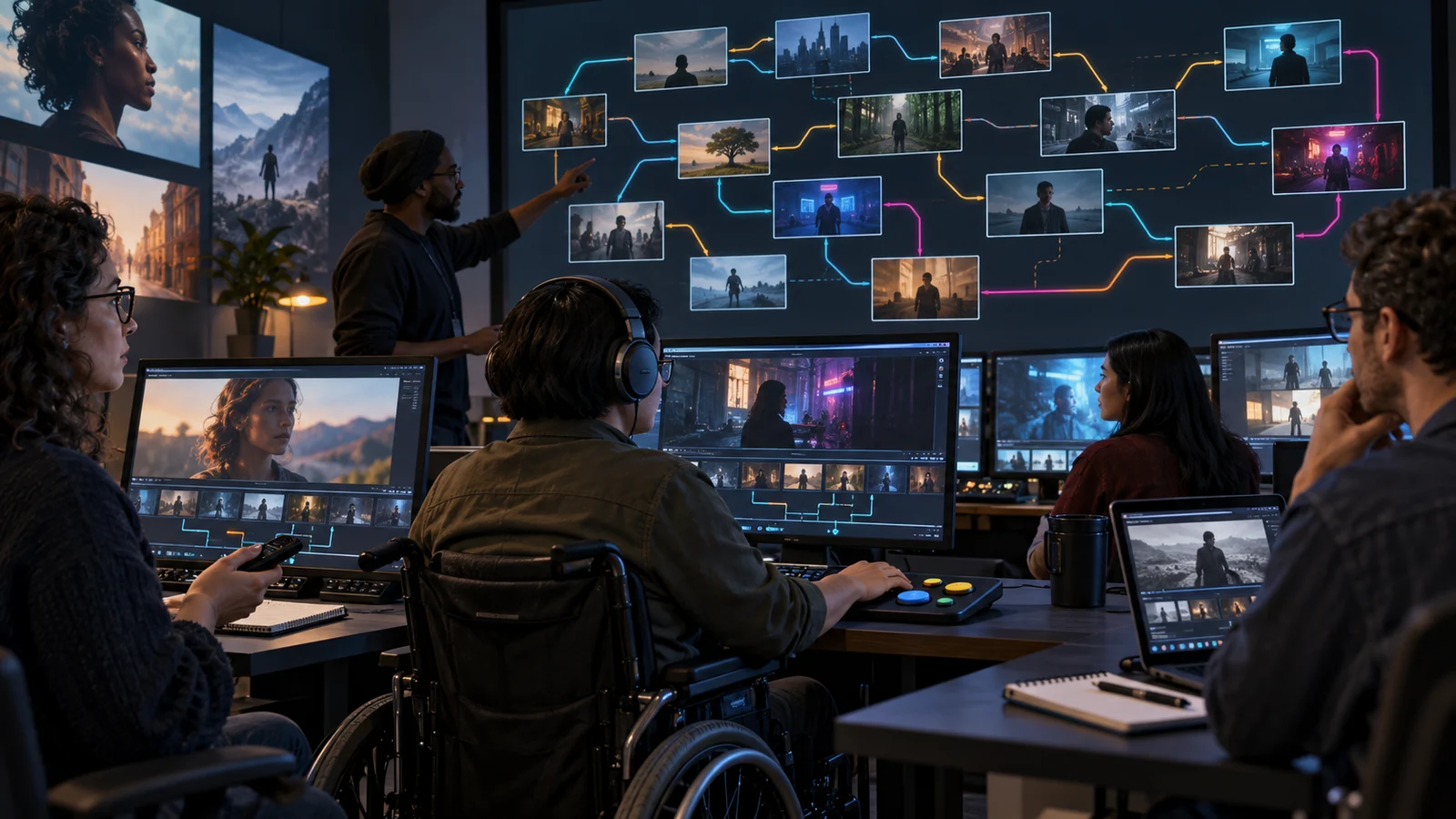
First, inventory the main route, short route, backtrack route, and no-input route. Mark every choice, playback control, and essential piece of information. Second, give each task a default and an alternative method that reach the same narrative result. Third, bind the rule to stable scene IDs, asset IDs, and state fields so that copy edits do not destroy traceability.
Fourth, test cheaply before polishing: complete a route by keyboard, at enlarged text size, with motion reduced, and after pausing and returning. Fifth, run cross-device and assistive-technology checks while recording steps, expected results, actual results, and evidence. Maintain a motion inventory with trigger, screen coverage, duration, flashing, and alternate asset. Test system preference and in-product setting end to end. Rapid repeated input must not stack transitions or reactivate motion that was disabled.
A useful record does not say “looks fine.” It says: “Enter at H02, enable the alternative setting, choose the left action, verify clue_letter=true, and confirm that H03 acknowledges it.” That record covers entry, action, feedback, and exit. When it fails, the team can locate the fault in input, presentation, or narrative state.
Most failures occur at system boundaries
Using only a CSS preference while ignoring video leaves the strongest movement. Removing animation and its accepted-choice feedback leaves uncertainty. Replacing movement with frequent white flashes can create another hazard.
Accessibility controls also fail when they are buried in a settings page that an affected viewer cannot reach. Provide a discoverable entry at launch, at the first choice, and in the pause menu. A changed preference needs immediate perceivable feedback and must remain active at the next node. If it disappears after reload, fix it or disclose the limitation before release.
Automation can flag missing names, some contrast problems, and some focus defects. It cannot decide whether choice copy is understandable, whether audio description spoils another branch, or whether pausing breaks narrative comprehension. Route testing and participation by disabled users remain essential. Return content defects to editorial, media defects to sound or post-production, state defects to engineering, and scope conflicts to the accountable owner.
Release gates must cover the complete process
Every nonessential interaction-triggered motion has an available alternative; alternatives retain information, state, and exit; preference persists; no stacked transition, unexpected flash, or motion-only cue remains.
The minimum release packet contains the feature scope, route inventory, preference defaults, interface copy in all five locales, devices and input methods tested, known limitations, defect owners, and one end-to-end record from opening to ending. W3C sources provide standards and explanatory guidance. The tables, node labels, and fictional case here are an editorial method, not a mandated W3C template.
Reduced motion cannot meet every vestibular, migraine, or photosensitivity need. Review flash thresholds, autoplay, and camera content separately and involve affected users in testing.
For the final check, ask someone outside the production team to reproduce the experience from the record. If they still need to ask what to press, how much time remains, what a cue means, or where a resumed session begins, the handoff is incomplete. Write the answer back into the rule and its evidence before publishing.
Sources: W3C Understanding SC 2.3.3: Animation from Interactions; W3C WCAG 2.2.