Clues Without Sound: Writing Useful Descriptions of Sound Cues
“A knocking sound is heard” establishes that a sound exists, but does not convey the clue. Use a sound-cue description card to preserve the perceptible source, rhythm, changes, and uncertainty, so players reading with the sound off can compare evidence while retaining room to reason.
Start with sound facts players can compare
If three short knocks followed by one long knock affect a choice, the text must describe that pattern. “A sound is heard” is not enough. A useful description should answer: Which direction does the sound come from? What sequence does it follow? What changes when it repeats? Which parts remain indistinct? Identity, intent, and the meaning of any code should be left to later evidence.
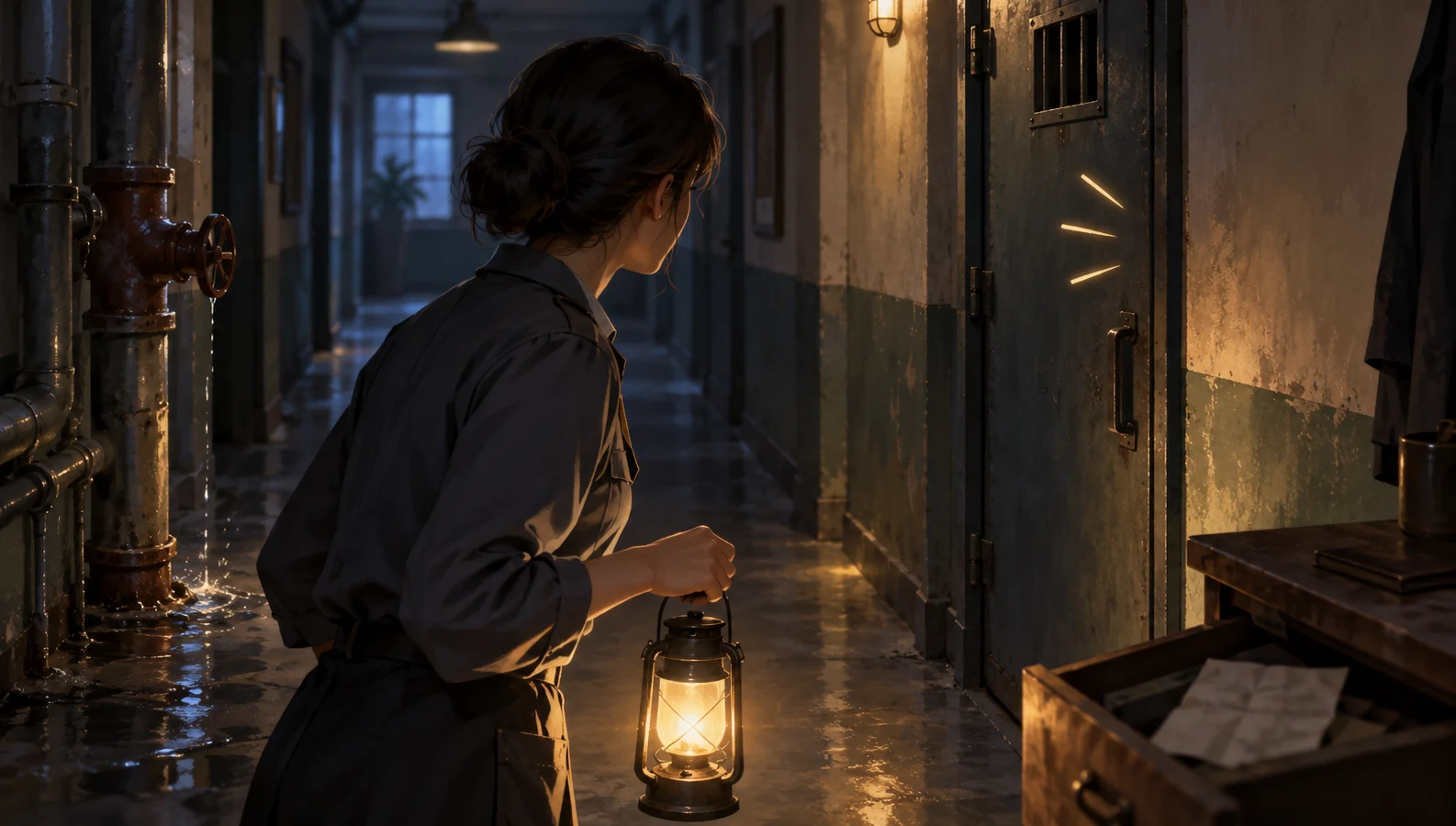
Here is a usable draft: “Three short knocks come from the direction of the iron door on the right, followed by a knock whose resonance lasts noticeably longer. After a pause, the same sequence occurs again.” It provides direction, sequence, differences in duration, and repetition without deciding who is behind the door.
This article uses the fictional teaching example The Last-Shift Archive: an attendant stands in a corridor, with an iron door on the right and water pipes on the left. The player must decide where to investigate next. The characters, setting, sounds, and branches are original teaching material, not a real user case, measured results, or a description of any product features.
Where the requirement applies, prerecorded audio-only content must have an equivalent alternative. Explanation of the relevant criterion. The following addresses how to describe narrative clues in text; it cannot establish that an entire work meets accessibility standards.
Use a sound-cue description card to separate source, pattern, and interpretation
Write an internal card before drafting the sentences players will read. The card helps writers check which audible differences affect a decision, so they do not overlook a crucial beat while writing for atmosphere.
| Field | Entry for this example | Writing constraint |
|---|---|---|
| Perceptible source | Direction of the iron door on the right | State only the discernible direction; do not identify who is making the sound |
| Sound quality | Knocking like hard objects striking together | Do not invent a specific tool |
| Pattern | Three short knocks; the fourth has longer resonance | Distinguish the number of knocks from their duration |
| Repetition and intervals | The original sequence returns after a pause | Do not count the pause as a sound |
| Subsequent change | The knocking becomes clearer on approach | Do not directly infer that the sound has grown louder |
| Limits of discernment | The space behind the door has not been seen | Preserve uncertainty about the source |
| Interpretation to withhold | Someone is asking for help using an agreed code | Keep this in the author’s notes |
“Long” needs particular care here. A knock itself is brief; “one long” might mean longer resonance or a longer pause after the knock. Those are different patterns. This example explicitly uses longer resonance. If a longer interval was intended, write “Three knocks follow at short intervals, then another sounds after a longer pause,” and make the sound design match the text.
A reusable structure is: “From [discernible direction or confirmed source] comes [sound quality]; [number, sequence, and intervals]. [When it occurs again or the position changes], [observable change].” There is no need to fill every field mechanically. If nothing changes, do not invent a change. When the direction cannot be determined, say so directly: “Knocking is heard in the corridor; its direction is hard to make out.”
Present the same clue across three stages of discovery
The Last-Shift Archive introduces the sound with the full description at the beginning of this article. The available actions are “Approach the iron door on the right,” “Inspect the water pipes on the left,” and “Stay here and observe.” The text gives players grounds for acting without marking any option as correct.
After the player approaches the iron door, provide new information:
The knocking is clearer beside the door: the first three knocks are short, and the fourth has longer resonance, in the same sequence as before. After the knocking stops, intermittent dripping can still be heard on the left.
This passage separates the two sounds and adds details discernible at close range. “Clearer” describes a change in perception at the current position. “The person behind the door knocks harder” adds a person and intent, so it is not interchangeable. If the story provides no evidence that the force has changed, do not write “The knocking grows more urgent,” either.
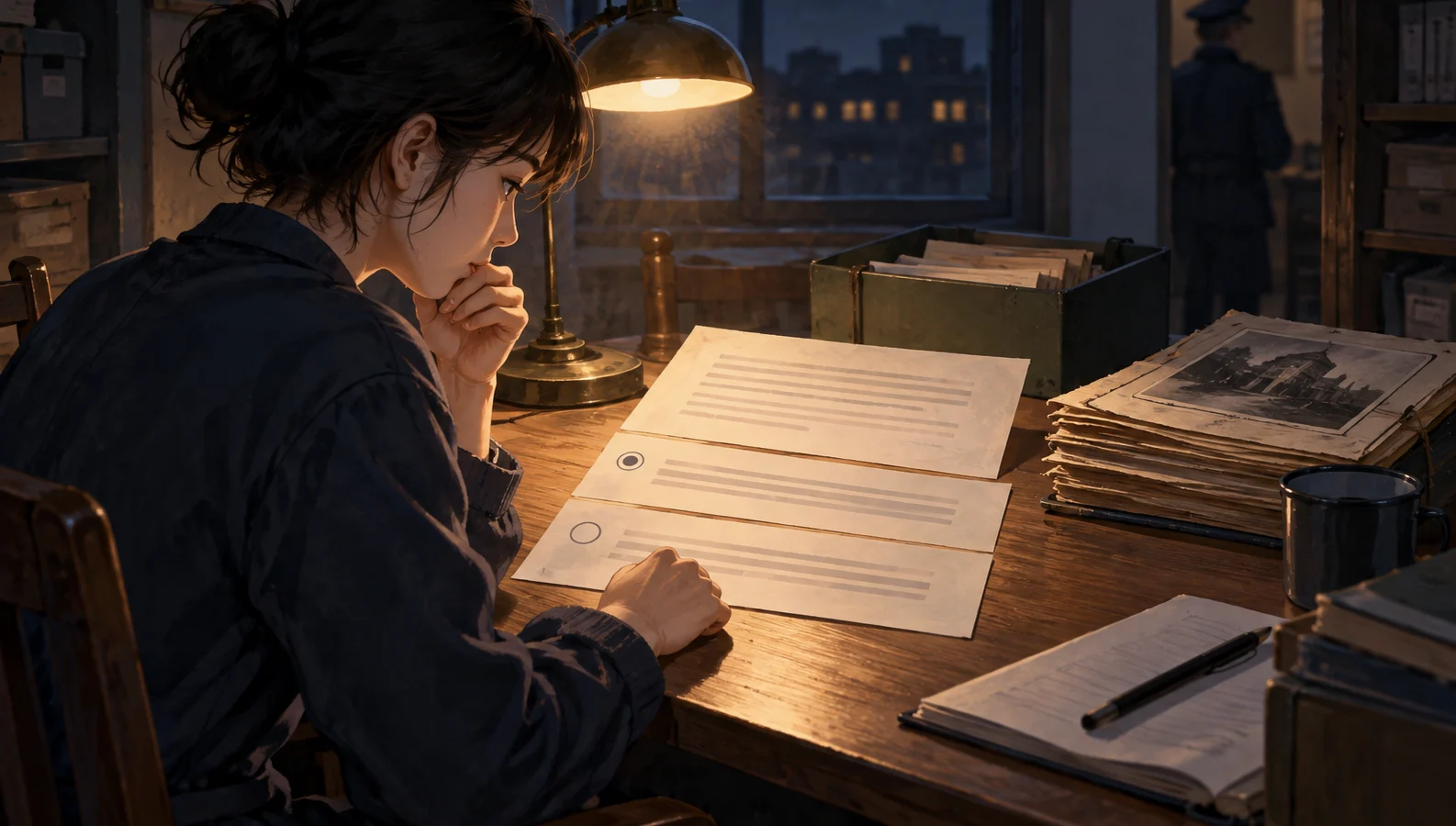
Later, the player opens the attendant’s drawer and finds a note reading “Door test: short, short, short, long.” The note and the earlier sound record can now be shown side by side for comparison. Keep the sound description unchanged rather than renaming it a “distress code.” The note refers to testing the door and is not enough to establish the knocker’s identity.
A complete line of reasoning might be: “The sound on the right follows a fixed sequence, so I’ll go to the door first. The sequence is unchanged up close, so I’ll check the relevant records. The note resembles the rhythm, but I still need to find out who left it.” This is a fictional reasoning demonstration, not test feedback. It illustrates the judgment process the text should support while leaving other explanations open, such as a mechanical device happening to repeat the same rhythm.
Choose the level of detail the puzzle requires
If the choice depends only on the sequence of short and long sounds, “Three short knocks, followed by one with longer resonance” is enough for the main text. If two possible signals differ only in their final sound, each element must be described explicitly; they cannot be condensed into “a series of rhythmic knocks.” The required detail depends on what the player needs to distinguish.
If a puzzle depends on precise intervals, define the relationships between those intervals in the design document first, then provide wording that allows comparison. Specific numbers of seconds are appropriate only when the work actually supplies a measurable timing reference. Do not attach seemingly precise figures to indistinct sounds. If the task also requires actions performed to a rhythm, a description addresses only access to information; the interaction method still needs separate design.
“Tap, tap, tap—thud” can supplement a description, but cannot carry the clue alone. A dash could mean a prolonged sound, a pause, or a decorative typographic choice, and “thud” does not necessarily explain what lasts longer. Likewise, four flashes or several vibrations do not inherently convey resonance or source. When using these alternatives, explain which distinctions they represent.
On mobile, the initial description can be split into two sentences so direction and rhythm are not crammed into one line. If you provide a record players can revisit, preserve the complete pattern and add changes according to what the player has actually experienced. Title the record “Corridor Knocking,” not “The Person Calling for Help Behind the Door.” Titles are evidence players receive, too.
Use a silent walkthrough to find omissions and overreach
During review, set aside the audio and behind-the-scenes explanations. Read only the text currently available to the player, then answer three questions: Where might the sound come from? How would you describe its pattern? What is available to compare next? If you cannot answer, add concrete facts first. Do not tell players “This is important” to prompt them to guess the author’s intent.
Then work backward to check whether the text has already made any inference for the player. “A strange sound is heard” omits the pattern. “Someone knocks four times” assumes a human source. “The familiar distress rhythm sounds again” adds both prior recognition and an interpretation of distress. The respective fixes are to add the sequence, withdraw the identity assumption, and specify which part matches what came before.
Check two boundaries as well. If the character cannot distinguish the final sound within the scene, the text should also say, “The ending is masked by dripping; it is unclear whether it is short or long,” and provide a chance to discern it before the pattern needs to be established later. If listening clearly would reveal a distinction but the text deliberately obscures it, suspense has become missing information.
Keep three components with the submitted draft: the sound-cue description card, the staged descriptions, and the interpretations to withhold. Check each item to ensure sound and text convey the same set of facts on which players can base their decisions, then check whether the text gives away extra identity information or an answer. This review is for finding draft problems; it cannot replace evaluation in actual use. Its specific goal is to give players who are not listening the material they need to reason.