How can the final images reflect choices made along the way without relying on a closing voice-over?
Repairing the old radio station completes the task. Who sits at the microphone, who can take over, and who still has to wait reveal what the choices along the way have changed. Use an action mapping table to turn those decisions into three short final scenes.
Start by having someone use the repaired radio station
The ending should first answer two questions: who is using the old radio station, and how? Turn the player’s choices along the way into that person’s actions: picking up objects, operating equipment, and giving someone else the place at the microphone. A light coming on only proves that the machine works again. Someone sitting down, someone making room, or someone still waiting for the door to open shows what the repair has changed.
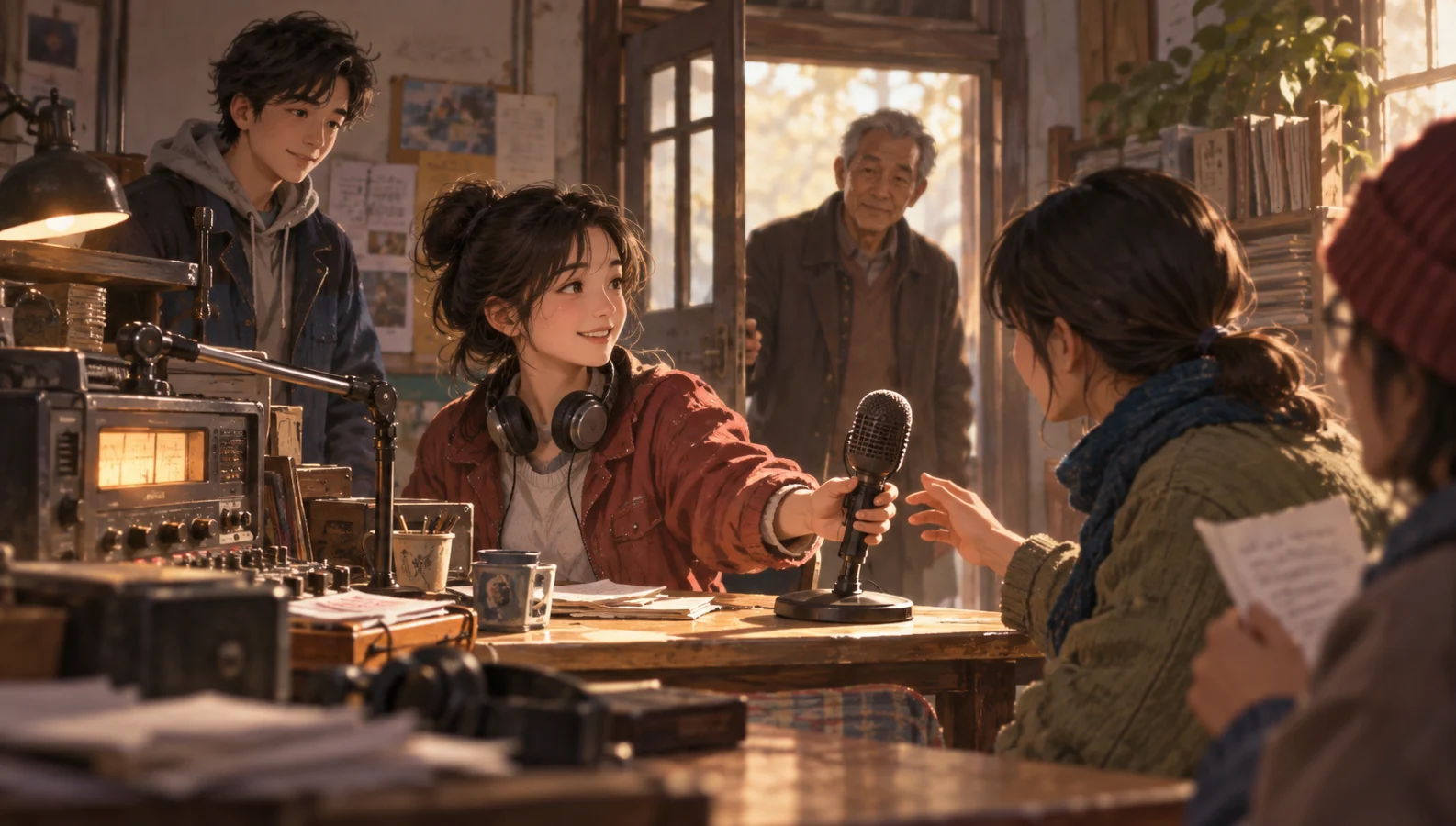
Do not rush to write, “From that day on, the town had a voice again.” Begin with something that can be filmed: Ahe finishes reading an announcement and turns the microphone toward the neighbor beside her. This action establishes who is using the station, how, and who comes next. A voice-over can then clarify the timing without having to explain everything the image means.
The old radio station, characters, and events below are fictional teaching examples. They are not real user cases, tested outcomes, or representations of DramaFork’s product features. All the connections are narrative designs for creators to adapt.
Record the repair process as evidence for the final scene’s actions
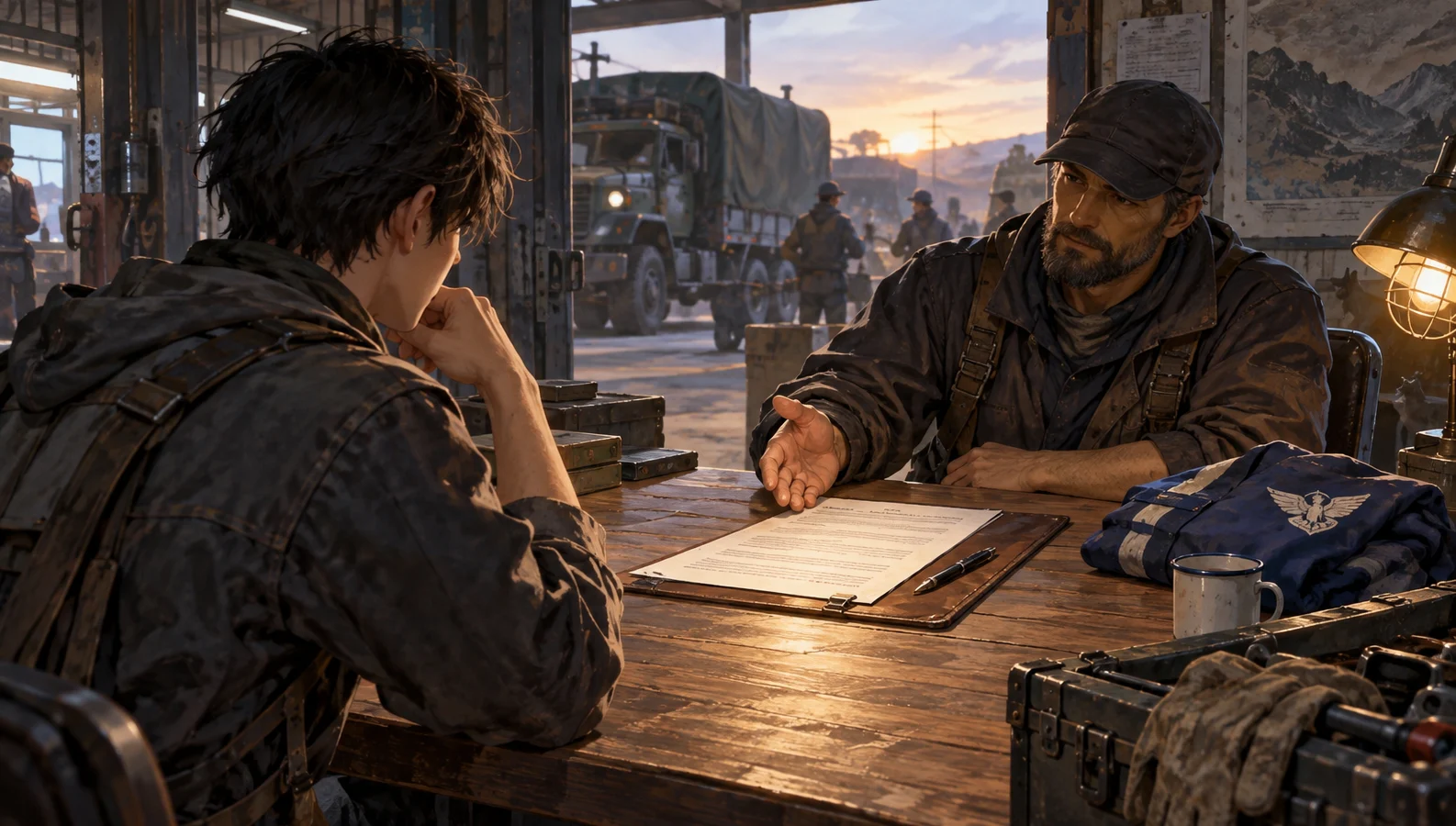
Suppose the player is Lin Cen, a repair technician helping Ahe restore a disused community radio station. Ahe has long wanted to broadcast messages from the neighborhood here; its former manager, Lao Zhou, still holds the door key. At the start of the story, Ahe slips a note through the locked door. Lao Zhou reads it out for her but does not let her touch the microphone.
Build three kinds of decisions into the repair process: who actually practices operating the equipment, what the repaired recording and playback unit is used for first, and who receives the key in the end. Each decision needs a concrete action. It cannot remain hidden in a line such as “support residents’ participation.” In particular, distinguish between “promising to teach Ahe” and “Ahe completing an operation on her own.” They support different endings.
Copy the following action mapping table and substitute your own characters and objects:
| Visible choice during the story | Evidence it leaves | Who does what in the final scene | What it does not establish |
|---|---|---|---|
| Let Ahe run a trial broadcast on her own while Lin Cen waits nearby | Ahe personally starts and finishes the broadcast | Ahe sorts the next message after finishing her broadcast | Every resident knows how to operate the equipment |
| Arrange for residents to take turns practicing message broadcasts | Neighbors have established an order and passed the microphone | Ahe hands the microphone to the next person | The station will never have disagreements |
| Keep the old programs and organize an index | Lao Zhou has used labels to find a recording | Lao Zhou chooses a tape, and Ahe checks its label before returning it to its place | Past divisions have disappeared |
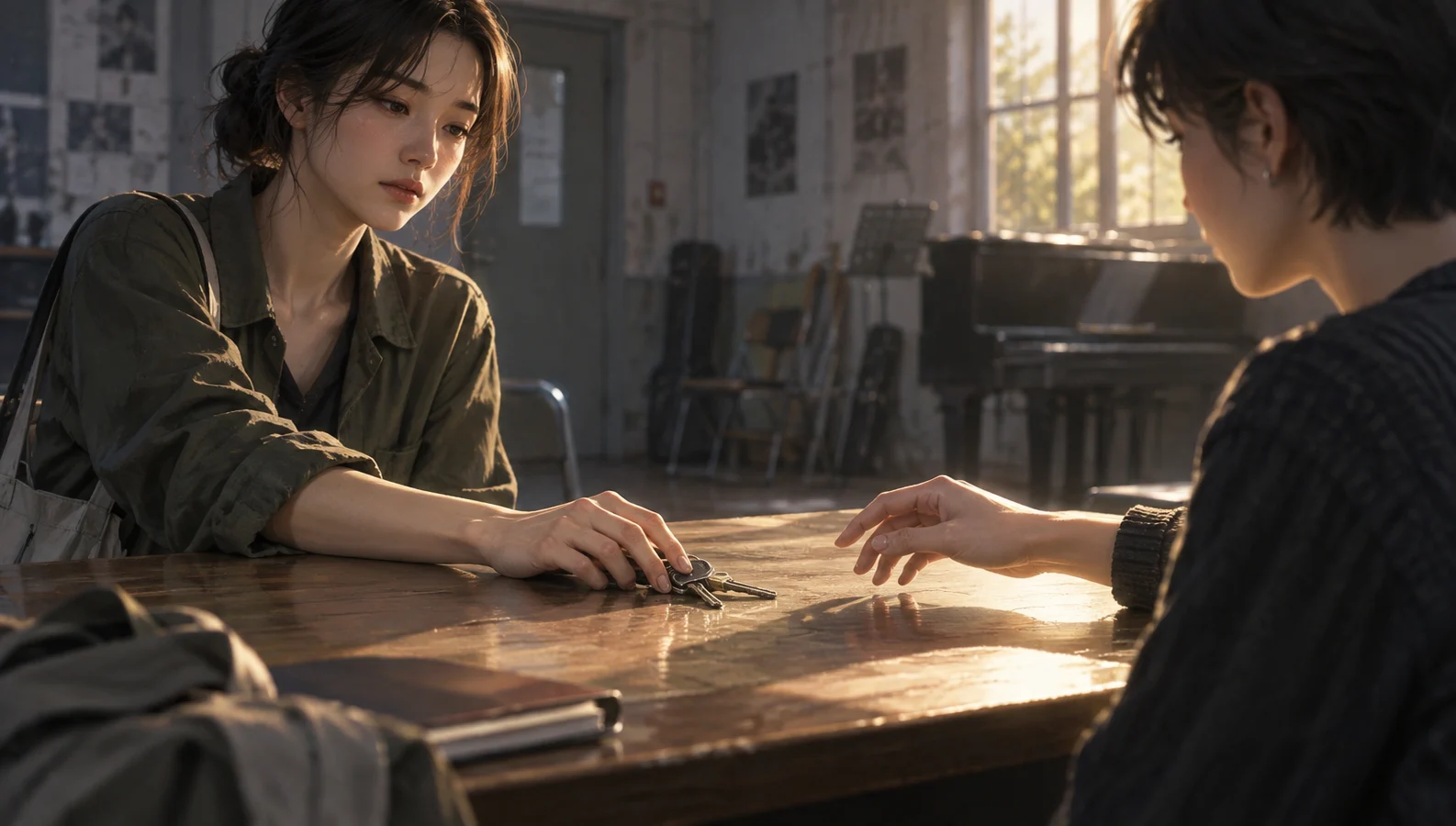
| Leave the only key with Lao Zhou | Ahe must still wait for him to open the door each time | Ahe enters only after Lao Zhou opens the door | Ahe can use the station whenever she wants |
Each row should connect one decision to one result. If “handing over the key” leads straight to a town-wide celebration, it skips over who organizes it, who participates, and whether people want to use the station. The ending then exaggerates the effect of that choice.
Write three short final scenes with the same opening shot
All three scenes begin with a shot from the doorway toward the same workbench, letting the changes appear through people and their actions. These are examples of three combinations of choices. They do not cover every route and are not ranked from good to bad.
Scene one: The microphone keeps passing from person to person. The prerequisites are that Ahe has completed an independent trial broadcast, the residents have practiced taking turns, and Ahe has received the key.
Ahe unlocks the door and pushes it open, then places a stack of messages beside the microphone. Lin Cen stands by the door without approaching the equipment. Ahe finishes reading an announcement about the shoe repair shop’s business operations. Her finger follows the note to its end, and she switches off the broadcast. A neighbor beside her raises their own note. Ahe moves her chair aside and turns the microphone toward them. The neighbor sits down. She reaches out and holds her hand beside the switch, waiting for them to press it themselves. Lin Cen lifts away the toolbox blocking the doorway. The final shot rests on the two notes lying side by side on the desk.
This scene shows that both operating the equipment and occupying the place at the microphone can be passed on. Ahe waiting for the neighbor to press the switch echoes the way Lin Cen waited while she practiced earlier. Removing the toolbox only means that this use of the station no longer needs the repair technician at its center.
Scene two: Someone is looking after the old voices. The prerequisites are that the old programs have been kept and indexed, Lao Zhou has taught Ahe to find recordings, and he has given her the key.
Ahe opens the door, and Lao Zhou follows her inside. He draws a cassette from a labeled case, resting his fingertip on the date. Ahe opens the index to the matching entry and puts the empty case at the corner of the desk. The opening of an old program plays. Lao Zhou raises a hand and lightly taps the desk in time with the familiar rhythm. When playback ends, Ahe does not follow it with her own message. Instead, she returns the cassette to its original case and puts it away with the label facing out. She pushes the index back between them, and Lao Zhou turns to the next page.
This scene shows the restored station being used to preserve and access recordings together. Ahe not broadcasting yet is an action chosen for this scene; it must not be expanded into a claim that she has abandoned her wish. If her wish has changed, that needs a separate decision earlier in the story.
Scene three: She can broadcast, but still has to wait at the door. The prerequisites are that Ahe has learned to operate the equipment and message broadcasts remain part of its use, but Lao Zhou still controls the key.
Ahe stands outside, smoothing her note. As footsteps approach, she takes half a step back. Lao Zhou unlocks the door. She follows him in and sits straight down at the equipment. She broadcasts the whole message on her own, removes her headphones, and looks toward the doorway. Another neighbor hurries over with a note, looking first at Lao Zhou and then at Ahe. With the key in his hand, Lao Zhou pauses, then steps aside to clear the entrance. Ahe pulls over a second chair. In the final shot, the key still dangles from Lao Zhou’s hand.
The equipment can work, Ahe can know how to use it, and entry can still require permission. All three can be true at once. Lao Zhou letting someone in this time does not mean he has given up control. Keeping the key’s location visible lets the ending show both an improvement and a remaining restriction.
With mixed choices, give each result its own action
If the player has taught Ahe to operate the equipment but leaves the key with Lao Zhou, the first scene cannot be used unchanged. Keep the middle section in which Ahe broadcasts independently, and replace the door-opening action with the one from scene three. Show her ability to operate the equipment at the desk and the conditions of entry at the door, so that neither result obscures the other.
If the player only repairs the equipment and gives nobody a chance to practice, Lin Cen can operate it in the final scene while Ahe hands over notes beside him. Do not suddenly have her start a broadcast with practiced skill. This version can still conclude the story, but it answers “the equipment works again,” not yet “someone else can take over.”
With limited locations or actors, you can also film details: one hand holds the key, another passes a message, and the microphone turns toward someone off-screen. But viewers must be able to recognize the characters from a previously established cuff, gesture, or voice. Close-ups of unfamiliar hands alone turn “who is using it” into a new mystery. If you need to establish a passage of time, add a brief caption while leaving the actual use to the actions.
Remove the summary and check how many answers the images still provide
Temporarily hide the voice-over and the ending’s name, then read only the action script. Can you identify the user, the purpose, and one limitation carried over from the story? Then change any key choice and see which final-scene action must change with it. If changing who holds the key makes no difference to how the door opens, that choice has not yet reached the ending.
There are three common failures: showing only a light coming on tells us the equipment’s status; showing everyone smiling conveys emotion but leaves the purpose unclear; repeating close-ups of old objects evokes memories without showing change. The respective fixes are to add someone using the equipment, show an operation being performed, and show different people accessing or using the old objects in different ways.
Keep one final boundary in mind: a single broadcast proves only that this broadcast happened, not that the community will live in harmony from then on. Break the judgment you most want to put in the summary into visible actions. Where the story provides no supporting evidence, narrow the conclusion or return to earlier scenes and supply it. Submit the action mapping table alongside the selected scene so that editing and performance have concrete earlier choices and actions to echo.