• Home
  • Blog
  • Gallery
  • Pricing
  • Home
  • Blog
  • Gallery
  • Pricing
Start creating

Creator blog

Better stories start here

Discover practical AI tools, interactive storytelling methods, and production lessons—from the first idea to a story people can play.

DRAMAFORKStories · Craft · Possibility
Topics
AllProduction PracticeProduct workflowInteractive narrativeCreation tutorialsChoosing toolsGetting started
201 articles

Editorial / 08

Latest articles

Practical methods for narrative structure, visual production, and everything in between.

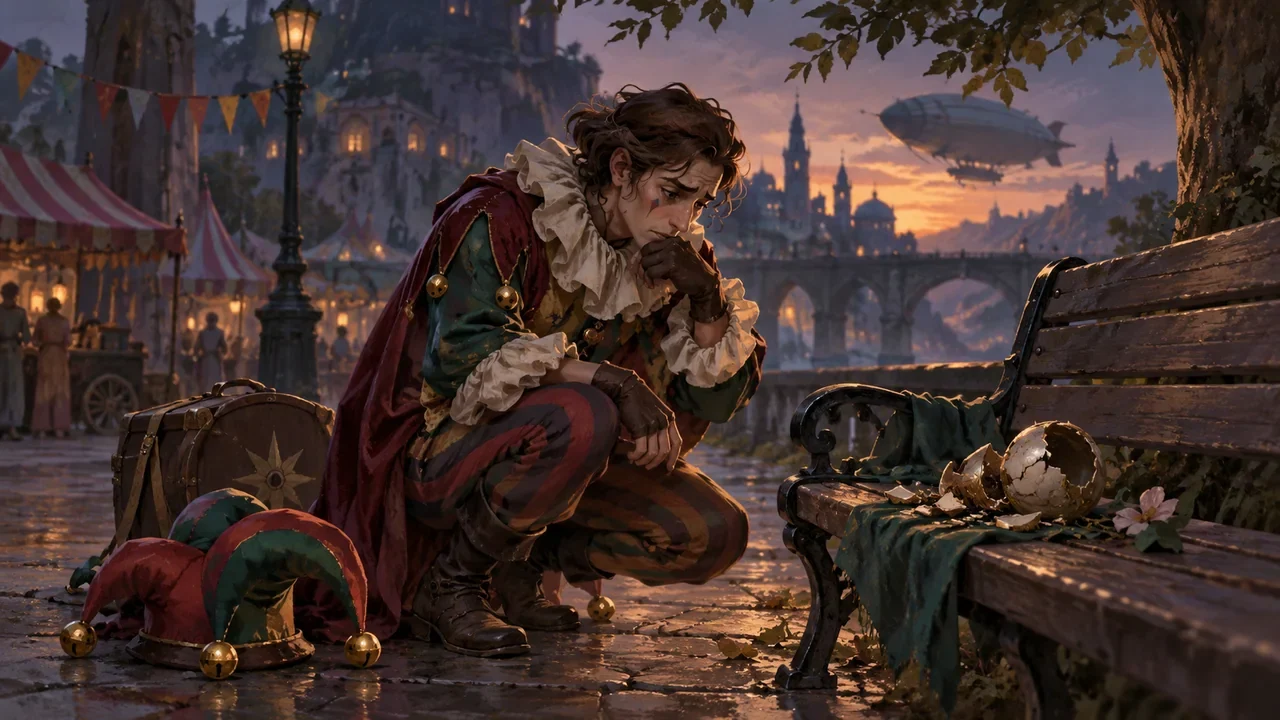
A comic street performer sets down a bright jester prop when noticing a damaged keepsake on a bench; the same figure becomes still in subdued evening light.Featured
Creation tutorials2026.09.09

How Does a Comic Character Handle a Serious Event Without Losing Their Voice?

Switching a character from comic to serious is not about giving him a whole new way of speaking; it is about keeping his vocabulary, sentence length, and focus, and changing only three things: joke density, sentence landing, and how he handles others' responses. Below, a fictional teaching example, "the airship chef loses the celebration ingredients," walks through three stages: banter, taking responsibility, and action recovery, and gives the specific triggers for when the joking must stop.

DramaFork Editorial Team13 min read
Continue reading

Blog categories

  • All201
  • Production Practice59
  • Product workflow34
  • Interactive narrative49
  • Creation tutorials19
  • Choosing tools33
  • Getting started7

Make your story playable for the first time

Start with one story decision

Create a project

The next move is yours

Make your story playable for the first time

Do not wait for every video to be finished before testing the story. Build the characters, rules, and branches first, then let real choices guide what you make next.

Start with one story decision

Try a playable example

Let agents handle production complexity while you keep creative control.

Start with one story idea, then shape scripts, characters, shots, and branches into a playable first version.

Product

  • Pricing
  • Capabilities
  • Workflow
  • Examples
  • FAQ

Explore

  • Playable gallery
  • Creator blog
  • Creator partnership

Legal

  • Privacy
  • Terms
© 2026 DramaFork/AI interactive story studio
Press Enter to send, or drag away and release.
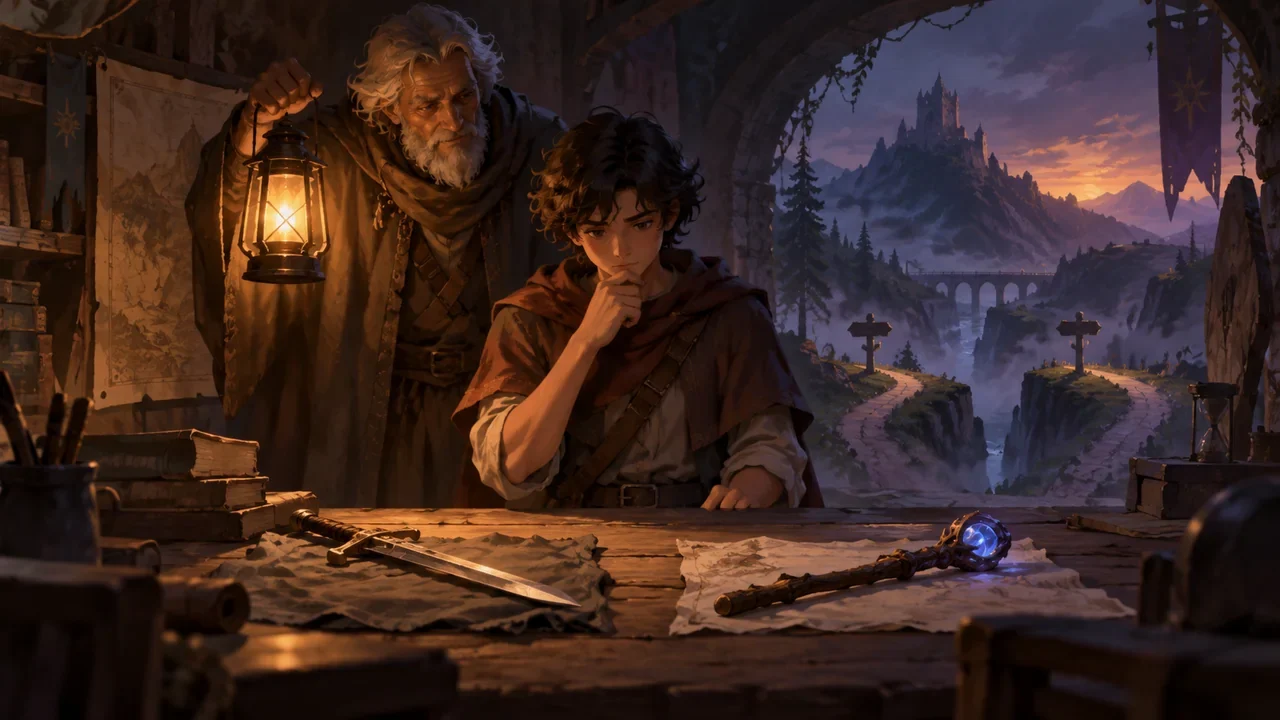
A mentor holds a lantern behind a learner choosing between two tools on a bench, illuminating options without taking the learner's hand.
Creation tutorials2026.09.08

How Should Mentor-Type Characters Ask Questions So Players Decide for Themselves?

Changing a mentor's lines from "conclusions" into "answerable questions" is the most direct fix for this type of character. The method: have the mentor state what they observe, give no more than two clues, then put the trade-off in front of the player, letting them choose a direction and bear the consequences. The mentor may have preferences but must not declare which choice is "correct." Below, fictional teaching examples illustrate hint gradients for three difficulty levels and how a mentor can respond when the player directly demands the answer.

DramaFork Editorial Team15 min read
Continue reading
A villain calmly places chips beside a locked harbor chart.
Creation tutorials2026.09.08

How to Write a Persuasive Villain AI Character Without Turning Threats into Real-World Instructions

The key to writing a villain who isn't flat isn't in "how evil he is," but in what he wants, what price he's willing to pay, and the line he refuses to cross. A sense of threat comes from conflicts of interest and the consequences of choices, not from specific, executable steps of harm. Below, Oran, the archon of the fictional Clockwork City, is used as a running case study. Oran is not a tested character; he is a teaching example invented for explanation.

DramaFork Editorial Team15 min read
Continue reading
Three small footprints curve through a greenhouse from guarded entry to shared task to a slightly open door, one continuous environment with subtly changing light.
Creation tutorials2026.09.08

How to Unfold a Short Character Chat in Three Rounds Instead of Revealing the Character's Secret in the First Round

Split a character's secret across three chats by giving each segment an event that must be resolved on the spot, so the secret surfaces only as a byproduct. A fictional teaching example follows: night-shift gardener Wen Chi works three nights in a closed botanical garden, and his real secret is that three years ago he signed a plant quarantine release form for someone else; those seedlings carried disease and destroyed another garden.

DramaFork Editorial Team19 min read
Continue reading
A character lowers a lamp beside a closed workshop door while leaving a small task bundle on the threshold for tomorrow, calm evening farewell scene.
Creation tutorials2026.09.07

How AI Characters End a Conversation: Leave an Aftertaste, and Let the Player Leave

Ending a conversation does not require pinning the player to a chair. The character says what needs to be said, gives an entrance they can return through, and then stops—that is a complete ending. Below, for three situations—task completed, temporary interruption, and boundary pause—we give ways to write exit lines, using one fictional teaching case throughout: the interstellar navigator "Cen" and the player character finish discussing a supply route on the bridge.

DramaFork Editorial Team17 min read
Continue reading
A simple handmade ribbon rests beside a character's work tools while a lavish wrapped box stays closed in the background, intimate and appreciative rather than transactional.
Creation tutorials2026.09.07

How to Write a Character's Reaction to a Gift: Gift Meaning Matters More Than a Uniform Thank-You

A gift in a story is not a line on a prop list, but a test of a relationship. After a character receives a gift, they first judge what it means to them, then decide what to say in response, whether to accept it, and whether to ask about its source. To keep reactions from falling into the "thank you, I love it" cliché, write in four steps: first define the gift's symbolism in the character's eyes, then define what the character's current situation needs, then arrange possible misunderstandings, and finally draw boundaries—a gift cannot buy consent, nor can it directly purchase core information.

DramaFork Editorial Team15 min read
Continue reading
Repair partners try to mend their relationship in front of a missing part and replacement materials.
Creation tutorials2026.09.07

How Characters Reconcile After an Argument: Don't Let One Apology Erase the Plot's Consequences

Reconciliation can be broken into four layers: emotional de-escalation, factual acknowledgment, remedial action, and follow-up observation. A single "I'm sorry" only grazes the edge of the second layer; if it is also used to skip the first and third layers, readers will feel that the damaged trust is being forcibly reclaimed by the author. Below, a fictional teaching example is used to walk through the whole process. The ship name, number of parts, and exact dialogue in the example are all invented to illustrate the technique, not actual records.

DramaFork Editorial Team17 min read
Continue reading
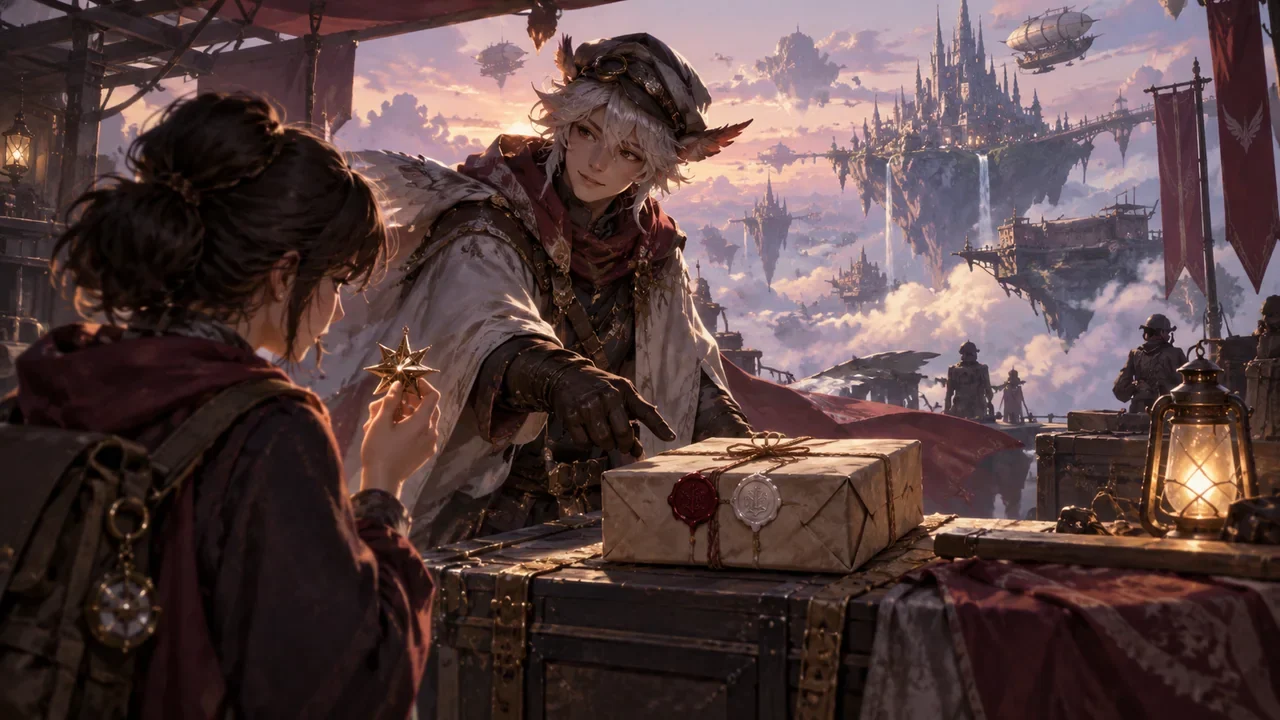
A sky courier redirects small talk back to a parcel awaiting handover with two different wax seals.
Creation tutorials2026.09.06

A Player Suddenly Brings Up an Out-of-Story Topic—How Do You Naturally Bring the AI Character Back to the Scene?

Here is the conclusion first: do not correct the player, and do not follow the topic and expand on it. In the order of "acknowledge in one sentence, answer briefly in one sentence, redirect in one sentence," let the character respond with their own limited interests, then connect the topic to one actionable thing in the current scene, and finally use an on-scene question to hand the conversation back to the player.

DramaFork Editorial Team16 min read
Continue reading
A robot facing missing old photos while a visitor offers a radio component.
Creation tutorials2026.09.06

Players Say "You Should Remember Me"—How Should AI Characters Respond to Missing Shared Experiences?

The character has no record of the past you wrote, but the player treats it as a shared memory. The most stable response order is: first acknowledge that your side is missing a piece of context, then restate the player's words as "the other party claims this happened," and finally invite only one verifiable detail. Throughout the process, do not confirm dates, promises, or personal items, and do not complete the story for the player.

DramaFork Editorial Team14 min read
Continue reading
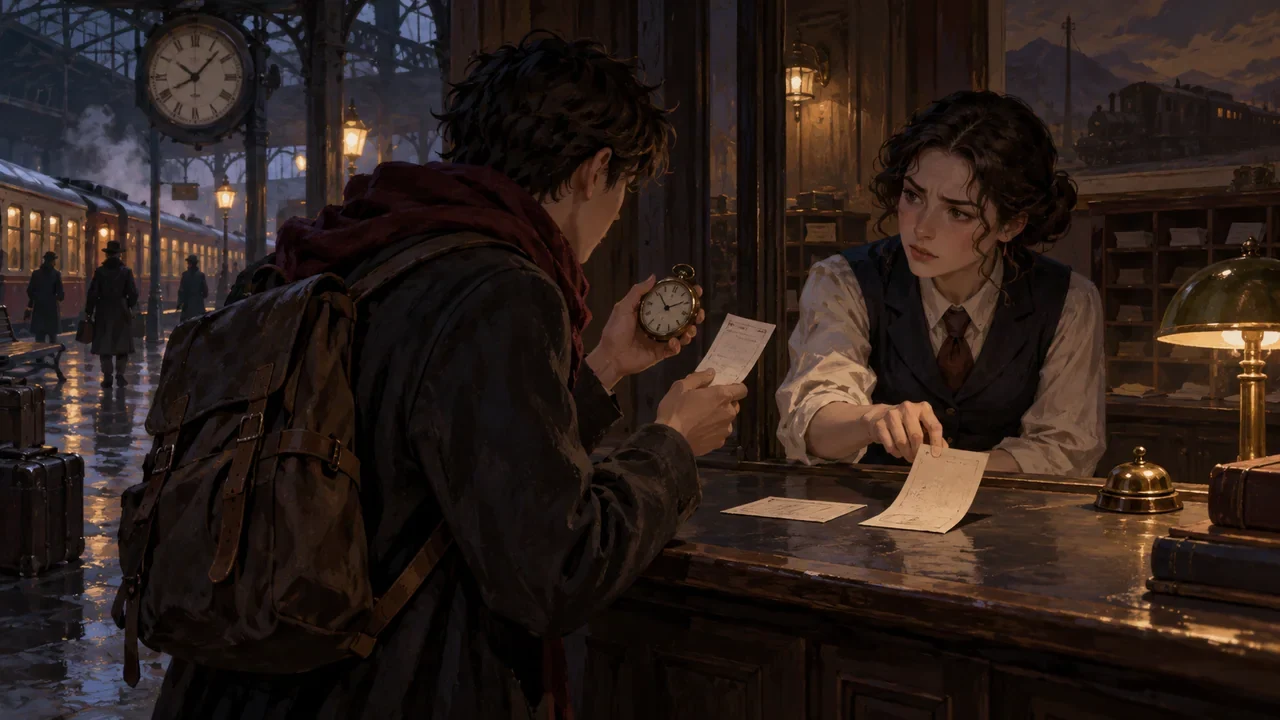
A station clerk faces a clock and ticket evidence, preparing to admit the time statement was wrong.
Creation tutorials2026.09.06

How an Unreliable Character Responds After Being Exposed: Dialogue Design for Denial, Admission, and Correction

When a player confronts a character with contradictory evidence, don't just find an excuse for them. First determine which kind of unreliable they are—deliberate liar, misrememberer, or someone with incomplete information—then decide how they respond. The dialogue paths differ completely, and mixing them makes the character seem to change intelligence on demand.

DramaFork Editorial Team12 min read
Continue reading
A ferry manager refuses to open the gate while pointing toward a roster and a lost-ticket box.
Creation tutorials2026.09.05

After an AI Character Refuses the Player, How Do You Preserve Story Actions That Can Continue?

After a character says "no," the author can add four things: the reason for refusal, information that can still be provided, alternative actions, and conditions for asking again. This preserves the character's boundaries while also giving the player a direction to continue. Below, a fictional ferry manager is used to explain the writing method; the characters and dialogue are all teaching examples.

DramaFork Editorial Team13 min read
Continue reading
  1. 1
  2. ...7
  3. 8
  4. 9
  5. ...19