Review gates in an interactive film workflow: Who accepts what
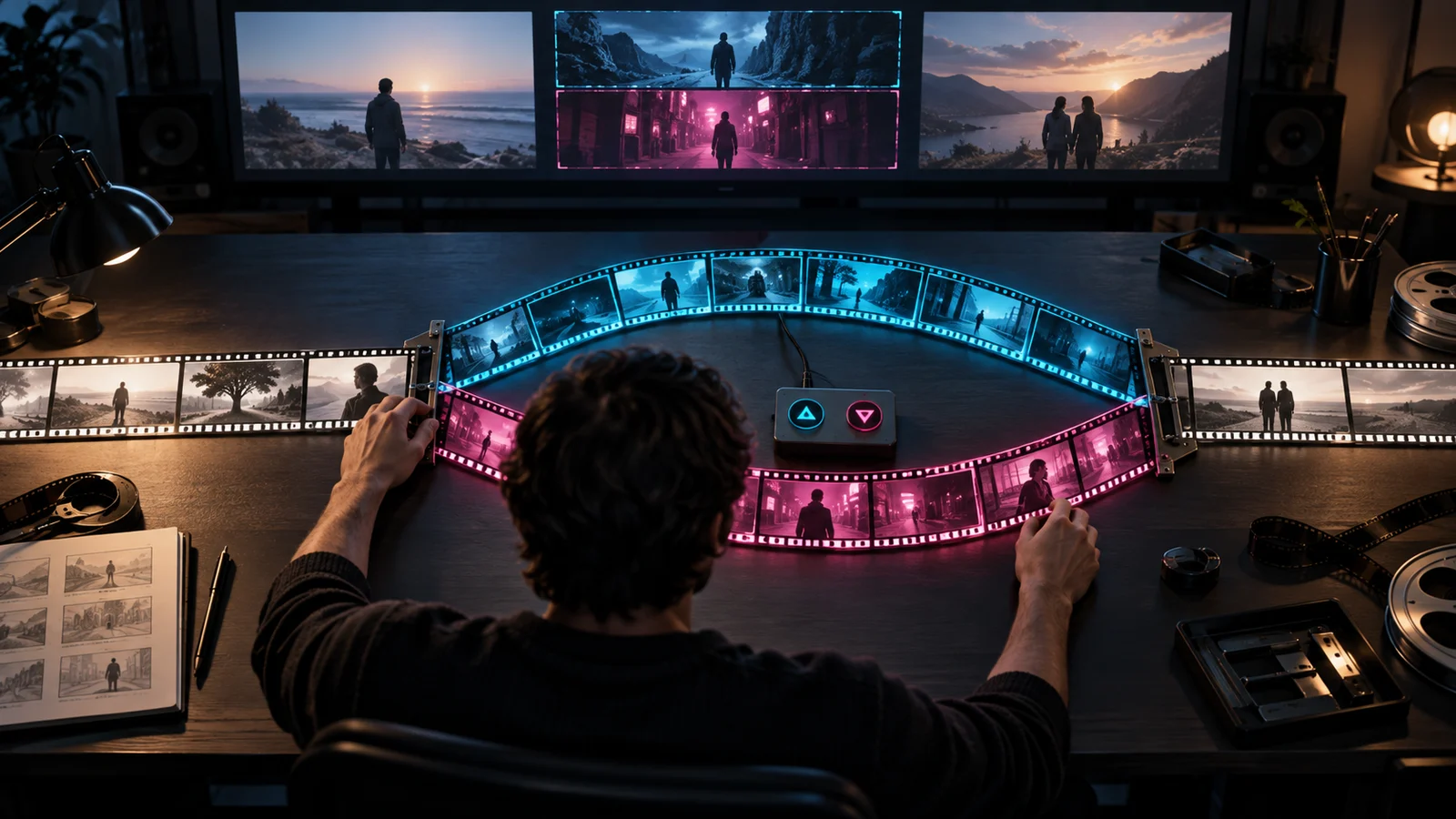
Use three review gates—causality, performance and audiovisuals, and release usability—with one handover sheet defining scope, issue ownership, and acceptance evidence so critical defects have an owner before the next stage.

Define the review problems before inviting reviewers
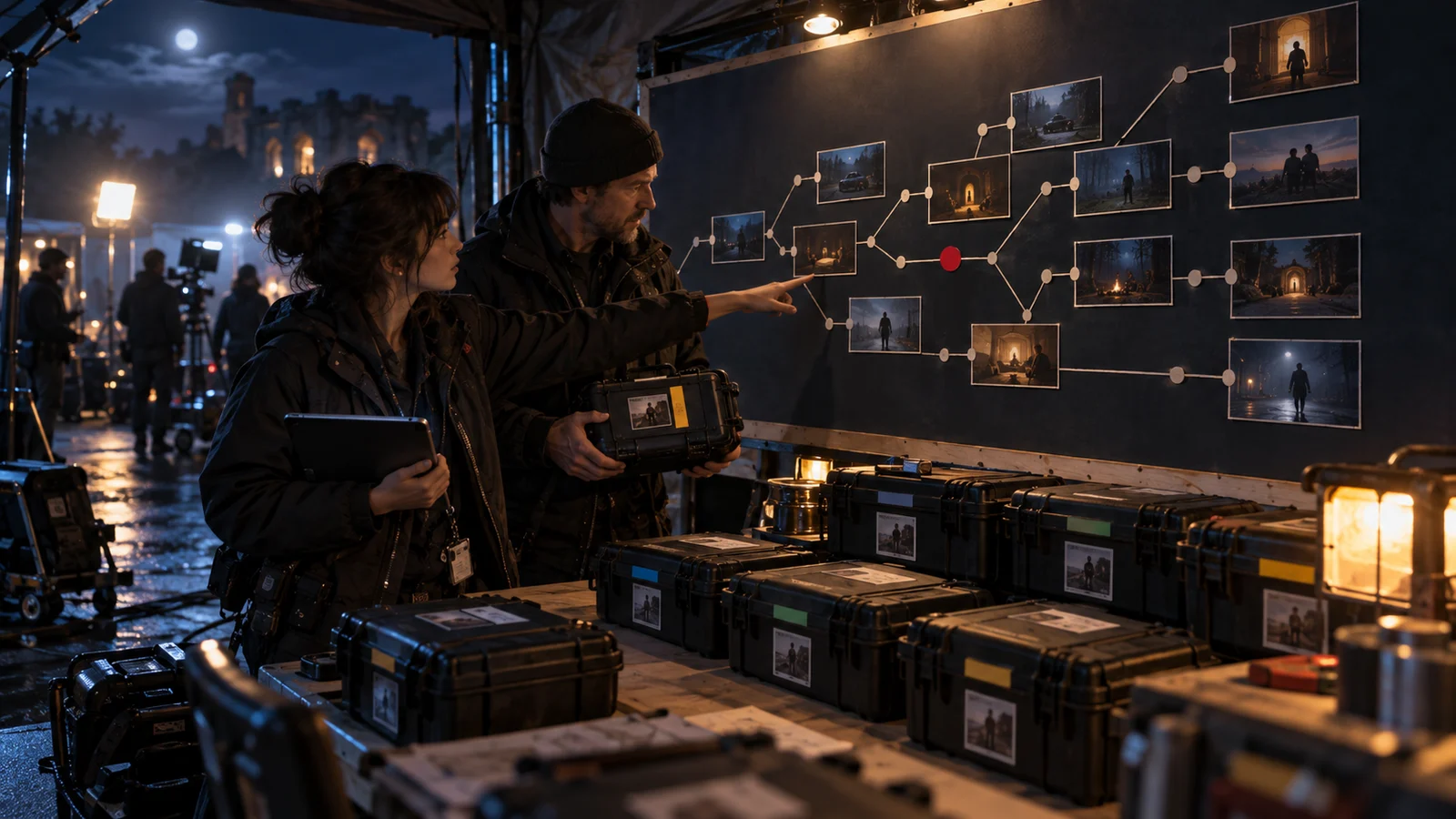
Reviews in an interactive film workflow can center on three handovers: check causality before the story reaches filming; check performance and audiovisuals before footage reaches integration; check usability before the work reaches release. Invite lead reviewers who can judge the current risk, giving them a specific version, viewing scope, and unresolved issues. Sign-off accepts results under those conditions, not a generic “looks good overall.”
This is a reference arrangement for small teams, not a universal industry process. High-risk material includes ending-critical clues, clips shared by multiple branches, and nodes whose changes affect accepted content. Review them with context. Unchanged passages with unchanged dependencies can reuse original records without gathering everyone to rewatch each round.
The fictional interactive suspense film Midnight Locker illustrates the method. As an attendant, the player chooses “check the collection slip” or “trust the visitor’s account,” then decides whether to open the locker. Story, handover sheet, and issue handling are teaching designs, not real user cases, tested results, or product features. They do not imply DramaFork automatically organizes reviews.
Gate one: the writer hands assessable causality to the director
Inputs should include branch synopses, choice wording, clue locations, and conditions for each ending. Text or temporary images are allowed, but a node-link diagram alone is insufficient. Connected nodes do not give characters reasons to act or prove players have decision evidence.
Here, the locker number on the slip was altered. An impression on its back reveals the original number. If verification is skipped but a later character says “I knew the number was changed all along,” the route invents knowledge. For each choice, write what the player sees, what the character knows, and why the next event occurs. The director assesses whether this provides a filmable basis.
The writer leads and the director receives. Involve the integration owner for conditional logic to confirm it can be expressed clearly. Acceptance evidence is a per-route causal record marking where clues appear, where they are used, and alternate reactions when absent. If a key ending depends on an unseen clue, return it to the writer rather than first debate close or medium shots for the line.
Acceptance permits shot and performance design for the relevant segments. If the impression clue is later removed—even to shorten runtime—reopen related causal records. Structural change is not an ordinary edit adjustment.
Gate two: the director hands intelligible performance and audiovisuals to integration
Inputs are a rough cut with sound, a clip list, and the first gate’s accepted decision basis. The director leads; editing or sound leads join according to the problem. The writer rechecks only passages changing a clue’s meaning. Scope includes setup before the clue, the clue itself, and the subsequent choice—not an isolated beautiful shot.
Suppose the impression was filmed, but the attendant’s finger always hides the original number; or “Check all you like” is performed as an obvious admission of falsification. The first obscures evidence; the second may dissolve suspense early. Refer both to the director, then assign pickups, take selection, or editing. Do not ask integration to repair them through button explanations.
Evidence should name the rough-cut version and exact times, specifying whether observations support the intended judgment. A proposed acceptance condition could be “the original number is recognizable when the impression is exposed, and the reaction does not announce the visitor’s identity early.” This is a condition awaiting checks, not a prewritten pass.
If existing footage cannot convey the essential clue, shoot more or provide it through dialogue. Dialogue changes its source and returns to gate one: on which route is the line heard, and what happens if skipped? Gate two may accept noncritical color still awaiting fine adjustment, but cannot defer an inaudible decisive line to release review.
Gate three: the release lead accepts a usable, specific delivery package
Inputs must be an operable version, media and subtitle inventories, path list, and the first two sign-offs. The release lead reviews; integration fixes paths and references; the director reviews only changed audiovisual content. A linear full-film export cannot replace actually entering, choosing, and switching.
An example failure: opening the slip-check clip alone shows a clear impression, but entering through the choice still references the old clip. Integration corrects the reference rather than rejudging cinematography. Log the entrance, choice sequence, actual clip, and result so others can reproduce it.
Every ending in release scope needs a reachability record. Shared nodes need correct reactions from different prior states. Retain checks for declared supported languages and devices; do not silently include unchecked conditions in sign-off. Suspend affected delivery if progress stops, the wrong ending appears, or critical content is mismatched.
If the team delivers a smaller scope first, remove relevant entrances, update inventories, then recheck remaining paths. Writing “not supported yet” while players can still enter a failing path is not an acceptable scope reduction.
Use one sheet for returns and renewed sign-off
All three gates share this sheet, one row per issue. Header fields are work version, current gate, lead reviewer, recipient, and deadline. Copy these columns.
| Field | Required entry |
|---|---|
| Input and scope | Asset version, entrance, path, viewing start and end |
| Issue and evidence | Expected behavior, actual discrepancy, record location |
| Ownership and impact | One responsible fixer, affected nodes, whether an earlier gate must reopen |
| Repair and recheck | Revised version, checker, acceptance condition, evidence location |
| Acceptance conclusion | Accept, return, or accept limited scope; list outstanding items |
For “skip verification yet claim prior knowledge,” gate one identifies the issue, the writer drafts two reactions, and the director receives new filming grounds. After rough cutting, the director checks both performances; after integration, the release lead follows both entrances. Each sign-off answers a different question. Final smooth playback cannot substitute for earlier judgments.
The reporter provides evidence, lead reviewer assigns ownership, fixer submits revisions, and recipient checks before accepting. For conflicting opinions, first ask whether agreed acceptance conditions are violated. The gate owner can decide and record preferences without making every suggestion blocking. Cross-gate disputes return to the earliest affected basis.
Small teams may combine roles but should record handling and review separately. Larger teams can watch specified clips asynchronously and gather only those who disagree. If change scope is unclear, local review lacks a basis: expand the viewing scope. The sheet identifies who accepted what; it cannot alone prove compelling suspense or consistent audience understanding. Those need separate evaluation tasks.