• Home
  • Blog
  • Gallery
  • Pricing
  • Home
  • Blog
  • Gallery
  • Pricing
Start creating

Creator blog

Better stories start hereBetter stories start here

Discover practical AI tools, interactive storytelling methods, and production lessons—from the first idea to a story people can play.

DRAMAFORKStories · Craft · Possibility
Topics
AllCreation tutorialsInteractive narrativeGetting startedGalgame Route DesignVisual Novel ProductionInteractive Fiction DesignNarrative Design for Interactive Film GamesInteractive Film AccessibilityInteractive Film WorkflowInteractive Game BasicsInteractive Film Presentation and DeliveryInteractive Film LocalizationInteractive Film ProductionNarrative MechanicsCreative CollaborationGetting startedFictional Case StudyStory LocalizationMobile and AccessibilityActing and StagingExploring Time and SpaceRelationships and GroupsResources and ConstraintsInformation and CommitmentsProduction PracticeProduct workflowChoosing tools
500 articles

Editorial / 16

Latest articlesLatest articles

Practical methods for narrative structure, visual production, and everything in between.

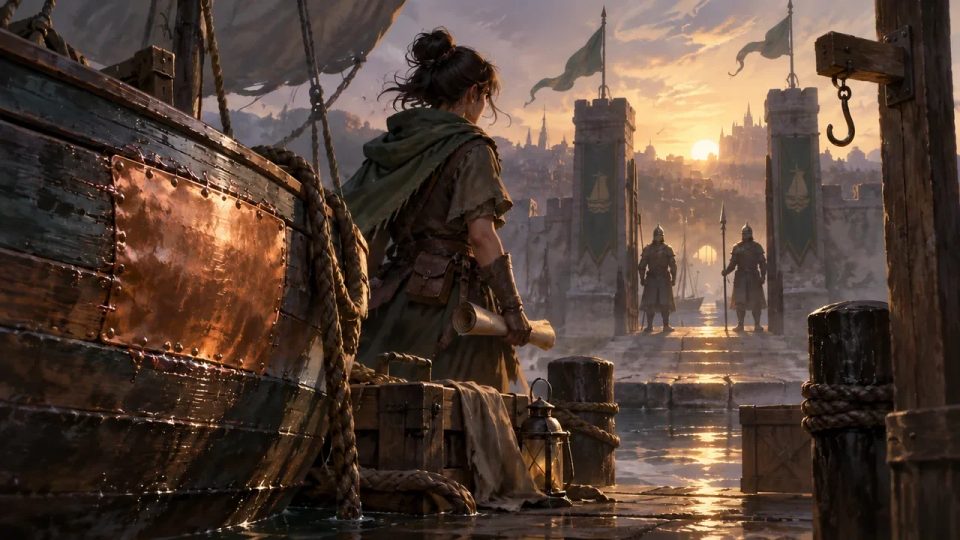
Can Players Understand Resource States Without Exact Numbers? — original editorial cover illustrationFeatured
Resources and Constraints2026.10.07

Can Players Understand Resource States Without Exact Numbers?

Yes, but “Intact,” “Strained,” and “At Risk” must correspond to consistent limits on available actions. A review table linking text-based tiers, actions, and transition cues helps players understand costs before choosing—including the handoff opportunity lost by detouring for repairs—and understand changes afterward.

DramaFork Editorial Team19 min read
Continue reading

The next move is yours

From a story to a playable world.From a story to a playable world.

Do not wait for every video to be finished before testing the story. Build the characters, rules, and branches first, then let real choices guide what you make next.

Start with one story decision

Try a playable example

From a story to a playable world.

Create interactive narrative games with DramaFork: connect scripts, characters, shots, and choices into a playable first version.

Explore & play

  • Explore gallery
  • Interactive film
  • Text game
  • Character IP
  • Rankings
  • Works index

Create & collaborate

  • My creations
  • Film studio
  • Text-game studio
  • Character studio
  • Creator partnership

Reading room

  • Creator blog
  • Story topics
  • Article archive

Story guides

  • Interactive storytelling
  • Making interactive films
  • Designing text games
  • Character and worldbuilding

Plans & credits

  • Pricing
  • Credits

Policies & support

  • Privacy
  • Terms
  • Cookies
© 2026 DramaFork/DramaFork · Interactive narrative games
Press Enter to send, or drag away and release.
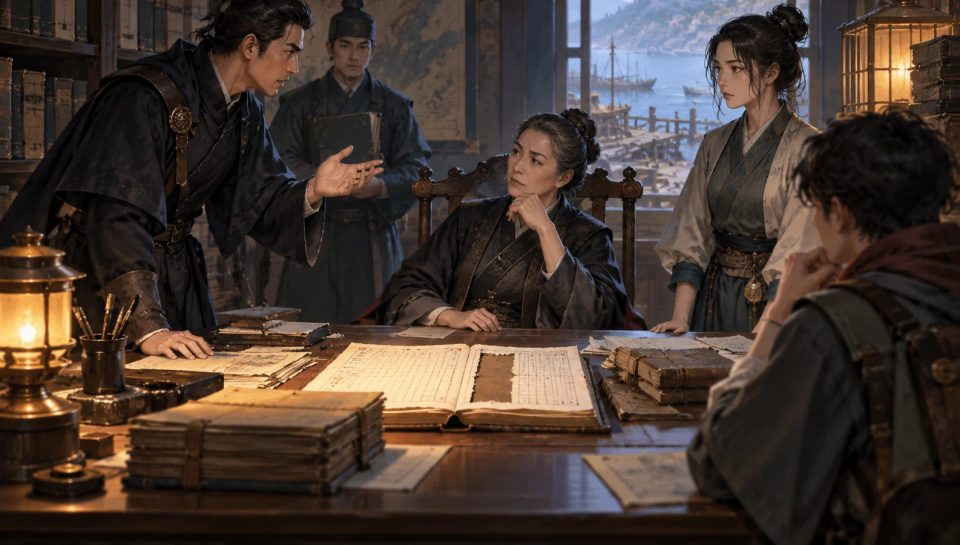
Two Ways to Pay for the Same Goal: How Do You Keep One from Always Being Better? — original editorial cover illustration
Resources and Constraints2026.10.07

Two Ways to Pay for the Same Goal: How Do You Keep One from Always Being Better?

Make spending materials and requesting help limit different future options, then vary the circumstances to see whether preferences can reasonably reverse. Includes a bridge repair example, a cost comparison table, and a reusable worksheet.

DramaFork Editorial Team19 min read
Continue reading
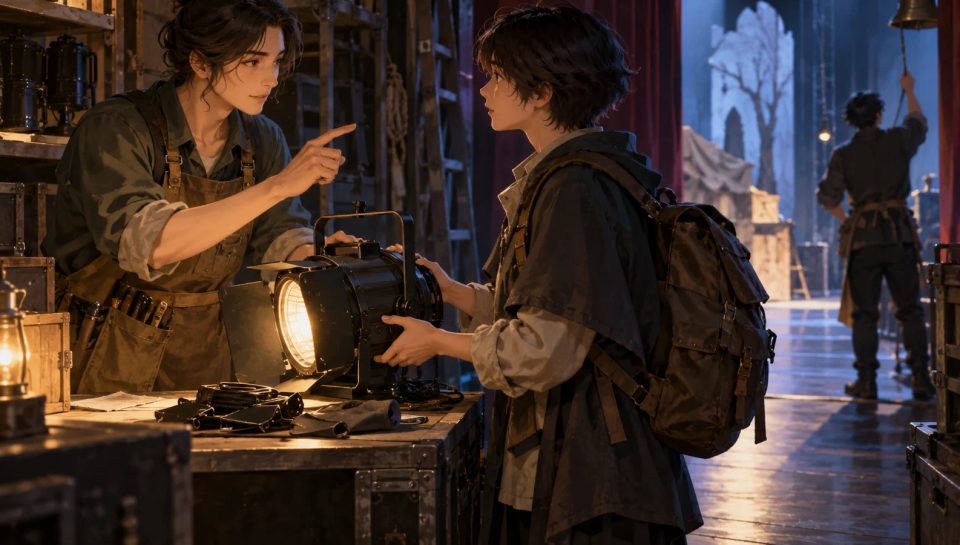
Borrowed Props Are Not Permanent Rewards: Make Return Obligations Clear — original editorial cover illustration
Resources and Constraints2026.10.07

Borrowed Props Are Not Permanent Rewards: Make Return Obligations Clear

Borrowing a theater light solves the immediate lighting problem. Use a loan tracking card to define the return window, who follows up, extension conditions, and completion criteria, so the promise still has a clear resolution after the prop leaves the inventory.

DramaFork Editorial Team16 min read
Continue reading
Stamina Recovers; Fuses Don’t: How Two Resources Create Different Choices — original editorial cover illustration
Resources and Constraints2026.10.07

Stamina Recovers; Fuses Don’t: How Two Resources Create Different Choices

Recoverable stamina shapes when to act; an irreplaceable fuse forces a choice between projection and transmission. A fictional mountain repair station illustrates how to build a resource comparison table and trace which actions remain reachable after depletion, along with their costs.

DramaFork Editorial Team17 min read
Continue reading
A Player’s Guess Is Not a Character’s Conclusion: Writing a Deduction Check — original editorial cover illustration
Information and Commitments2026.10.07

A Player’s Guess Is Not a Character’s Conclusion: Writing a Deduction Check

Turn a guess into a prediction stated in advance, define the conditions for a valid check, and let the observed result determine how far the conclusion can go. Use a deduction check card to write rounds where a guess proves right, proves wrong, or remains inconclusive.

DramaFork Editorial Team17 min read
Continue reading
Who Has to Prove It? Turning the Burden of Proof into Story Actions — original editorial cover illustration
Information and Commitments2026.10.07

Who Has to Prove It? Turning the Burden of Proof into Story Actions

A character’s accusation should not automatically give the player a string of investigation tasks. Use an evidence assignment table to clarify who submits material first, which alternatives count, and which story action cannot proceed without enough support.

DramaFork Editorial Team19 min read
Continue reading
When Two Reliable Reports Conflict, How Can You Design a Review Without Forcing a Single Truth? — original editorial cover illustration
Information and Commitments2026.10.07

When Two Reliable Reports Conflict, How Can You Design a Review Without Forcing a Single Truth?

Different water-level reports do not require a search for a liar. Use a time-by-location table to establish how the readings were taken, then let players decide whether to keep checking or submit a record with the disagreements clearly stated.

DramaFork Editorial Team18 min read
Continue reading
A Clue Proves Only Part of the Story: How to Keep Players from Treating Partial Facts as Complete Conclusions — original editorial cover illustration
Information and Promises2026.10.07

A Clue Proves Only Part of the Story: How to Keep Players from Treating Partial Facts as Complete Conclusions

An intact seal is a useful clue, but it cannot establish on its own that no one entered a warehouse. Use an inference boundary table to distinguish observations and rules, required premises, supported conclusions, and unresolved gaps—and show players what to check next.

DramaFork Editorial Team19 min read
Continue reading
Make Withdrawing a Promise an Event, Not a Quiet Dialogue Edit — original editorial cover illustration
Information and Promises2026.10.07

Make Withdrawing a Promise an Event, Not a Quiet Dialogue Edit

When a ferry manager promises to save someone a place but cannot honor that promise, simply saying “You can’t board” is not enough. Use a withdrawal event record to preserve the original words, explain what changed, track whether the news reached those affected, and record compensation offers and their outcomes according to the choices actually made.

DramaFork Editorial Team19 min read
Continue reading
Once the Player Hands Over Information, Who in the World Should Know? — original editorial cover illustration
Information and Commitments2026.10.07

Once the Player Hands Over Information, Who in the World Should Know?

Handing a survey report to the workshop does not mean everyone there—or the council—immediately knows its contents. Use receiving agreements and knowledge records to track who may receive it, who actually read it, what may be passed on, and which events cause leaks. Reading a signature does not reveal who delivered the report.

DramaFork Editorial Team20 min read
Continue reading
Anonymous Messages Should Not Carry Authority: Independently Verifying a Maintenance Warning — original editorial cover illustration
Information and Commitments2026.10.07

Anonymous Messages Should Not Carry Authority: Independently Verifying a Maintenance Warning

Separate an anonymous warning into verifiable claims, requested actions, and identity cues, then check the same proposition through two independently sourced paths. Players can judge which parts hold up without first identifying the sender.

DramaFork Editorial Team18 min read
Continue reading
Choosing Without Enough Evidence: Make Uncertainty Clear with Choice Cards — original editorial cover illustration
Information and Commitment2026.10.07

Choosing Without Enough Evidence: Make Uncertainty Clear with Choice Cards

Why a space station door has failed can remain unanswered for now. What players base their actions on, and where they can still stop, must be clear. A choice card covering confirmed facts, unknowns, and action boundaries turns guesses about a fault into reasoned decisions. A door that has not moved does not prove a command was not executed; a receipt confirms only what its record supports.

DramaFork Editorial Team19 min read
Continue reading
How can a message preserve its sources and traces of change across three handoffs? — original editorial cover illustration
Information and Commitments2026.10.07

How can a message preserve its sources and traces of change across three handoffs?

Record what was received, what was passed on, and what each recipient understood, then compare adjacent versions sentence by sentence. A transmission-chain verification table helps trace lost conditions, added reasons, changes from waiting to gathering, and who supposedly made a decision. Also check whether the draft was actually spoken and which instruction the condition governs.

DramaFork Editorial Team21 min read
Continue reading
Information Expires: Give Messages in Interactive Stories an Expiry Time — original editorial cover illustration
Information and Commitments2026.10.07

Information Expires: Give Messages in Interactive Stories an Expiry Time

Even a reliable observation station’s forecast may have expired by the time it arrives. A three-column ledger—when the message applies, how to check it, and what to do after it expires—shows players what old information still supports and what they can do next.

DramaFork Editorial Team19 min read
Continue reading
A finished work package placed beside creator tools, version labels, and a feedback collection box.
Production practice2026.10.04

How to Write the Credits and Version Notes at the End of an Interactive Story So Feedback Reaches the Right Person

Writing the ending information in three layers is enough: the deliverable name and version number, the division of creative contributions and tool usage, and the three pieces of information to include when giving feedback. Readers who spot a problem can locate the specific file, and when you receive feedback you can tell which layer to change, without going back and forth in emails asking "which version are you talking about?"

DramaFork Editorial Team17 min read
Continue reading
The same character appears on three independent stages, each keeping different progress and objects.
Production practice2026.10.04

Same IP Character Chat and Text Adventure: How to Explain the Relationship Without Making Players Think Progress Is Shared?

Describe the relationship between the two entry points as "same world, same character identity, each progresses independently," and use a state comparison table on the entry page to clarify what carries over and what does not. The approach has four steps: first define a character profile for the IP as the shared identity foundation for both entry points; then write a separate "state boundary" statement for each entry point; next prepare a can-say/cannot-say table to constrain marketing copy; finally use a fictional dialogue to test whether players form incorrect expectations after reading.

DramaFork Editorial Team15 min read
Continue reading
A warm entrance and a severe iron gate create a genre-promise gap, and the creator recalibrates.
Production practice2026.10.04

Cover Looks Horror but the Content Is Cozy Slice-of-Life? How to Check Whether a Work's Genre Promise Is Consistent

Start with the conclusion: write one sentence each for the synopsis, opening, first core task, and ending describing "what intensity the player expects to bear right now," then read the four sentences side by side.

DramaFork Editorial Team13 min read
Continue reading
A copper plate left from the previous chapter and an empty permit hook lead toward a dawn gate inspection.
Production practice2026.10.03

How to Bridge Interactive Story Chapters: Recycle the Previous Chapter's Consequences, Then Give the Next Chapter a Clear Action

Bridging is not retelling the previous chapter; it turns the previous chapter's decision into a visible current state, then immediately hands the reader one thing to do.

DramaFork Editorial Team18 min read
Continue reading
A playtester uses a small story model while an observer holds a blank notebook at a respectful distance, no leading gesture or approving nod, quiet study scene.
Production practice2026.10.03

How to Ask Questions During Playtesting Without Hinting at the Answer: Turn "You Get It, Right?" into Neutral Questions

The goal of playtesting questions is not to get the player to say the answer you expect, but to have them reconstruct what just happened in their own words. The approach can be compressed into three steps: first have the player retell their actions, then ask which clue they based it on, and finally ask why they chose this one between two options. Put questions after the action, do not interject while they are hesitating, and do not evaluate any route as better. As long as a question contains "is it because," "you get it, right," or "this is obvious," what you get is mostly agreement,

DramaFork Editorial Team15 min read
Continue reading
  1. 1
  2. ...15
  3. 16
  4. 17
  5. ...27

Blog categories

  • All500
  • Creation tutorials40
  • Interactive narrative60
  • Getting started11
  • Galgame Route Design25
  • Visual Novel Production25
  • Interactive Fiction Design25
  • Narrative Design for Interactive Film Games25
  • Interactive Film Accessibility10
  • Interactive Film Workflow10
  • Interactive Game Basics10
  • Interactive Film Presentation and Delivery10
  • Interactive Film Localization10
  • Interactive Film Production10
  • Narrative Mechanics11
  • Creative Collaboration11
  • Getting started1
  • Fictional Case Study10
  • Story Localization10
  • Mobile and Accessibility10
  • Acting and Staging10
  • Exploring Time and Space10
  • Relationships and Groups10
  • Resources and Constraints10
  • Information and Commitments10
  • Production Practice59
  • Product workflow34
  • Choosing tools33

From a story to a playable world.

Start with one story decision

Create a project