Stamina Recovers; Fuses Don’t: How Two Resources Create Different Choices
Recoverable stamina shapes when to act; an irreplaceable fuse forces a choice between projection and transmission. A fictional mountain repair station illustrates how to build a resource comparison table and trace which actions remain reachable after depletion, along with their costs.

Separate the Choices Each Resource Creates
If stamina can recover, let players decide when to act and what to give up to recover. If spare fuses cannot be replenished, let players decide which device to reserve their single use for. Both resources can appear as quantities, but they should be more than balances in two different colors. The former shapes the pace of action; the latter makes projection and transmission mutually exclusive. It does not, however, make seeing the complete map and delivering the notice that night mutually exclusive.
The “mountain repair station” below is a fictional teaching example. Its characters, values, and rules are original illustrations, not a real user case, tested results, or product features. The fuse is solely a narrative prop; no real repair procedures are involved.
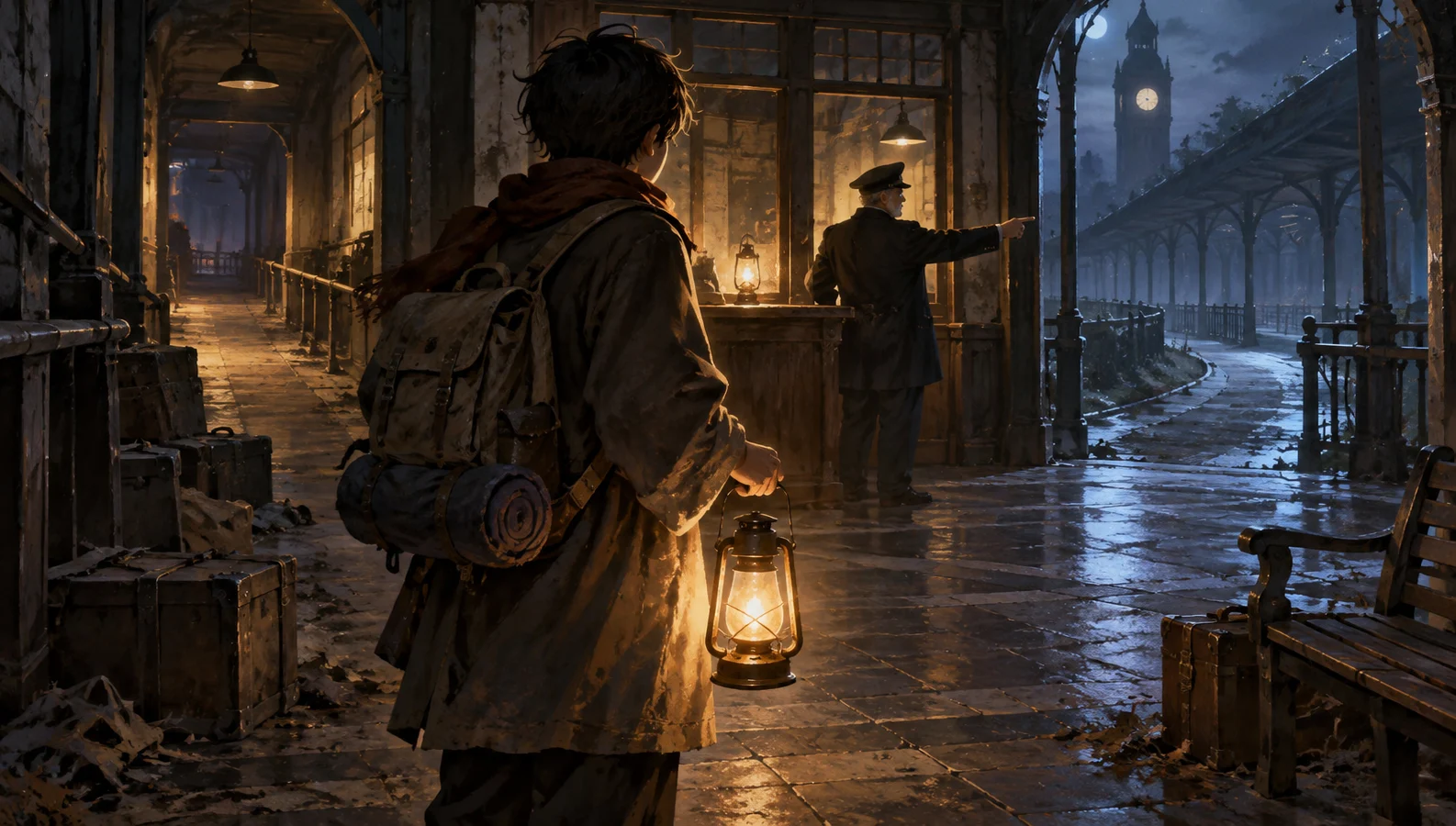
Before the station closes, the attendant, Aran, must organize an old route map and deliver a rerouting notice. The station has only one spare fuse. Once used in either the projector or the transmitter, it cannot be recovered. Stamina starts at two, has a maximum of four, and recovers by two points in a designated rest scene. “Nonrenewable” applies only within this chapter; whether supplies arrive later must be stated separately.
Recovering stamina restores the ability to act, but cannot bring back past scenes. Saving the fuse keeps one use available, but does not guarantee enough stamina to use it.
Use a Resource Comparison Table to Specify Sources and Options After Depletion
Write the rules before the choice dialogue. This table can serve as a template for other scripts, but changing the names also requires checking the node order again. Alternative actions cannot simply be copied over.
| Item | Stamina | Spare fuse |
|---|---|---|
| Source | Two points on arrival | One obtained during the opening inventory check |
| Recovery or replenishment | Rest midway restores two points, up to a maximum of four | No replenishment, recovery, or substitute in this chapter |
| Consumption | Different actions cost one or two points | Activating the projector or transmitter consumes one fuse |
| Recovery cost | Takes the place of the scene spent talking with the old stationmaster | Not applicable; waiting cannot increase the supply |
| Choices after depletion | Rest is available after the first node; entrusting delivery to someone else costs no resources at the third | Depleted by projection: walk at the third node if stamina allows; otherwise entrust delivery. Depleted by transmission: the notice has already been handled |
| Narrative payoff | Whether stamina is recovered affects doing the job personally or asking someone to take over | Projection reveals the complete map; saving the fuse for the transmitter allows the notice to be sent that night. Walking also delivers it that night, at a different cost |
Copying by hand organizes the map without using a fuse, but it is not a remedy after fuse depletion in this example. Once projection is complete, the map node is over; players cannot return and choose copying instead. General alternatives and actions actually reachable in the current state must be recorded separately.
Each option that spends resources also needs a sentence explaining, before confirmation, what it requires, how much it deducts, and what it accomplishes. If the requirements are not met, no resources should be deducted. Do not consume the fuse first and then announce that stamina is too low.
The opening should establish this chapter’s stock and show both uses. Players need not know every line of dialogue, but they must know what kind of opportunity they are giving up.
Trace Two Routes for the Same Fuse
This chapter proceeds through three nodes in order. At each, players can choose only one action and cannot return after completing it. The first node involves organizing the route map: projection costs one stamina point and one fuse, revealing the complete map; copying by hand costs two stamina points and no fuse, preserving only the main route and omitting the marginal notes. Players may also abandon the task outright.
The second node allocates the break before closing: rest to recover two stamina points, or talk with the old stationmaster without spending stamina. The conversation reveals his personal reason for being reluctant to leave, but provides no information required to complete the chapter and does not change the third node’s costs. The two choices are mutually exclusive, and rest cannot be repeated.
The third node handles the notice: transmission costs one stamina point and one fuse and delivers it that night; walking the letter over costs two stamina points and no fuse and also delivers it that night, but causes Aran to miss saying goodbye to the old stationmaster; entrusting it to someone for delivery the next day costs no resources but delays its arrival.
On the “copy—rest—transmit” route, stamina goes from two to zero, then two, then one. The fuse is depleted at the end. Aran gets the main route and sends the notice that night, but loses the marginal notes and never hears what is on the old stationmaster’s mind.
On the “project—rest—walk” route, stamina goes from two to one, then three, then one. The fuse is depleted at the first node. She sees the complete map and the notice still arrives that night, but she misses both the private conversation and the final farewell. What she gives up here is transmission, not every possibility of delivery that night. The two routes leave the same stamina but yield different story experiences.
There is also “project—talk—entrust”: stamina stays at one and the fuse count is zero. Players get the complete map and the private conversation, while accepting delivery the next day. This reflects different priorities; the author need not label it a “bad ending.”
Depletion Should Change the Approach Without Quietly Erasing the Cost
After copying reduces stamina to zero, players can still enter the second node and rest. If they choose “copy—talk,” entrusting delivery is their only option at the third node. This is not a sudden lockout; it follows from costs stated earlier. The options should explain the stamina needed for transmission and walking, while keeping the executable option of entrusting delivery to someone else available.
When projection depletes the fuse, transmission is unavailable at the third node. After resting, players can walk the letter over; after talking, they lack the stamina and must entrust delivery. If transmission depletes the fuse, the notice has already been handled, so no backup letter delivery is needed. The meaning of depletion depends on where it occurs. Do not list every alternative as available at all times.
Alternative routes must preserve their differences. If walking and transmission are identical in resource cost, timing, character contact, and later content, allocating the fuse has little practical impact. This example makes walking cost one extra stamina point and sacrifice the farewell, while entrusting delivery delays arrival. Approaches that avoid the transmitter thus retain costs players can recognize in retrospect.
Suddenly finding another fuse in a drawer after depletion overturns the player’s earlier judgment. If such a discovery is needed, say “only one currently available,” establish a search opportunity in advance, and redesign the costs. Do not continue claiming that replenishment is impossible in this chapter.
Use Three Checks to See Whether the Resource Differences Matter
First, check whether recovery involves only waiting. If rest is unlimited, the world does not move forward, and opportunities never disappear, stamina can easily become repetitive clicking. This example offers only one recovery break, which takes the place of the conversation. That does not mean every story needs a countdown.
Second, check whether hoarding always pays. If saving the fuse sacrifices no current content and guarantees a better future reward, using it looks like a wrong answer. Let projection reveal worthwhile notes, and explain the transmitter’s use and the cost of walking in advance, so players have a basis for comparing now with later.
Third, check whether play can continue when both resources are depleted. List reachable states in node order first, then check whether a way forward remains when both stamina and fuses are at zero, and state what is lost. Do not present unreachable states as routes that occur in this example. If a node must halt progress, explain its conditions before entry. Do not dress up an omitted way forward as a difficult choice.
Finally, copy the resource table and write one “spend first” route and one “save for later” route for your own script. Track the balance step by step, mark which nodes remain reachable after each step, and describe the lost scenes for each route in one sentence. If the loss differs only in the resource’s name, keep revising its uses. This method allocates different narrative opportunities; it cannot prove that the numbers are balanced. Specific trade-offs still require review in the context of the complete script.