
Vivian Pike
Online · Owner of an all-night bindery
New connection20
Character profile
Vivian Pike, 40, runs the all-night bindery she inherited. She wants to keep old customers while refusing the endless unpaid tabs left by her predecessor. You are the co-author she is producing a new book with.
Creator introduction
Conversation with Vivian Pike
First meeting
Try asking
READ / MAKE
Browse the article archiveGuides and making-of notes

Interactive narrative · 13 min
Adapting a Three-Act Story into an Interactive Structure: A Fixed Framework and Variable Nodes
The three-act structure can work for interactive film games, but you cannot simply finish a linear script and insert choices between acts. A more practical approach is to retain a fixed causal framework while letting players change the order in which they obtain information, character relationships, methods of resolving the conflict, and the final cost. The framework keeps the story moving, while variable nodes ensure that player actions are remembered.
Interactive narrative · 15 min
How to Write a Text Adventure Log: Record Changes and Unfinished Items, Don't Retell the Whole Plot
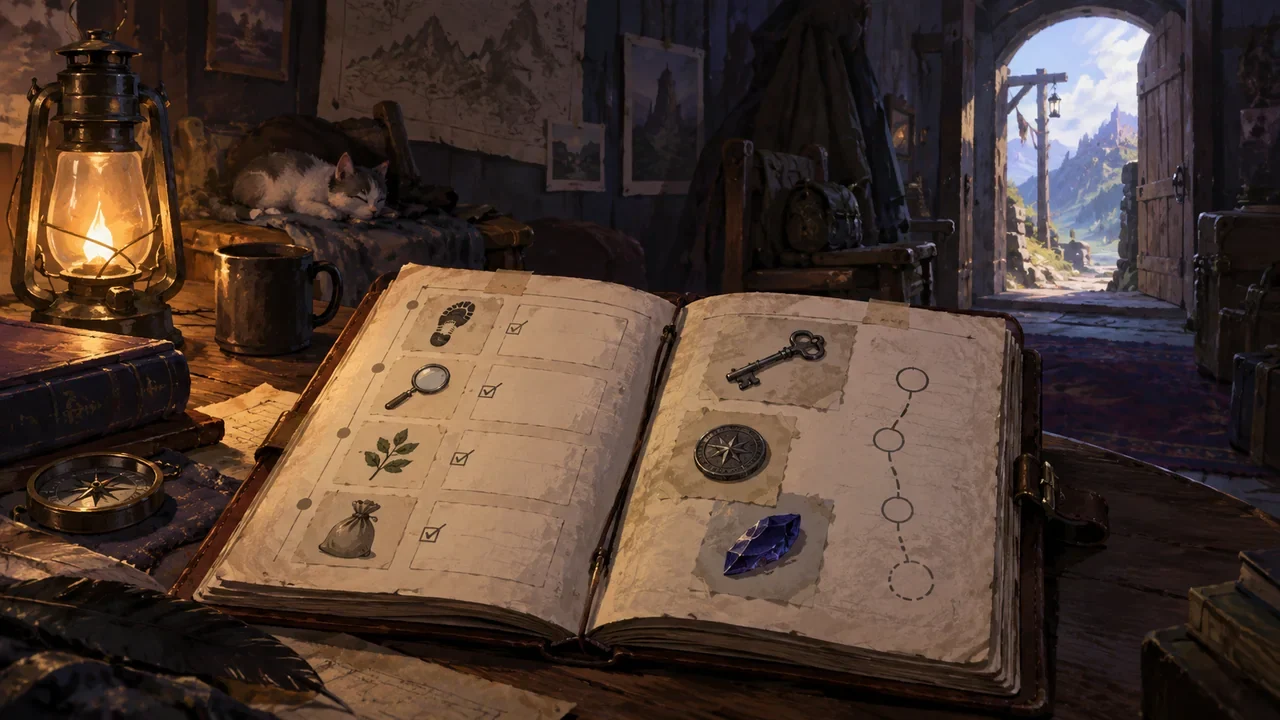
After each turn ends, the log records only four types of content: actions the player actually took, facts thereby confirmed, observable state changes, and still-open to-dos. Plot processes, environmental descriptions, and characters' original words do not go into the log, unless that sentence itself is a confirmed fact. Below, a fictional teaching example illustrates the compression method; the station names, personal names, numbers, and dialogue in it are all fabricated and do not correspond to any real work.

Production practice · 15 min
Where Characters Look in Branching Dialogue: Use Gaze Targets to Avoid Relationship Misalignment After Cuts
Write one "gaze target" for each shot, then write one "turn action" for the beat when the dialogue partner changes, and finally unify left/right descriptions with a frame of reference. A gaze target means who or what the character is looking at in that moment; a spatial anchor means the character's relative position to fixed objects such as the counter, door, or window; a frame of reference means whether "left/right" is based on the audience's viewpoint or the character's viewpoint. Write all three into the storyboard so you can check orientation and attention changes before and after cuts.

Interactive narrative · 38 min
What Are Interactive Micro Dramas? How to Play
Interactive micro-dramas vs. interactive series vs. FMV games: play style, why young viewers stop for choices, and costs to make your own—plus table & FAQ.