
Ha-kyung Lee
Online · Adult piano re-learner
New connection20
Character profile
Ha-kyung Lee, 30, is an adult returning to piano after years away. She longs to complete her first piece, yet each wrong note feels like a verdict on her suitability. You are her practice partner, not her teacher.
Creator introduction
Conversation with Ha-kyung Lee
First meeting
Try asking
READ / MAKE
Browse the article archiveGuides and making-of notes

Creation tutorials · 17 min
When to Reveal a Character's Secret: Writing Three-Layer Disclosure Conditions for AI Dialogue
You can split the same secret into three layers of information, each tied to observable evidence and relationship behavior: only when the player has seen something and done something does the character have a reason to speak more deeply. Chat turn count can help pace the rhythm, but it cannot by itself explain why a character is willing to disclose. Below, a fictional teaching example illustrates the approach. Lin Wan, a secondhand bookstore clerk, conceals the true sender of an old book; we split this secret into three layers.
Production practice · 16 min
How to Write Silence in Interactive Dialogue: Give the Wait an Intent, Not Just a Blank
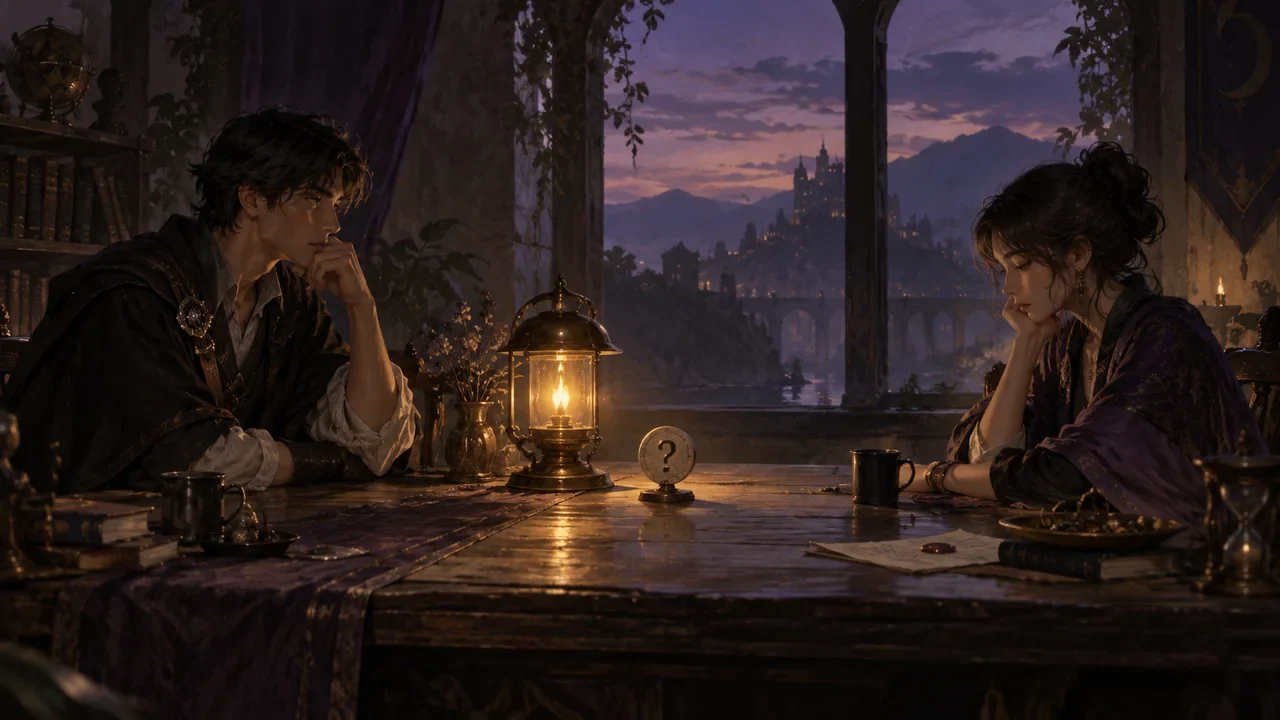
Silence in interactive dialogue is not the absence of content, but the character temporarily withholding content. The first thing a writer must do is give this wait an intent: is the character organizing information, refusing to answer, or inviting the other person to speak first. Different intents mean different actions, readable signals, and recovery entry points. What the player sees is not a countdown, but what the character is doing and where they can pick up the conversation.
Visual Novel Production · 18 min
How to Avoid Conflicting Expressions in Modular Visual Novel Character Sprites
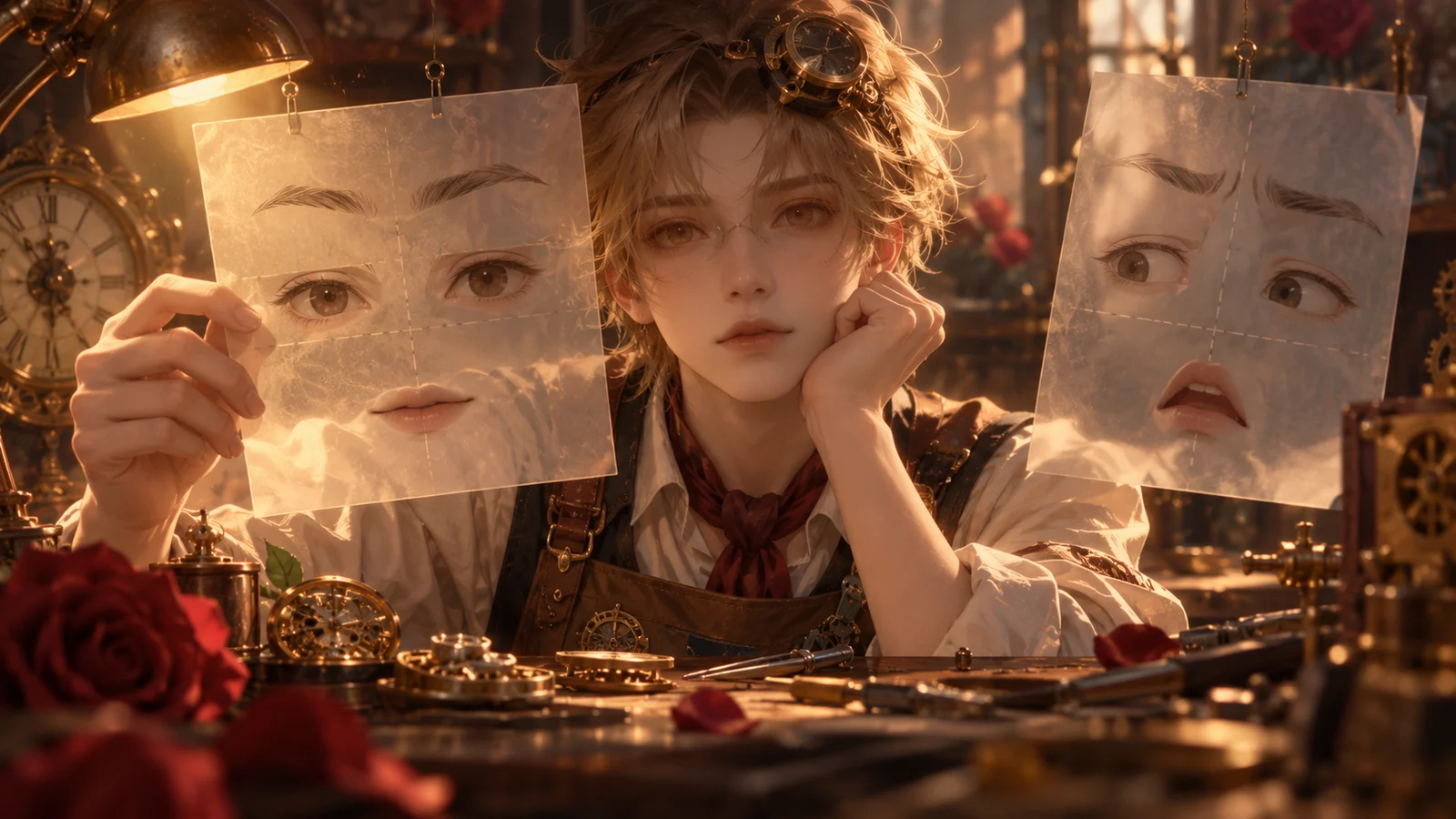
Matching the positions of eyebrows, eyes, and mouths only suggests that the parts may fit together; it does not mean the performance works. Using a fictional watchmaker’s apprentice with tearful eyes, tightly furrowed brows, and a smiling mouth, this article builds a constraint table that separates geometric compatibility, expressive intent, prohibited combinations, and additional artwork.

Production practice · 15 min
Where Characters Look in Branching Dialogue: Use Gaze Targets to Avoid Relationship Misalignment After Cuts
Write one "gaze target" for each shot, then write one "turn action" for the beat when the dialogue partner changes, and finally unify left/right descriptions with a frame of reference. A gaze target means who or what the character is looking at in that moment; a spatial anchor means the character's relative position to fixed objects such as the counter, door, or window; a frame of reference means whether "left/right" is based on the audience's viewpoint or the character's viewpoint. Write all three into the storyboard so you can check orientation and attention changes before and after cuts.