• Home
  • Blog
  • Gallery
  • Pricing
  • Home
  • Blog
  • Gallery
  • Pricing
Start creating

Creator blog

Better stories start here

Discover practical AI tools, interactive storytelling methods, and production lessons—from the first idea to a story people can play.

DRAMAFORKStories · Craft · Possibility
Topics
AllProduction PracticeProduct workflowInteractive narrativeCreation tutorialsChoosing toolsGetting started
59 articles

Editorial / 02

Latest articles

Practical methods for narrative structure, visual production, and everything in between.

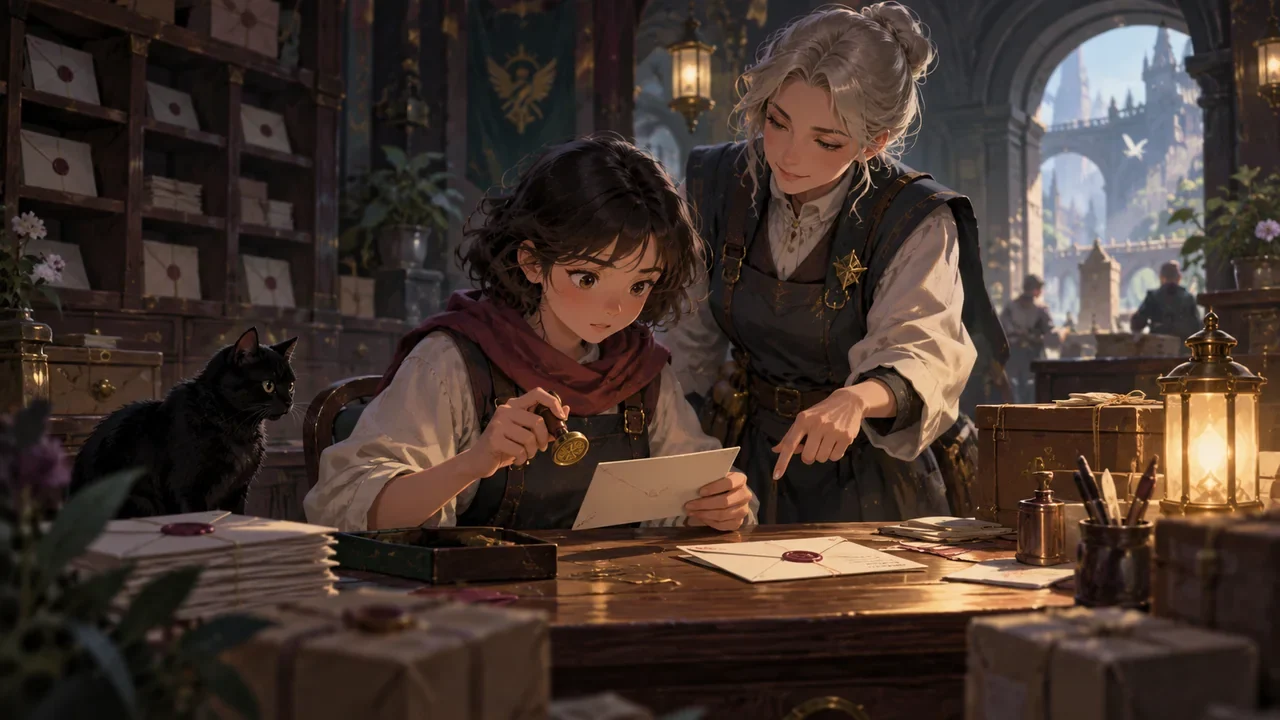
A postal novice checks envelope information first while an experienced clerk prompts the next step nearby.Topic selection
Production practice2026.10.01

How to Teach Players Controls in Interactive Stories: Let the First Attempt Also Complete a Story Task

The easiest way to teach players controls is to write the tutorial action directly as the story task itself. The player's first attempt made to advance the story is the operation you want to teach; feedback comes simultaneously from the interface and the story, and there is no need to open an extra "tutorial level."
DramaFork Editorial Team13 min read
Continue reading

Blog categories

  • All201
  • Production Practice59
  • Product workflow34
  • Interactive narrative49
  • Creation tutorials19
  • Choosing tools33
  • Getting started7

Make your story playable for the first time

Start with one story decision

Create a project

The next move is yours

Make your story playable for the first time

Do not wait for every video to be finished before testing the story. Build the characters, rules, and branches first, then let real choices guide what you make next.

Start with one story decision

Try a playable example

Let agents handle production complexity while you keep creative control.

Start with one story idea, then shape scripts, characters, shots, and branches into a playable first version.

Product

  • Pricing
  • Capabilities
  • Workflow
  • Examples
  • FAQ

Explore

  • Playable gallery
  • Creator blog
  • Creator partnership

Legal

  • Privacy
  • Terms
© 2026 DramaFork/AI interactive story studio
Press Enter to send, or drag away and release.
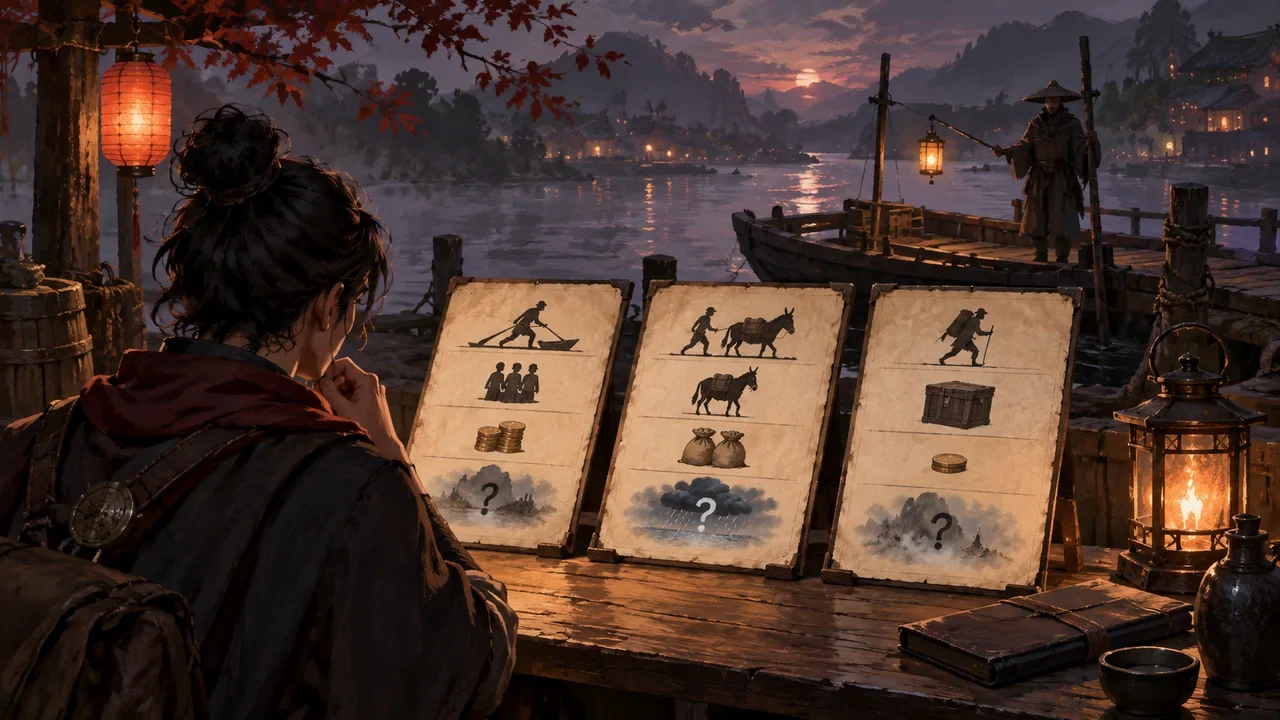
Three action cards arranged in a unified order showing action, object, and ferry cost.
Production practice2026.09.30

When Options Are Long and Players Forget the Previous One After Reading: First Unify the Comparison Order

Arrange the three options in the same order: first write the action, then the object, then the known cost, and finally the uncertain result. Place the same type of information in the same position for each option, so readers have a fixed basis for comparison. Move background exposition outside the options, and keep risks within the corresponding action. Below, a fictional teaching example, "Three Options at the Ferry," goes through three rewrites, and a manual check method for reader retelling is provided.

DramaFork Editorial Team16 min read
Continue reading
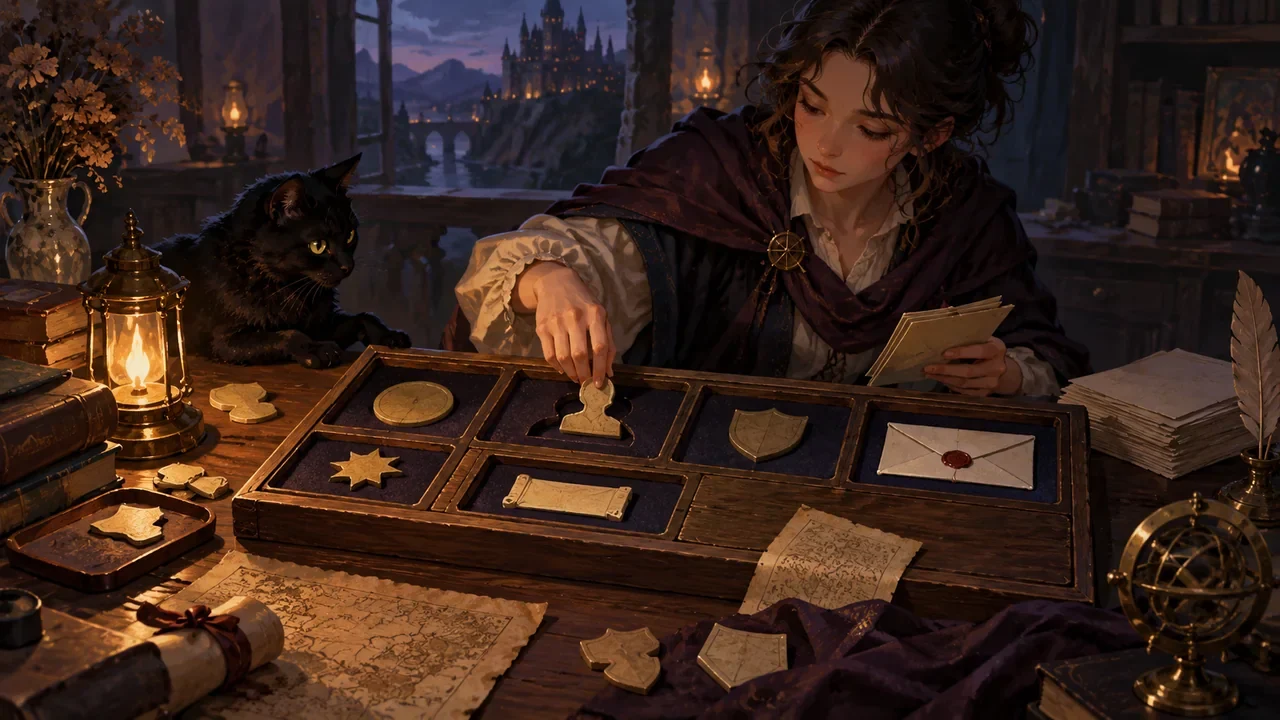
A glossary desk places a passage token and invitation envelope into separate shaped compartments, with definition boundaries shown by physical fit instead of text.
Production practice2026.09.30

How to Write an Interactive Story Glossary: Which Words Can Change, and Which Meanings Cannot?

What a glossary needs to solve is not "how should this word be translated," but "where does this word appear, to what degree may it be changed, and will changing it break the plot logic." The method can be divided into four steps: first assign each word a semantic slot, then write a definition, context, and counterexample for it, then mark the variable parts and the frozen parts, and finally list the undecided translated names separately for the reviewer to adjudicate one by one.

DramaFork Editorial Team14 min read
Continue reading
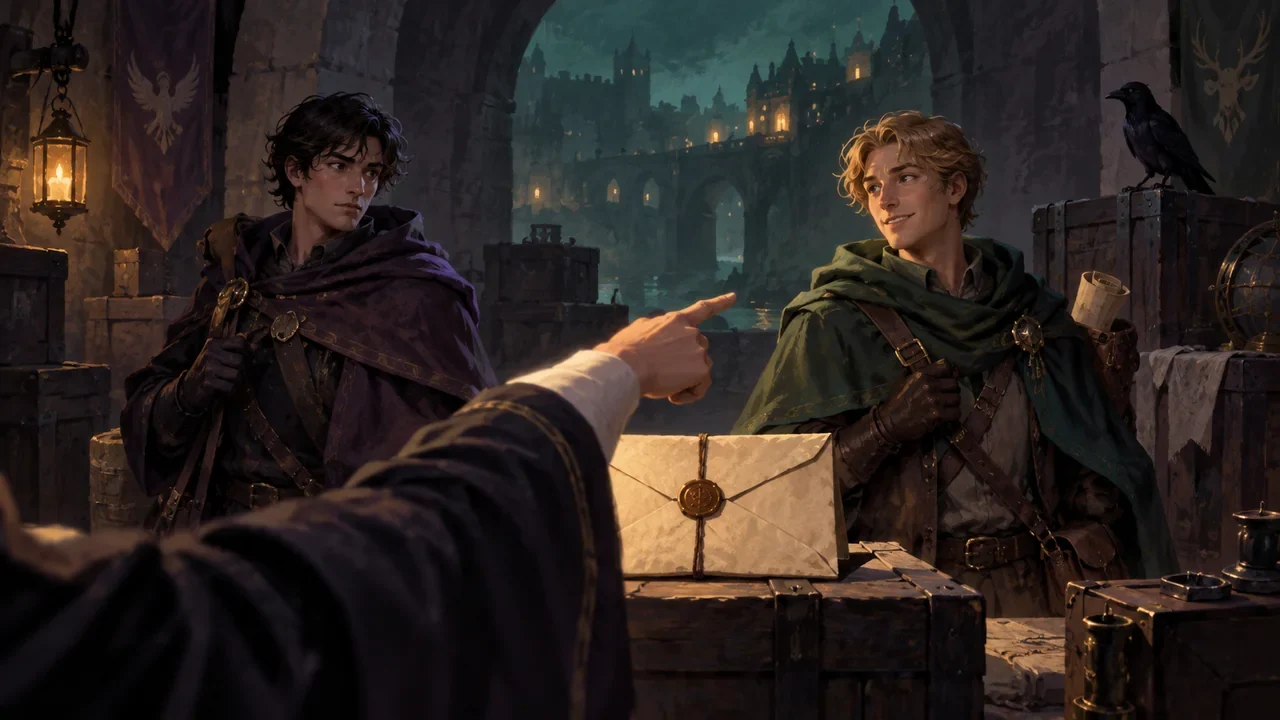
A pointing hand beside two speakers is clearly redirected toward one of them.
Production practice2026.09.29

Who Does “He” Refer to in Branching Subtitles: How Can You Remove Ambiguity Without Lengthening Dialogue?

Here is the conclusion first: replace the pronoun with a form of address, let an action carry the reference, or rearrange the sentence so that the same line of dialogue has only one interpretation when read at all three entry points, and the word count can often stay the same or even become shorter. Below, a fictional teaching example, “two adult couriers in the same scene,” is used to walk through the complete process. All characters, dialogue, and numerical values are invented for explanation, not actual test data.

DramaFork Editorial Team16 min read
Continue reading
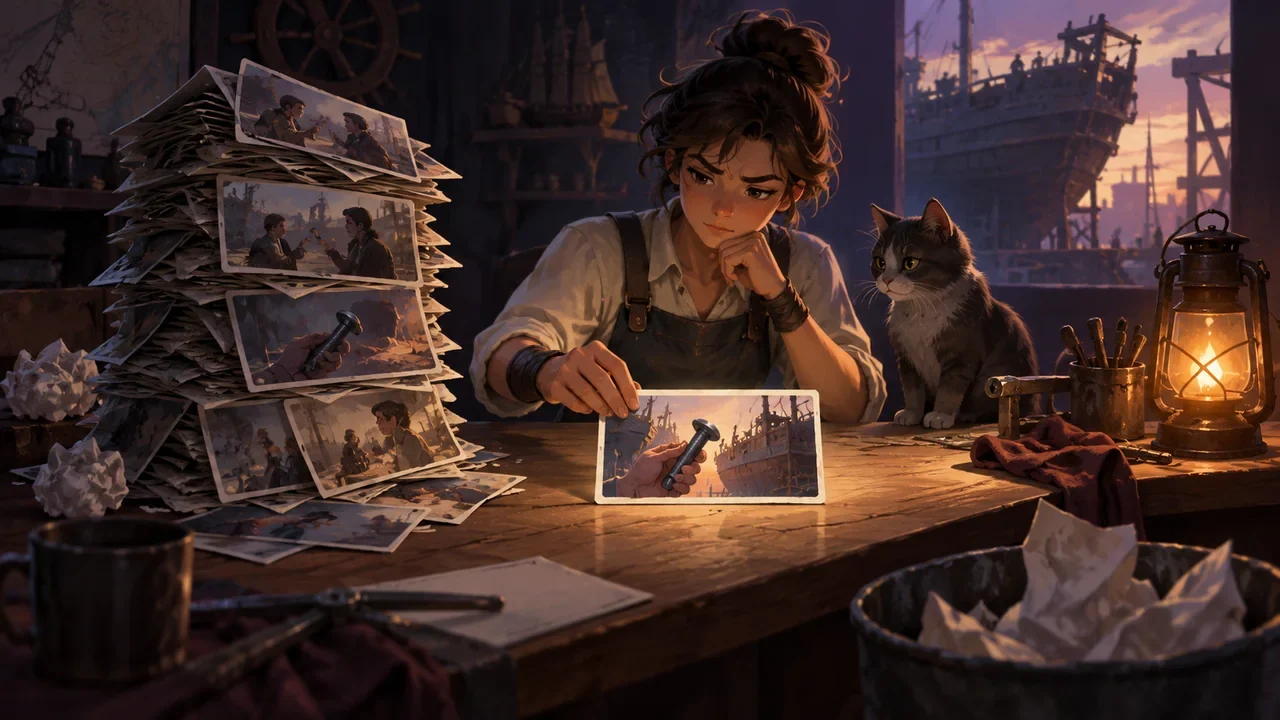
A cluttered stack of scene cards is pared down to one object, one obstacle, and one action.
Production practice2026.09.24

How to Shorten an Overlong Pre-Choice Video: Keep the Information Needed for Judgment, Then Cut Repeated Setup

Do three things first: break the current video into information segments by shot, label each one as "fact," "emotion," or "action signal," then keep only the segments that support the player's choice. When the basis for judgment is insufficient, add facts; when emotions repeat, merge them; when the action signal is missing, add a clear direction. Below, a fictional ship-repair argument case walks through it: each of the six information segments has a clear category, and after trimming, the short script still lets the player understand "whether to give the last rivet to the opponent."

DramaFork Editorial Team12 min read
Continue reading
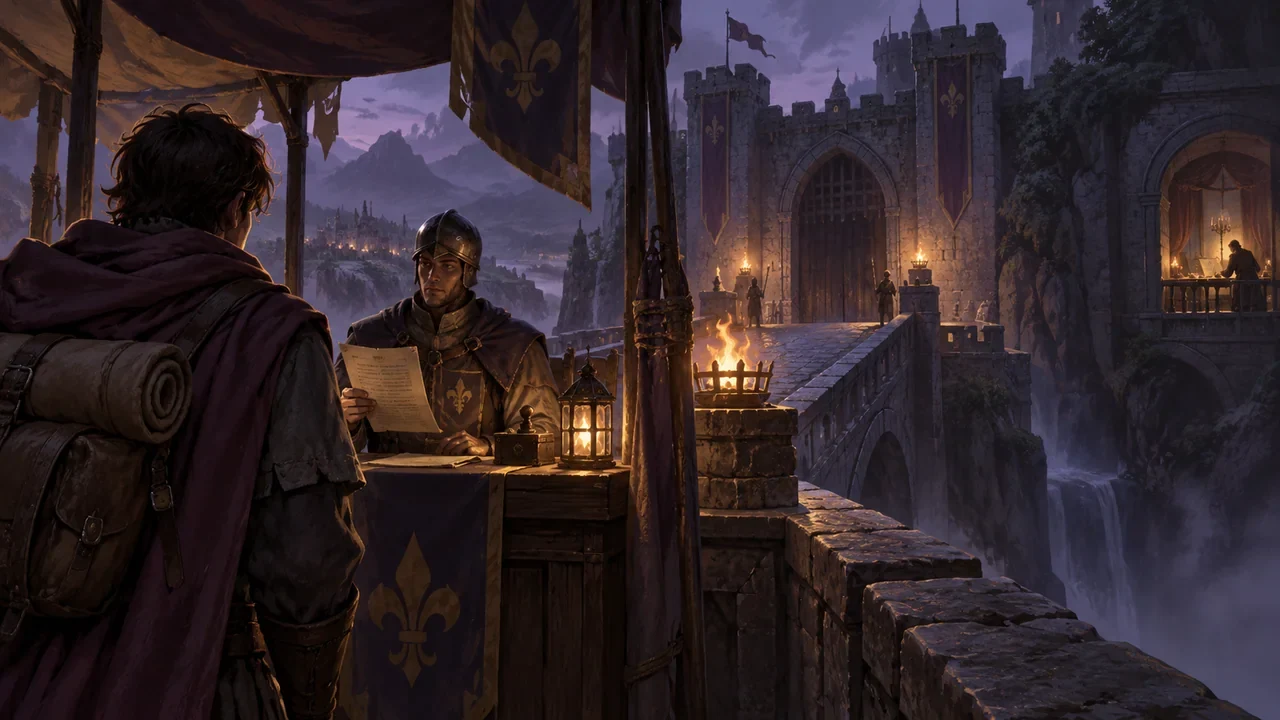
A choice shot from behind a traveler shows a visible bridge and permit clerk.
Production practice2026.09.24

Should the perspective before and after a choice be consistent: How do you avoid the player suddenly knowing something the protagonist does not?

It needs to be consistent, but the thing that must be consistent is not "what the protagonist knows," but "who is allowed to know what in this scene." The writer must first define the information sources for each scene, then make choices use only information that has already appeared in front of the player. If a choice must use knowledge the protagonist has not yet obtained, either add a scene in which the protagonist obtains it, or rewrite the choice as an action the protagonist can take based on existing clues.

DramaFork Editorial Team17 min read
Continue reading
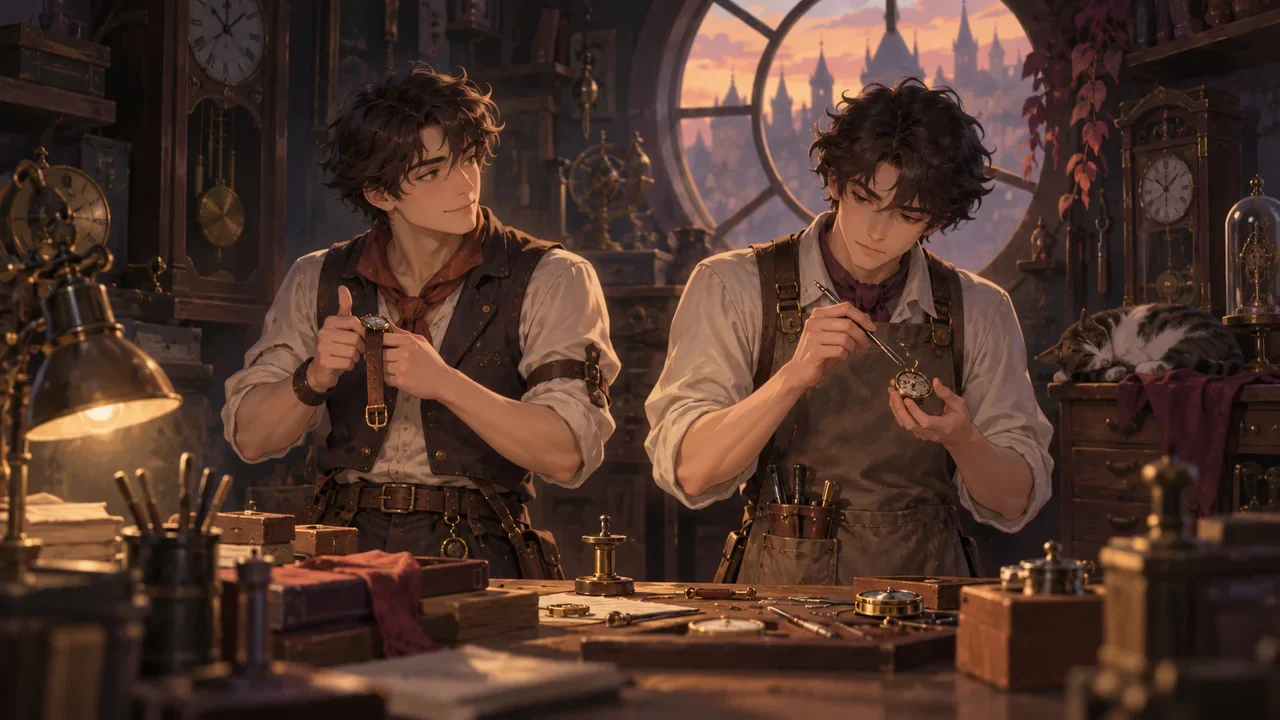
Similar-looking watch repairers distinguished by a vest, an apron, and different hand actions.
Production practice2026.09.24

Two Characters Look Alike: How Can Clothing, Behavior, and Forms of Address Help Players Tell Them Apart?

Conclusion first: split recognition into four mutually independent clues, each of which can stand on its own, so players do not need to rely on facial features to tell them apart. The four are: silhouette (different at a distance), carried objects (ownership visible up close), action habits (confirmable in motion), and forms of address and self-reference (identifiable in dialogue). Below, a pair of fictional twin watchmakers is used to build a complete construction; the characters, numbers, and dialogue are all teaching examples, not measured data.

DramaFork Editorial Team13 min read
Continue reading
A phone beside a separate information card, showing that key clues should not rely only on the screen image.
Production practice2026.09.23

When Plot Clues Are Written on a Phone Screen, How Do You Avoid Relying on a Single Image for Key Text?

The author should maintain a separate "required reading text list" that fully records each key text's exact wording, presentation medium, trigger conditions, and how players can verify it; in the visuals, treat that text as only one form of presentation, and provide subtitles or independent body text as well. If numbers, times, locations, or forms of address do not match, stop and revise the text rather than continuing to work on later shots.

DramaFork Editorial Team14 min read
Continue reading
A wet coat, rain-streaked glass, and outdoor puddles together show a continuous weather state.
Production practice2026.09.23

How to Keep Weather Continuous Across Rainy-Night Branches: Check Lighting, Sound, and Clothing Together

First treat weather as an account with a starting point, levels, and an endpoint, not as decoration improvised freely per shot. The specific method has four steps: first, write a weather line for this rain, marking how it starts, intensity levels, duration periods, shelter conditions, and how it ends; second, break this line into three comparison ledgers for lighting, sound, and clothing, each recording only observable states; third, in the storyboard or node table, mark each shot with "rain level + period + shelter," so changes happen only at the event points you specify

DramaFork Editorial Team17 min read
Continue reading
At night, the same station waiting bench is revisited, with a new dent and a moved suitcase.
Production practice2026.09.23

When the Same Location Appears a Second Time, How Can Shared Shots Still Convey Story Change?

When returning to the same location a second time, shared shots must convey change. The method is: keep the location's spatial skeleton, replace at least one visible detail caused by a character's choice, and make dialogue, objects, and eyelines form a readable difference between the two visits. The location stays the same, but the character's reactions cannot be copied.

DramaFork Editorial Team14 min read
Continue reading
Three clue tokens are identified by notches, silhouettes, and texture rather than color alone.
Production practice2026.09.22

When Using Color to Distinguish Plot Clues, How Do You Also Write Shape and Position?

Start with the method: split each clue into four layers of marking—color, shape, text, and position—then let dialogue and storyboards each take on part of the recognition task. Color only handles “first-glance grouping,” shape handles “still being distinguishable in black and white or from a color-vision-deficiency perspective,” text handles “making the clue’s purpose clear,” and position handles “making the audience remember whose side and which space it appears in.” Write all four layers into the script, and recognition no longer has to rely only on red-green differences.

DramaFork Editorial Team12 min read
Continue reading
  1. 1
  2. 2
  3. 3
  4. 4
  5. 5
  6. 6