• Home
  • Blog
  • Gallery
  • Pricing
  • Home
  • Blog
  • Gallery
  • Pricing
Start creating

Creator blog

Better stories start hereBetter stories start here

Discover practical AI tools, interactive storytelling methods, and production lessons—from the first idea to a story people can play.

DRAMAFORKStories · Craft · Possibility
Topics
AllCreation tutorialsInteractive narrativeGetting startedGalgame Route DesignVisual Novel ProductionInteractive Fiction DesignNarrative Design for Interactive Film GamesInteractive Film AccessibilityInteractive Film WorkflowInteractive Game BasicsInteractive Film Presentation and DeliveryInteractive Film LocalizationInteractive Film ProductionNarrative MechanicsCreative CollaborationGetting startedFictional Case StudyStory LocalizationMobile and AccessibilityActing and StagingExploring Time and SpaceRelationships and GroupsResources and ConstraintsInformation and CommitmentsProduction PracticeProduct workflowChoosing tools
25 articles

Editorial / 02

Latest articlesLatest articles

Practical methods for narrative structure, visual production, and everything in between.

Cinematic editorial illustration: a lighthouse keeper in the same dark coat spans two areas, one moonlit and one lit by a warm indoor lamp.Topic selection
Visual Novel Development2026.10.13

Visual Novel Sprites Look Like Stickers at Night: Planning Lighting Variants

Nighttime character sprites need more than an overall brightness reduction. Using three positions of a fictional lighthouse keeper, this guide separates color grading from local repainting and turns key-light direction, occlusion, identifying colors, and reuse limits into an actionable lighting brief.

DramaFork Editorial Team20 min read
Continue reading

The next move is yours

From a story to a playable world.From a story to a playable world.

Do not wait for every video to be finished before testing the story. Build the characters, rules, and branches first, then let real choices guide what you make next.

Start with one story decision

Try a playable example

From a story to a playable world.

Create interactive narrative games with DramaFork: connect scripts, characters, shots, and choices into a playable first version.

Explore & play

  • Explore gallery
  • Interactive film
  • Text game
  • Character IP
  • Rankings
  • Works index

Create & collaborate

  • My creations
  • Film studio
  • Text-game studio
  • Character studio
  • Creator partnership

Reading room

  • Creator blog
  • Story topics
  • Article archive

Story guides

  • Interactive storytelling
  • Making interactive films
  • Designing text games
  • Character and worldbuilding

Plans & credits

  • Pricing
  • Credits

Policies & support

  • Privacy
  • Terms
  • Cookies
© 2026 DramaFork/DramaFork · Interactive narrative games
Press Enter to send, or drag away and release.
Cinematic editorial illustration: an empty waiting room in evening light retains complete walls and seating.
Visual Novel Production2026.10.13

Characters and Props Baked into Your Visual Novel Background? Plan a Reusable Clean Plate

A clean background plate does not need to be stripped of every object. Start by listing who will leave and what will move, then complete the walls, seating, and floor revealed when those elements are removed. Use one brief to define the background plate, separate elements, and intended compositions.

DramaFork Editorial Team18 min read
Continue reading
Cinematic editorial illustration: diagonally laid floor tiles at the far end of a long corridor. A paper cutout of an adult messenger stands on the floor, casting a shadow along the ground to one side, while another trial cutout floats above the floor.
Visual Novel Creation2026.10.13

When Visual Novel Sprites Look Like They’re Floating: Checking Perspective and Foot Placement

Before adjusting scale and position, check whether the character and background share a consistent viewing height and supporting plane. Use fictional examples of an adult messenger in a corridor and at a stair landing to complete a character placement review card and distinguish fixes for compositing, background art, and character art.

DramaFork Editorial Team19 min read
Continue reading
Cinematic editorial illustration of a flower shop: the counter, character, and rear flower shelves form layers of depth like stage scenery.
Visual Novel Development2026.10.13

Visual Novel Characters Behind a Counter: How to Layer Foreground and Background Occlusion

Map the character’s route from behind the counter to the customer’s side, then separate layers according to what overlaps along the way. Use an occlusion layer breakdown sheet to specify fixed foreground elements, a separate arm layer, and exceptions when the character walks around the counter.

DramaFork Editorial Team18 min read
Continue reading
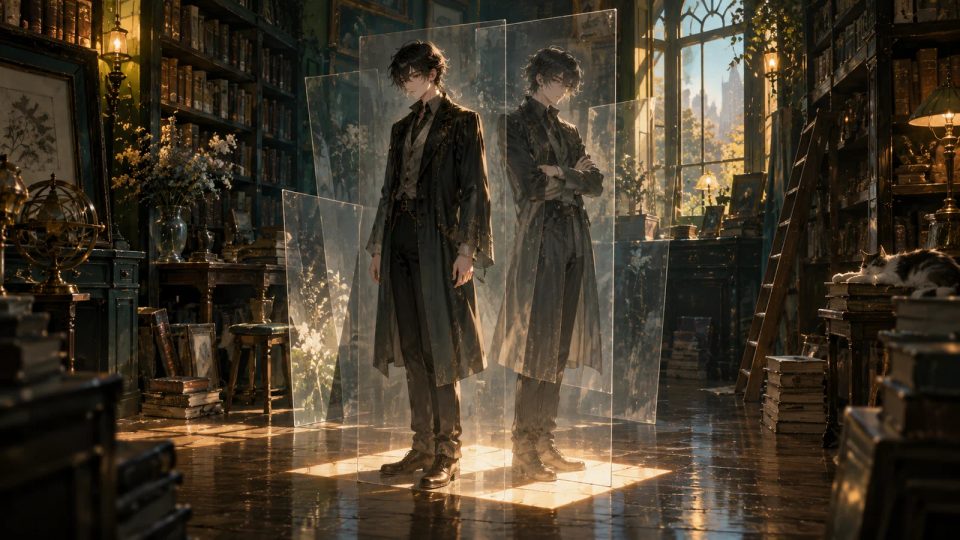
Cinematic editorial illustration: in a secondhand bookstore, translucent painted versions of the same character with arms down and arms crossed overlap, sharing a clear pool of light beneath their feet.
Visual Novel Development2026.10.13

Visual Novel Sprite Position Jumps: How to Align Different Poses

When a character jumps position during a sprite swap, check where the body anchor sits inside each image before comparing image dimensions. Use a positioning reference card to record canvas bounds, body anchors, intended movement, and swap compensation separately, so the character’s feet stay in place when switching from arms down to arms crossed.

DramaFork Editorial Team18 min read
Continue reading
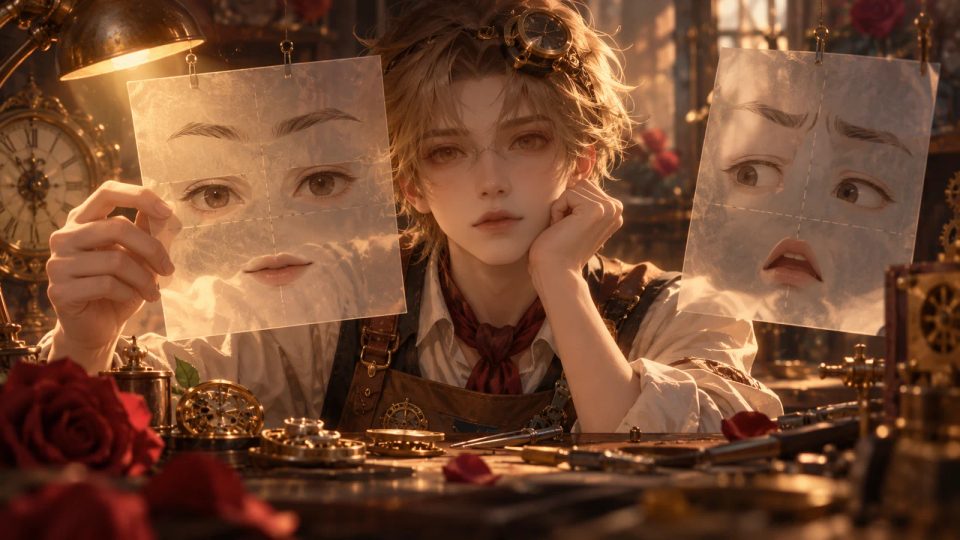
Cinematic editorial illustration: beneath a warm work lamp, translucent drawing sheets containing the eyebrows, eyes, and mouths of the same fictional watchmaker’s apprentice float in front of his complete portrait.
Visual Novel Production2026.10.13

How to Avoid Conflicting Expressions in Modular Visual Novel Character Sprites

Matching the positions of eyebrows, eyes, and mouths only suggests that the parts may fit together; it does not mean the performance works. Using a fictional watchmaker’s apprentice with tearful eyes, tightly furrowed brows, and a smiling mouth, this article builds a constraint table that separates geometric compatibility, expressive intent, prohibited combinations, and additional artwork.

DramaFork Editorial Team18 min read
Continue reading
  1. 1
  2. 2

Blog categories

  • All500
  • Creation tutorials40
  • Interactive narrative60
  • Getting started11
  • Galgame Route Design25
  • Visual Novel Production25
  • Interactive Fiction Design25
  • Narrative Design for Interactive Film Games25
  • Interactive Film Accessibility10
  • Interactive Film Workflow10
  • Interactive Game Basics10
  • Interactive Film Presentation and Delivery10
  • Interactive Film Localization10
  • Interactive Film Production10
  • Narrative Mechanics11
  • Creative Collaboration11
  • Getting started1
  • Fictional Case Study10
  • Story Localization10
  • Mobile and Accessibility10
  • Acting and Staging10
  • Exploring Time and Space10
  • Relationships and Groups10
  • Resources and Constraints10
  • Information and Commitments10
  • Production Practice59
  • Product workflow34
  • Choosing tools33

From a story to a playable world.

Start with one story decision

Create a project