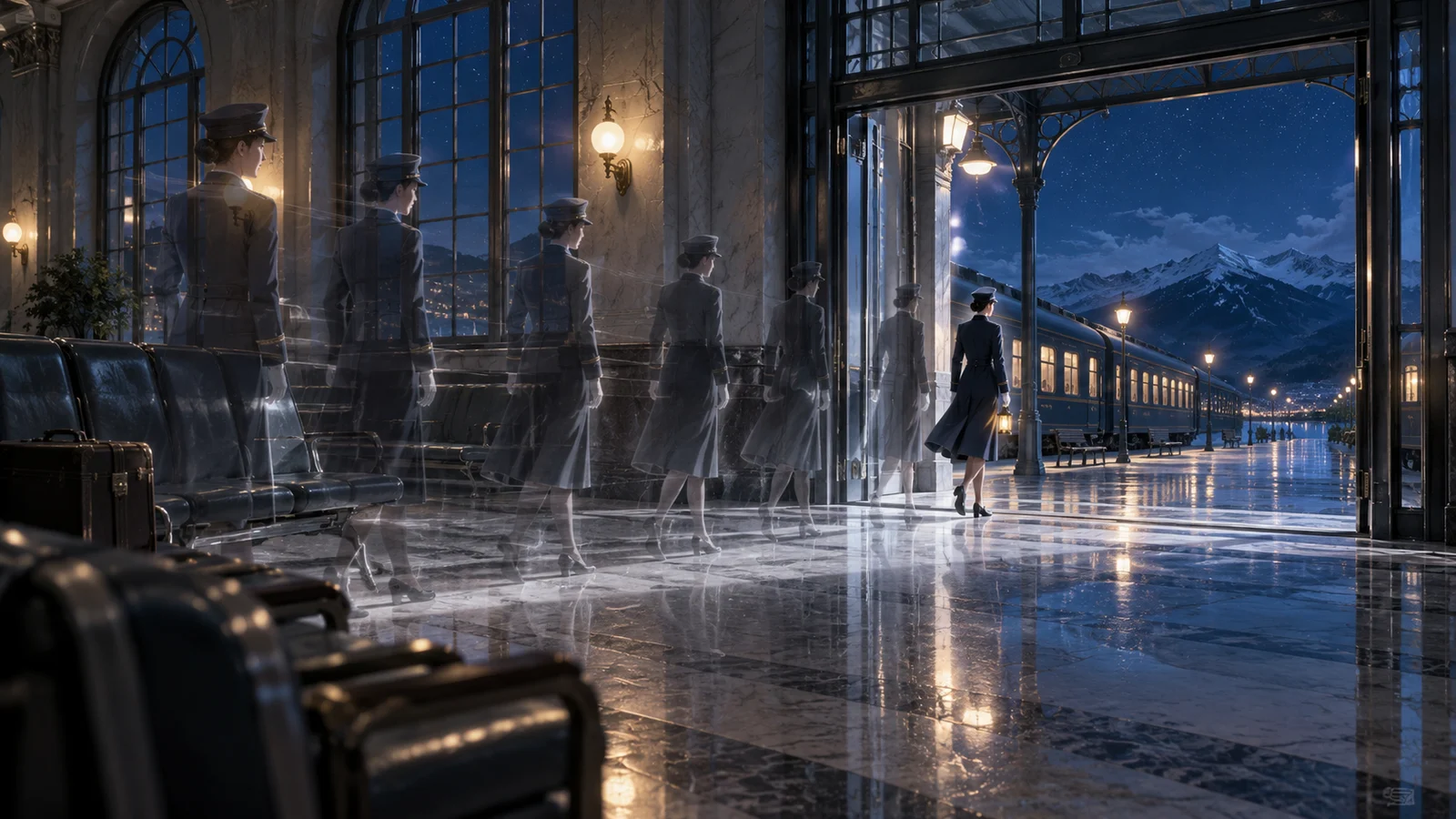
Characters and Props Baked into Your Visual Novel Background? Plan a Reusable Clean Plate
A clean background plate does not need to be stripped of every object. Start by listing who will leave and what will move, then complete the walls, seating, and floor revealed when those elements are removed. Use one brief to define the background plate, separate elements, and intended compositions.
Introduction
To plan a clean background plate, first decide which elements need to disappear, then require the environment behind them to be fully drawn. Wall decorations that always remain can be part of the plate; a passenger who leaves and luggage that gets carried away should be delivered separately. The basis for separating elements is what the scene needs to remove, not how many objects the image contains.
The production lead’s instructions to the artist should specify exactly what must become visible when a particular element is hidden. Simply asking for “layers” can still result in a file with a separate character but blank space behind them. The clean-plate brief below defines both what to separate and who is responsible for completing the obscured areas.
List the display states before deciding what to separate
The waiting room below is a fictional teaching example used to work out commission requirements. It is not a real user case, a tested result, or a DramaFork product feature.
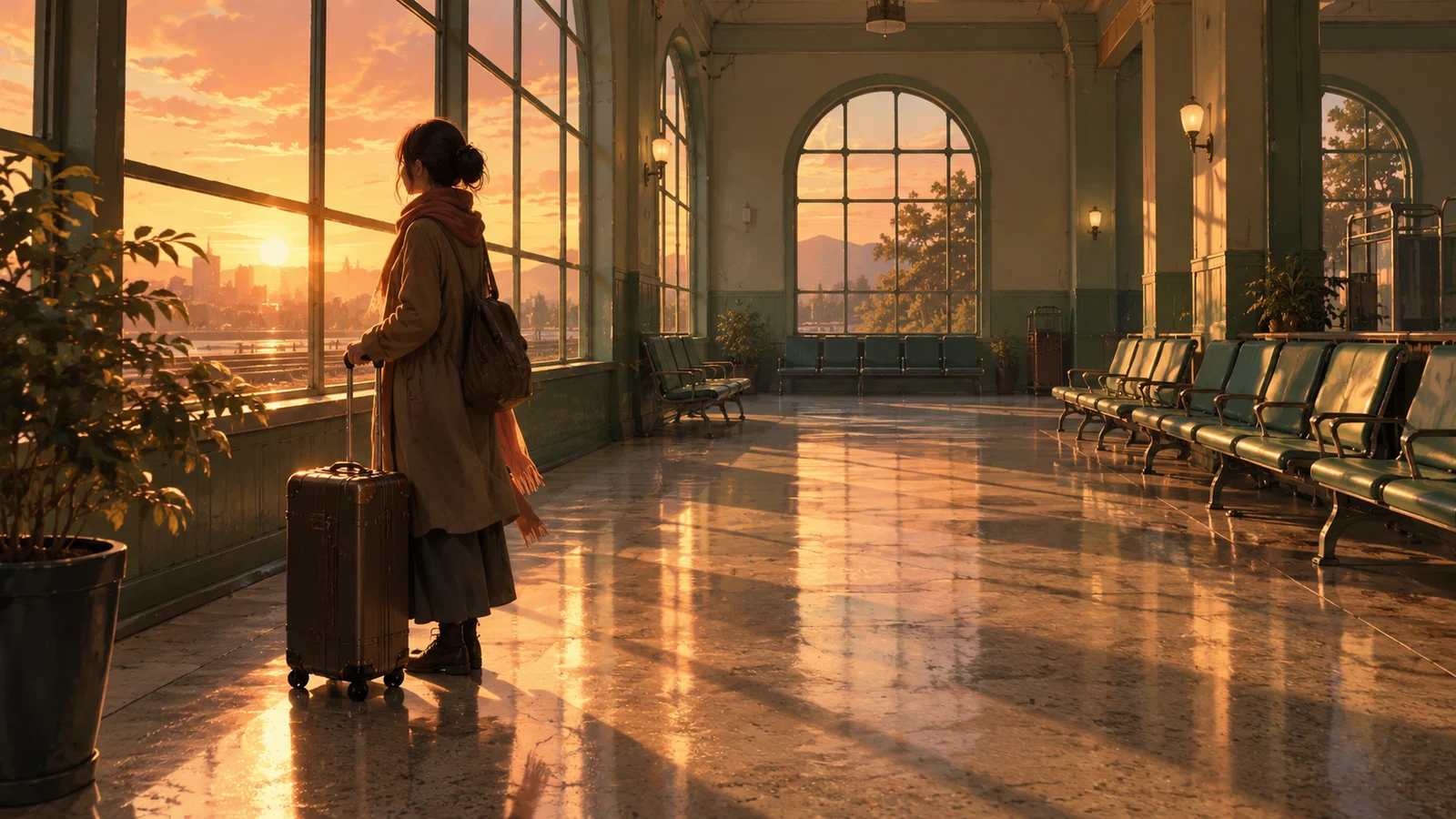
The scene uses a fixed camera angle and evening light. Fixed decorations hang on the back wall, with a row of seats in front. A passenger stands in front of the seats, with luggage to his right. The scene needs four states: both passenger and luggage present; the passenger gone but the luggage remaining; both gone; and the luggage placed again, this time to the left of the seats.
These states lead directly to the separation decisions: deliver the passenger and luggage separately, while keeping the back wall, decorations, seats, and floor in the plate. The luggage cannot be merged with the passenger because they do not always leave together. The wall decorations are objects too, but there is no requirement to remove or replace them in this commission, so they do not need to be separated.
Here, “clean” means free of these removable elements, not an unfurnished room. Removing all the seats would only expand the drawing scope. To decide whether a detail is worth separating, write down a specific use: “So it can disappear, move, or be replaced in a particular scene.” If you cannot name one, leave it in the plate for now and record the currently agreed scope of use.
Complete the areas that become visible after removal
On the composition sketch, mark the areas covered by the passenger and luggage, then identify what lies behind each one. The passenger’s upper body obscures the wall and part of its decoration; his lower body obscures the edge of the seating and the floor. The luggage obscures chair legs and joints between floor tiles. All these areas must continue properly within the plate.
Completing these areas does not mean filling the character’s outline with an approximate color. The edges of the wall decoration, the crossbars of the seats, the points where the chair legs meet the floor, and the tile joints must all connect. Otherwise, the gaps will reveal distorted structures when the character leaves. Specify “Fully draw the obscured seat backs and chair legs,” rather than the vague “Fill in behind the character.”
This work also has limits. The seats remain throughout this example, so there is no need to draw every part of the wall–floor junction permanently hidden behind them. If the seats need to be moved later, that will require additional background work. Likewise, a complete image for the current fixed camera angle does not automatically support a different angle or a camera move beyond the frame.
Record the shadows cast by the passenger and luggage as well. The passenger’s shadow must not remain after he disappears, or the scene will no longer look empty. In this example, the passenger’s shadow belongs to the separate passenger group, while the luggage needs a shadow prepared for each of its two positions. The fixed shadows of the window frame and seats remain in the plate. Where a shadow crosses the wall, floor, or seating, draw it to match the surfaces receiving it; do not assume it will still work when simply shifted elsewhere.
Turn those decisions into a deliverable clean-plate brief
Begin the brief with the shared conditions: the same composition, canvas dimensions, and direction of evening light, with separate elements aligned to their agreed positions. The table below is a completed commission brief for this example. Replace the objects to reuse it for another scene.
| Item | What stays or can be removed | Obscured areas to complete | Separate delivery and composition use |
|---|---|---|---|
| Fixed structures | Back wall, seats, and floor always remain | Complete the wall, seat backs, chair legs, and floor tiles hidden by the passenger and luggage | Include in the clean plate for use in every state |
| Wall decorations | Always remain; no removal required | Complete the decorative pattern and frame obscured by the passenger | Include in the plate; do not overlay a second copy |
| Passenger | Can leave independently | The plate supplies the environment behind him | Deliver the passenger and his corresponding shadow as a separate group for states in which he is present |
| Luggage | Can remain, be taken away, or move to the left | Chair legs and floor at the original position must be complete | Deliver the luggage separately, with a corresponding shadow for each of the right and left positions |
| Left-side placement | Use only the position agreed in the sketch | Keep the original right-side position clear; use the complete plate beneath the left-side placement | Supply a left-side composition reference to check scale and ground contact |
After the table, add an explicit rule against duplication: “The clean plate excludes the passenger, luggage, and their dedicated shadows. Composition references include them but must not be used as clean plates.” This distinguishes composites used to confirm the intended appearance from assets used to build the actual compositions.
Each removable element should have only one visible source. If a piece of luggage is already painted into the plate, adding a separate luggage element will not clear the original position when that separate layer moves. Delivery names should also distinguish “Clean Plate,” “Passenger Group,” “Luggage,” “Right-Side Shadow,” “Left-Side Shadow,” and “Composition Reference,” rather than using only “Final” to identify their purposes.
Check the sequence: keep, remove, place again
First, work through the brief on paper. Do not describe this step as testing the actual files. The first composition combines the plate, passenger group, luggage, and right-side shadow. Both passenger and luggage are present, the passenger partly obscures the wall decoration, and the luggage rests on the floor. This composition confirms the intended occupied scene.
For the second composition, remove the passenger group while retaining the luggage and right-side shadow. A continuous decorative frame, seat backs, and the floor beneath the passenger’s feet should now be visible. The luggage must not disappear with him. This step specifically checks whether the character and prop have been incorrectly tied together.
For the third composition, remove the luggage and its shadow too, leaving only the plate. Complete chair legs and floor tiles should be visible where the luggage stood, with no suitcase corner, dark patch, or transparent gap left behind. Following structural lines makes missing reconstruction work easier to locate than judging only whether the overall image “looks like an empty room.”
For the fourth composition, place the luggage at the agreed left-side position and use the left-side shadow. The right side should stay clear, and two sets of shadows must not appear on the left. If the luggage’s perspective clearly fails to fit after the move, a separate left-side version needs to be drawn. “Delivered separately” does not mean “ready to place anywhere.”
When the final files arrive, rebuild these four compositions using the actual deliverables and compare them with the reference images. The paper walkthrough establishes whether the requirements are internally consistent; checking the files establishes whether the artwork fulfills them.
Set a boundary between reuse and additional drawing
The more elements you separate, the more edges, shadows, and combinations you need to maintain. This example keeps the fixed wall decorations and seats in the plate and separates only objects with clearly defined state changes. The tradeoff is that any later scene involving moving the seats or taking down a decoration will require further drawing. That is an acceptable scope choice, and it should be made explicit in advance.
If the entire scene appears only once and neither the passenger nor the luggage ever leaves, a single composite background may meet the requirements. If the scene needs continuous movement, turning, or changes in lighting, a clean plate alone is still insufficient. Poses, perspective, and lighting variations need separate planning.
Before sending the commission, have the recipient explain three things using only the brief: which elements to hide, which complete structures should be revealed, and which assets form each state. If any answer depends on guesswork, add the missing position or purpose to the table before finalizing the drawing scope.