
• Home
  • Blog
  • Gallery
  • Pricing
  • Home
  • Blog
  • Gallery
  • Pricing
Start creating

Creator blog

Better stories start here

Discover practical AI tools, interactive storytelling methods, and production lessons—from the first idea to a story people can play.

DRAMAFORKStories · Craft · Possibility
Topics
AllProduction PracticeProduct workflowInteractive narrativeCreation tutorialsChoosing toolsGetting started
19 articles

Editorial / 02

Latest articles

Practical methods for narrative structure, visual production, and everything in between.

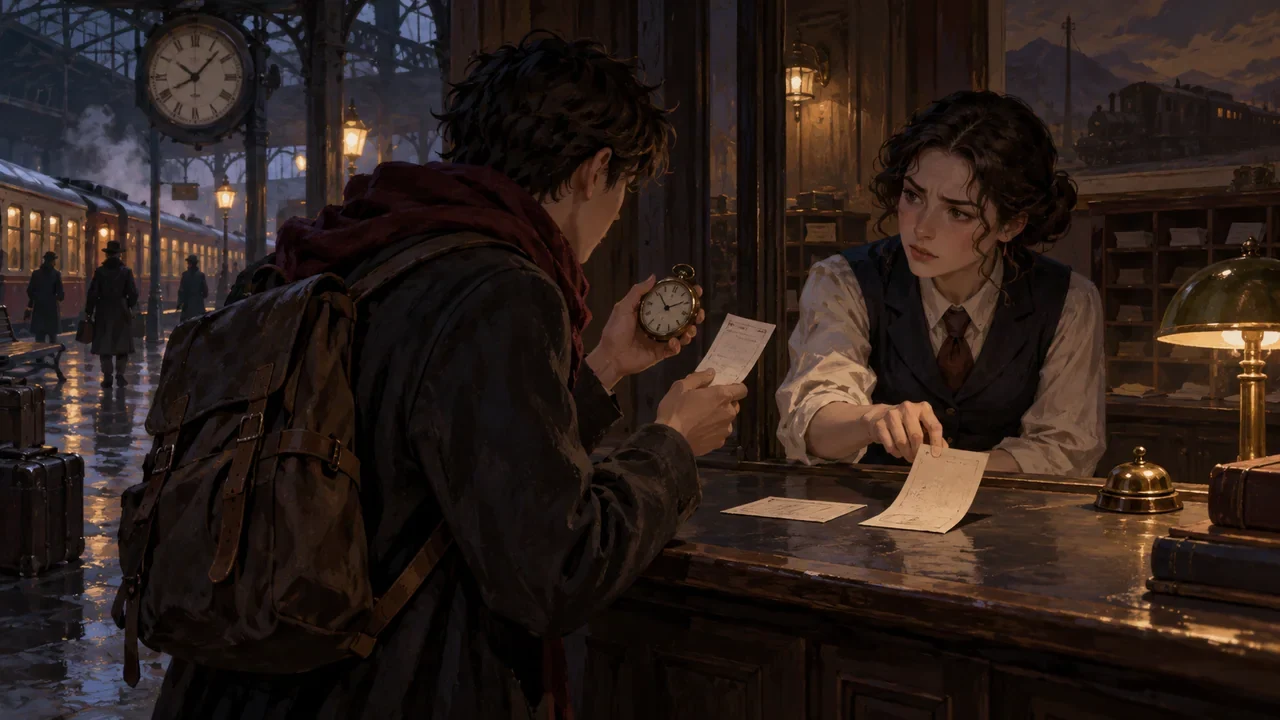
A station clerk faces a clock and ticket evidence, preparing to admit the time statement was wrong.Topic selection
Creation tutorials2026.09.06

How an Unreliable Character Responds After Being Exposed: Dialogue Design for Denial, Admission, and Correction

When a player confronts a character with contradictory evidence, don't just find an excuse for them. First determine which kind of unreliable they are—deliberate liar, misrememberer, or someone with incomplete information—then decide how they respond. The dialogue paths differ completely, and mixing them makes the character seem to change intelligence on demand.


DramaFork Editorial Team12 min read
Continue reading

Blog categories

  • All201
  • Production Practice59
  • Product workflow34
  • Interactive narrative49
  • Creation tutorials19
  • Choosing tools33
  • Getting started7

Make your story playable for the first time

Start with one story decision

Create a project

The next move is yours

Make your story playable for the first time

Do not wait for every video to be finished before testing the story. Build the characters, rules, and branches first, then let real choices guide what you make next.

Start with one story decision

Try a playable example

Let agents handle production complexity while you keep creative control.

Start with one story idea, then shape scripts, characters, shots, and branches into a playable first version.

Product

  • Pricing
  • Capabilities
  • Workflow
  • Examples
  • FAQ

Explore

  • Playable gallery
  • Creator blog
  • Creator partnership

Legal

  • Privacy
  • Terms
© 2026 DramaFork/AI interactive story studio
Press Enter to send, or drag away and release.
A ferry manager refuses to open the gate while pointing toward a roster and a lost-ticket box.
Creation tutorials2026.09.05

After an AI Character Refuses the Player, How Do You Preserve Story Actions That Can Continue?

After a character says "no," the author can add four things: the reason for refusal, information that can still be provided, alternative actions, and conditions for asking again. This preserves the character's boundaries while also giving the player a direction to continue. Below, a fictional ferry manager is used to explain the writing method; the characters and dialogue are all teaching examples.

DramaFork Editorial Team13 min read
Continue reading
Three nested envelopes on a bookshop counter: the outer one open, a middle one partially revealed, and the inner one still sealed, with a clerk's hand resting protectively beside them.
Creation tutorials2026.09.05

When to Reveal a Character's Secret: Writing Three-Layer Disclosure Conditions for AI Dialogue

You can split the same secret into three layers of information, each tied to observable evidence and relationship behavior: only when the player has seen something and done something does the character have a reason to speak more deeply. Chat turn count can help pace the rhythm, but it cannot by itself explain why a character is willing to disclose. Below, a fictional teaching example illustrates the approach. Lin Wan, a secondhand bookstore clerk, conceals the true sender of an old book; we split this secret into three layers.

DramaFork Editorial Team17 min read
Continue reading
A lighthouse keeper stands between a warmly lit doorway with a departing loved one's bag and the empty stairway to the tower, divided warm and cool lighting within one scene.
Creation tutorials2026.09.05

An AI Character Has Two Opposing Wishes—How Can the Dialogue Still Stay Coherent?

To keep opposing wishes coherent, first break them into four layers: surface goal, deep need, current pressure, and the bottom line that must not be crossed. Then mark the main intention of each line of dialogue and what kind of constraint it is under, and check whether every turn has a cause. Below, a fictional lighthouse keeper, A-Che, demonstrates this: he wants his younger brother A-Yan to leave the island, yet fears guarding the tower alone. The characters and dialogue are teaching examples and do not correspond to real user records.

DramaFork Editorial Team13 min read
Continue reading
A bookshop keeper slides a small parcel across the counter toward a visitor's waiting hand, leaving room to respond.
Creation tutorials2026.09.03

From Character Bio to Opening Dialogue: How an AI Character's First Line Gives Players Room to Respond

A good opening line should establish the current situation, reveal the character's way of speaking, and give the player an entry point to respond. A character bio can contain a full history, but the first line only needs to let the reader know: who I am talking to, what is happening right now, and what can be said next.

DramaFork Editorial Team14 min read
Continue reading
A gloved adventurer's hand reaches beyond three arranged stepping stones toward an unexpected rope bridge, while a guide's lantern illuminates the unplanned but possible action.
Creation tutorials2026.09.03

When the Player Doesn't Pick an Option: Execution, Clarifying Questions, and Refusal Templates for AI Text Adventures

After the player enters free-form input, first judge whether the action is clear, whether it fits the current world, and whether the conditions for execution are met, then decide to execute, ask a clarifying question, or refuse. Letting the player express themselves freely does not mean a single sentence can rewrite a character's identity, resources, or facts that have already happened.

DramaFork Editorial Team14 min read
Continue reading
A traveler at a forest camp facing limited supplies and a forked trail at dawn.
Creation tutorials2026.09.02

How to Write the First Round of an AI Text Adventure: Player Identity, Resources, Actions, and Feedback Template

The first round should let players know who they are, what they need to accomplish right now, what actions they can take, and what their actions have already changed. Prepare the initial state, then break down the result of one action into narrative, status, log, and next steps, and you can check whether the opening has formed a complete turn.

DramaFork Editorial Team14 min read
Continue reading
A character's tailored coat hangs beside a notebook, a hidden brass key and a small mirror, forming a tactile portrait of identity, desire and boundaries, close still-life framing.
Creation tutorials2026.09.02

How to Write an AI Character Setting Card: Identity, Desire, Secret, Tone, and Boundary Template

Turning a character biography into a character setting card is key to making every setting guide a response: what the character knows, what they want, how they speak, what they will refuse, and what is still allowed to continue after refusal. After filling it out, check it with fixed situations, rather than only looking at whether the adjectives are rich.

DramaFork Editorial Team14 min read
Continue reading
  1. 1
  2. 2