An AI Character Has Two Opposing Wishes—How Can the Dialogue Still Stay Coherent?
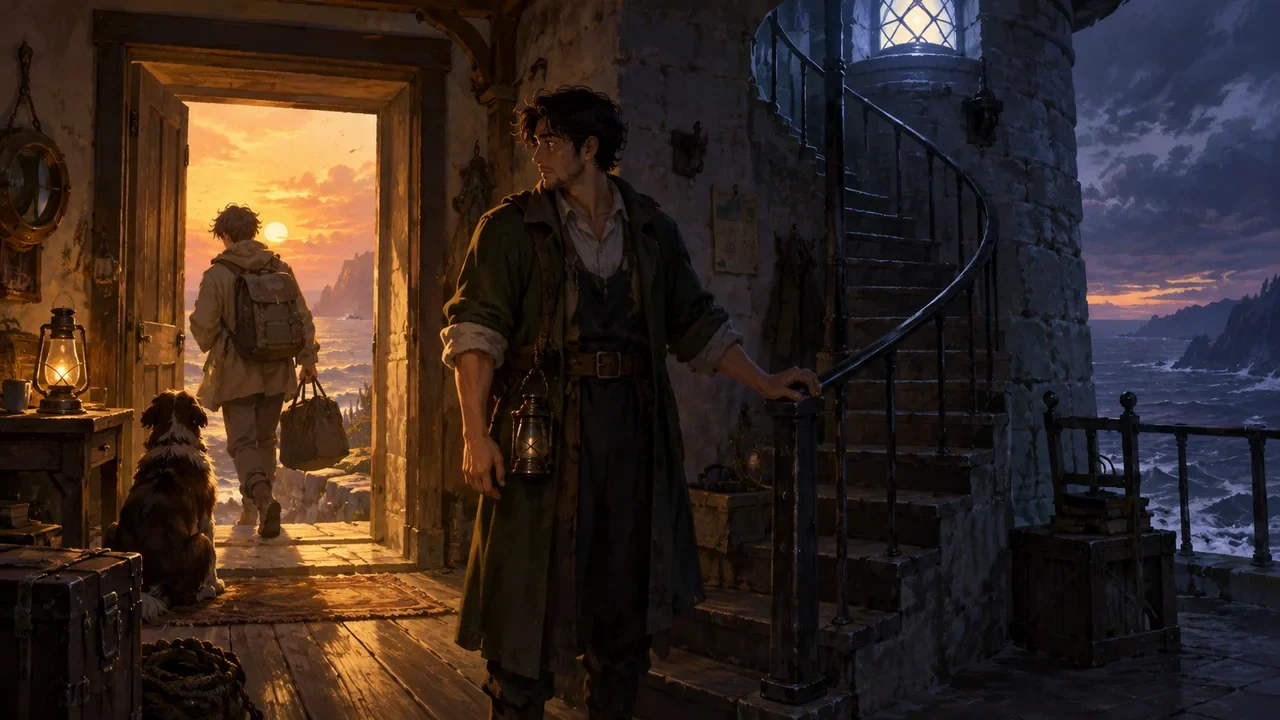
To keep opposing wishes coherent, first break them into four layers: surface goal, deep need, current pressure, and the bottom line that must not be crossed. Then mark the main intention of each line of dialogue and what kind of constraint it is under, and check whether every turn has a cause. Below, a fictional lighthouse keeper, A-Che, demonstrates this: he wants his younger brother A-Yan to leave the island, yet fears guarding the tower alone. The characters and dialogue are teaching examples and do not correspond to real user records.
Introduction
To keep opposing wishes coherent, first break them into four layers: surface goal, deep need, current pressure, and the bottom line that must not be crossed. Then mark the main intention of each line of dialogue and what kind of constraint it is under, and check whether every turn has a cause. Below, a fictional lighthouse keeper, A-Che, demonstrates this: he wants his younger brother A-Yan to leave the island, yet fears guarding the tower alone. The characters and dialogue are teaching examples and do not correspond to real user records.
Four-layer breakdown: first distinguish which line is speaking for which layer
| Layer | A-Che's content | How it appears in dialogue |
|---|---|---|
| Surface goal | Make his younger brother leave on tomorrow morning's supply ship | Spoken instructions, urging, arrangements |
| Deep need | Someone to prove that he can hold on alone | Rarely said directly, hidden in testing and concessions |
| Current pressure | Tonight's storm arrives early; the light cannot go out | Determines speech rate, interruptions, answering off-topic |
| Bottom line | Do not make the choice to stay or leave for his younger brother | Once forced to choose on his behalf, he will stop or change his words |
The four layers can affect one line at the same time, but primary and secondary must be distinguished. Within the same scene, when the intention changes, there should be a traceable trigger point, such as a follow-up question, a ship whistle, or a flicker of the light. Readers therefore have a basis for judging why the character retreats, and the author can also check whether this cause is sufficient.
Choices and dialogue under four kinds of pressure
Pressure one: time is tight. The supply ship arrives in two hours, and A-Yan is still repairing the broken rotating gear. A-Che's choice is to urge, but not to choose for him.
A-Che: I'll take the gear. You go pack. A-Yan: Pack what? A-Che: You know what. A-Yan: Brother, every time you say "you know what," you're telling me to leave.
Here the surface goal comes first, and the deep need is hidden in "I'll take it"—he wants to prove he can carry it. The bottom line has not been touched, so the dialogue is short, hard, and unexplained.
Pressure two: the younger brother asks back. A-Yan asks: "Are you afraid of being alone?" A-Che's retreat appears, but he does not deny the goal.
A-Che: Afraid. A-Yan: Then I'll stay. A-Che: No. Being afraid is my business; leaving is yours.
Note that "afraid" is an acknowledgment of pressure, not an overturning of the goal. The retreat falls on the emotional layer, while the goal layer does not move, so there is no contradiction before and after.
Pressure three: the bottom line is approached. A-Yan says: "If you don't say stay or leave, I won't get on the ship." This forces A-Che to choose for him, triggering the bottom line.
A-Che: The ship won't wait for you. A-Yan: Neither will you. A-Che: (fastens the lamp cover) The light waits for you. I won't press this fingerprint for you.
"I won't press this fingerprint for you" is the externalization of the bottom line. He still wants his younger brother to leave, but refuses to accomplish it with a command. The dialogue switches from urging to a silent action, and readers can feel that this is the same person.
Pressure four: the storm bears down. Only one bar of lamp oil remains, and if A-Yan stays he can help. A-Che's deep need and surface goal collide head-on for the first time.
A-Yan: If I stay, we can last one more night. A-Che: We can. A-Yan: Then— A-Che: I do want you to stay with me. But I also want to try once, to get through this night without relying on you. Report to me that you're safe when you reach shore, and wait until dawn to hear me tell you the result.
This line simultaneously acknowledges the fear of being alone and the need to prove independence. Letting his younger brother report that he is safe preserves the relationship; guarding the tower alone carries out the choice he is willing to bear. The need is still "prove that I can hold on too," and it does not suddenly switch to another set of motives at the end.
Desire conflict adjudication table
After writing a scene, use this table to check line by line. When filling in the "trigger point" column, write clearly which previous line or action made the character change layers.
| Dialogue/action | Which layer it serves | Trigger point | Whether the bottom line is crossed | Verdict |
|---|---|---|---|---|
| "I'll take the gear. You go pack." | Surface goal | The ship schedule is approaching | No | Keep |
| "Being afraid is my business; leaving is yours." | Pressure + goal | The younger brother asks back | No | Keep |
| "I won't press this fingerprint for you." | Bottom line | Forced to choose for him | Yes, but it has been held | Keep |
| "Wait until dawn to hear me tell you the result." | Deep need | Lamp oil is critically low | No | Keep |
| "You stay. I can't do it alone." | Overturns the goal | None | Yes, not held | Rewrite or delete |
The last line is not something that cannot appear, but it needs a new and sufficiently strong trigger point, such as A-Che being injured and losing the ability to act. If he changes his words without a trigger point, readers will read it as the author fishing for emotion.
A brief reminder when collaborating with AI
If you ask AI to continue this kind of dialogue, first write into the prompt which layer it is currently serving, for example, "At this moment, show only the pressure layer; do not touch the bottom line." Prompt constraints do not guarantee that every output is correct, and after generation you still need to manually check the trigger points and bottom line line by line. Do not expect the model to automatically remember the layered state from the previous scene.
Completion check
- Does each of the four layers have at least one identifiable line of dialogue or action?
- Every time there is a switch between layers, is there a specific trigger point, rather than a sudden change of face?
- When the bottom line is approached, does the character make an observable action to hold the line?
- Is the deep need translated at least once into an executable goal, rather than stopping only at emotional words?
- Are there any rows in the adjudication table where "the words change without a trigger point"? If so, rewrite them.
Take that capricious character you have on hand, choose only one scene, and fill out the adjudication table once. If you cannot fill in all four layers, it means the contradiction has not yet been broken apart; if you fill them in but the trigger point is blank, it means the dialogue still lacks a turn that readers can follow.