• Home
  • Blog
  • Gallery
  • Pricing
  • Home
  • Blog
  • Gallery
  • Pricing
Start creating

Creator blog

Better stories start hereBetter stories start here

Discover practical AI tools, interactive storytelling methods, and production lessons—from the first idea to a story people can play.

DRAMAFORKStories · Craft · Possibility
Topics
AllCreation tutorialsInteractive narrativeGetting startedGalgame Route DesignVisual Novel ProductionInteractive Fiction DesignNarrative Design for Interactive Film GamesInteractive Film AccessibilityInteractive Film WorkflowInteractive Game BasicsInteractive Film Presentation and DeliveryInteractive Film LocalizationInteractive Film ProductionNarrative MechanicsCreative CollaborationGetting startedFictional Case StudyStory LocalizationMobile and AccessibilityActing and StagingExploring Time and SpaceRelationships and GroupsResources and ConstraintsInformation and CommitmentsProduction PracticeProduct workflowChoosing tools
25 articles

Editorial / 02

Latest articlesLatest articles

Practical methods for narrative structure, visual production, and everything in between.

Cinematic editorial illustration: a stationary clay pot retains the same outline across overlapping translucent frames.Topic selection
Interactive Fiction Design2026.10.13

Interactive Fiction: How One Changed Detail Can Carry an Object’s Description Forward

When players examine an object again, keep a short phrase that identifies it, then add the current difference they have not yet read about. If nothing has changed, confirm that the state continues. This clay-pot worksheet separates the world’s current state from what the player last saw, with matching text for a first examination, a changed state, and an unchanged state.

DramaFork Editorial Team17 min read
Continue reading

The next move is yours

From a story to a playable world.From a story to a playable world.

Do not wait for every video to be finished before testing the story. Build the characters, rules, and branches first, then let real choices guide what you make next.

Start with one story decision

Try a playable example

From a story to a playable world.

Create interactive narrative games with DramaFork: connect scripts, characters, shots, and choices into a playable first version.

Explore & play

  • Explore gallery
  • Interactive film
  • Text game
  • Character IP
  • Rankings
  • Works index

Create & collaborate

  • My creations
  • Film studio
  • Text-game studio
  • Character studio
  • Creator partnership

Reading room

  • Creator blog
  • Story topics
  • Article archive

Story guides

  • Interactive storytelling
  • Making interactive films
  • Designing text games
  • Character and worldbuilding

Plans & credits

  • Pricing
  • Credits

Policies & support

  • Privacy
  • Terms
  • Cookies
© 2026 DramaFork/DramaFork · Interactive narrative games
Press Enter to send, or drag away and release.
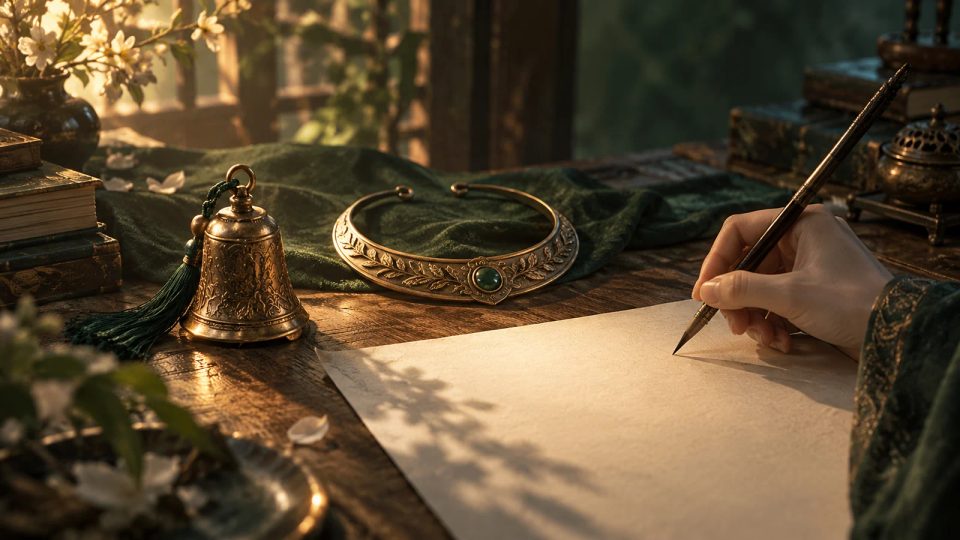
Cinematic editorial illustration: a copper bell and a copper collar ornament sit side by side on a table.
Interactive Fiction Design2026.10.13

Handling Typos in Interactive Fiction: Don’t Change Commands for Players

When an input may contain a typo, preserve what the player entered, identify the uncertain text, and let them confirm a suggestion or type again. A reusable typo-repair prompt table separates wording suggestions from story actions, so correction does not choose an action or target for the player.

DramaFork Editorial Team16 min read
Continue reading
Cinematic editorial illustration: a person stands beside a window, showing a companion a completely blank sheet of paper.
Interactive Fiction Design2026.10.13

Quoted Commands in Interactive Fiction: Is the Player Acting or Quoting?

Determine what the whole input is doing before deciding whether an action inside a quotation has been requested. Fill out a quoted-input decision card using the same command, “close the window,” to distinguish direct action, character speech, reported material, and questions about commands—and preserve quotation boundaries even when quotation marks are missing.

DramaFork Editorial Team18 min read
Continue reading
Cinematic editorial illustration: a character has picked up an oil lamp and stopped before the closed door to a dark room.
Interactive Fiction Design2026.10.13

Sequential Actions in Interactive Fiction: Show Exactly Where Execution Stopped

When a sequence of actions in a single input gets blocked midway, feedback must explain what has taken effect, which step failed, and what has not started. Use a compound-command execution report to make the rules for connecting words, action dependencies, and the limits on resuming after resubmission explicit.

DramaFork Editorial Team18 min read
Continue reading
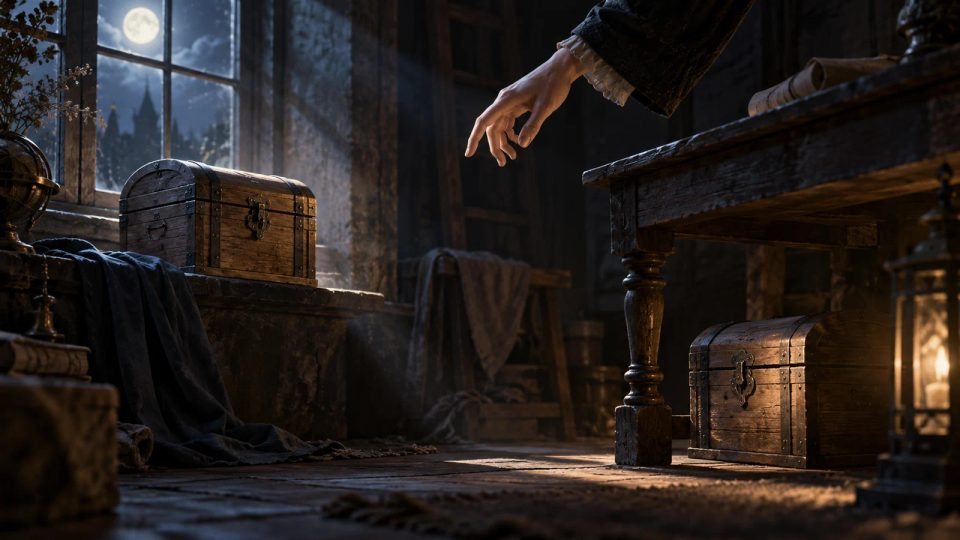
Cinematic editorial illustration: in a dim storeroom, two similar wooden boxes sit by a window and under a table.
Interactive Fiction Design2026.10.13

Two Same-Named Boxes in a Text Adventure: Clarify Without Choosing for the Player

When a player says “open the box,” keep the opening action pending and ask which box they mean, using location details already shown. Resume only when the reply identifies one candidate and the scene is unchanged. A target clarification turn card records candidates, replies, cancellation, and expiration conditions.

DramaFork Editorial Team17 min read
Continue reading
Cinematic editorial illustration: soft light from different directions converges on a single old lens on a darkroom table. Disassembled lens parts beside it sit in a separate beam of light. No text, letters, numbers, logos, watermarks, brand elements, or interface screenshots.
Interactive Fiction Design2026.10.13

Synonymous Commands in Interactive Fiction: When “Look” and “Study” Mean the Same Action

Similar meanings alone do not make commands equivalent. Define their boundaries by target, method, and end state so that “look at the lens” and “study the lens” can share observation feedback while disassembly, wiping, and other actions remain distinct.

DramaFork Editorial Team17 min read
Continue reading
  1. 1
  2. 2

Blog categories

  • All500
  • Creation tutorials40
  • Interactive narrative60
  • Getting started11
  • Galgame Route Design25
  • Visual Novel Production25
  • Interactive Fiction Design25
  • Narrative Design for Interactive Film Games25
  • Interactive Film Accessibility10
  • Interactive Film Workflow10
  • Interactive Game Basics10
  • Interactive Film Presentation and Delivery10
  • Interactive Film Localization10
  • Interactive Film Production10
  • Narrative Mechanics11
  • Creative Collaboration11
  • Getting started1
  • Fictional Case Study10
  • Story Localization10
  • Mobile and Accessibility10
  • Acting and Staging10
  • Exploring Time and Space10
  • Relationships and Groups10
  • Resources and Constraints10
  • Information and Commitments10
  • Production Practice59
  • Product workflow34
  • Choosing tools33

From a story to a playable world.

Start with one story decision

Create a project