When a translated name changes, how do you update the initials in its clues?
When names are part of a puzzle’s logic, changing a translated name affects inscriptions, dialogue references, and answers. A dependency checklist that records both derivations and locations helps you update the entire solution path.

Update the derivation first, then replace the name
After changing a translated name, first recalculate its initials, then follow a dependency checklist to update related objects, clue references, and answers. The completion criterion is this: readers using only the new version can derive the new answer from explicit rules, without leftover initials directing them to a different object.
The problem addressed here is broken connections across objects caused by a name change. Updating the answer sheet alone is not enough: the answer may be correct while a drawer label still carries the old letters; dialogue may use the new name while a recorded hint still tells readers to find the old label. The checklist must therefore record both “what this is derived from” and “where it appears.”
The “Rain Harbor Archive” below is a fictional teaching example. Its characters, files, and dialogue were all invented for illustration. It is not a real user case, does not represent tested results, and does not describe existing DramaFork product features.
First decide exactly how the new initials are derived
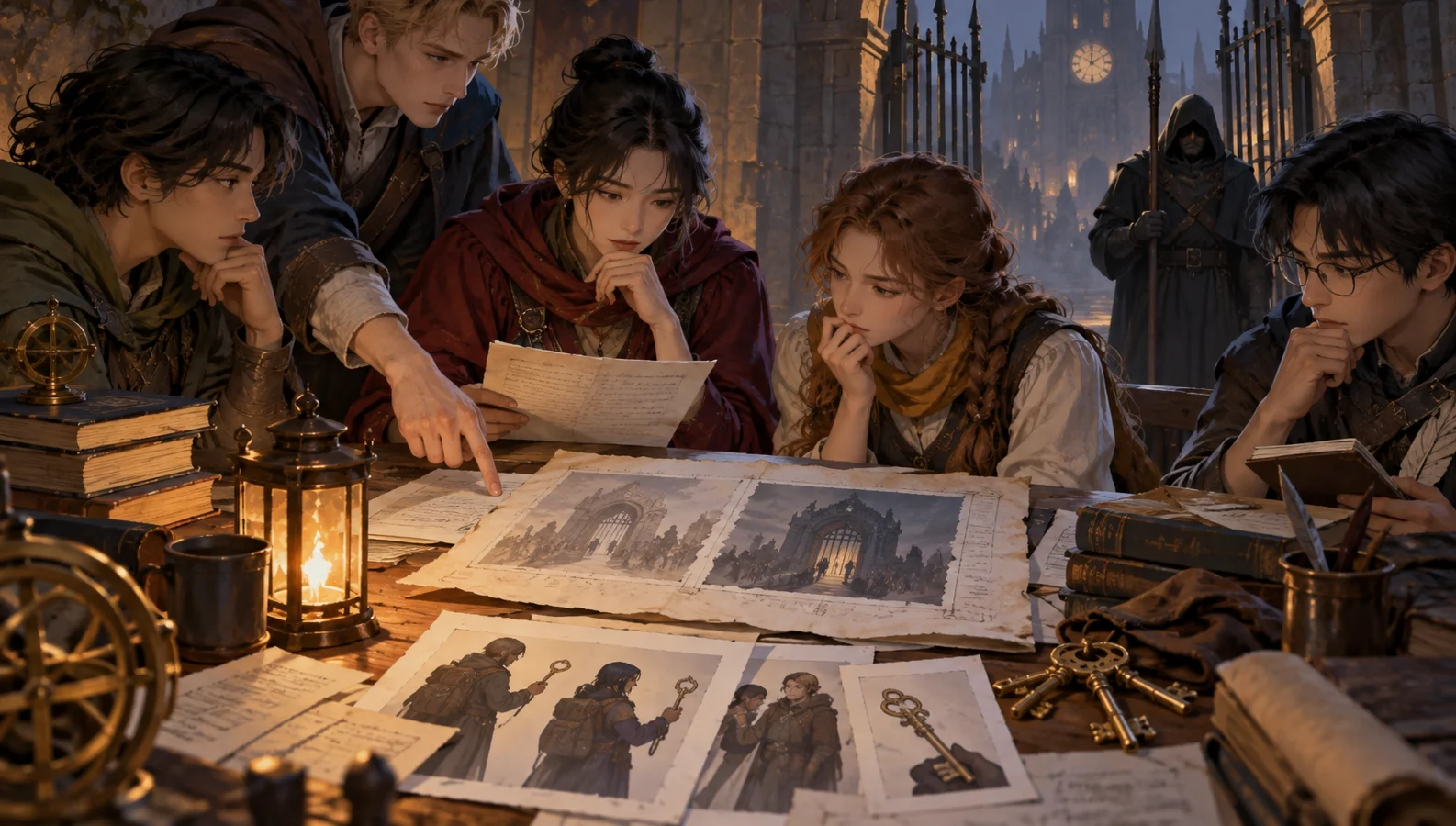
In the story, players must find a blue file left by a missing custodian. The character’s name in the original is Eleanor Vale. The previous Chinese version used the transliteration “埃莉诺·维尔,” and the file’s initials were taken from the original given name followed by the surname, producing EV. The character card, key tag, and drawer label all used these letters.
The new localization approach replaces the name entirely, naming the character “林岚.” This is not a conventional transliteration of the original name, but a deliberate adaptation chosen for this example. The new rule accordingly becomes “take the first letter of each Chinese character’s pinyin, in the order of the Chinese name shown on the character card,” so 林岚 produces LL.
The two rules cannot be mixed. If the hint still says “take the initials of the given name and surname,” readers may not know whether the Chinese surname comes first or last, or whether they need to reconstruct the foreign name. The new character card therefore states “林岚, pinyin: Lin Lan,” and the archive’s instruction sign specifies the order. Necessary information should appear before readers solve the puzzle.
This example also retains a fixed suffix: the blue file’s number is 04, making its full label LL-04. The number comes from the borrowing slip and is independent of the name, so it remains unchanged when the name changes. Separating the “name-derived part” from the “independent number” first prevents the entire label from being treated as arbitrary text to replace.
Use a dependency checklist to cover every place a clue appears
Give the character an internal identifier that remains stable when the translated name changes, “Character A,” then create the following checklist. This is a document maintained by the author; it does not need to become an extra puzzle for readers. In actual use, each row should specify a chapter, scene, or asset name that makes the occurrence easy to locate.
| Object and location | Old value→New value | Depends on | Related checks |
|---|---|---|---|
| Character A: character card | 埃莉诺·维尔→林岚 | This version’s naming approach | Add pinyin; check other forms of address |
| Rule for deriving initials: entrance sign | Initials of original given name and surname→First letter of each character’s pinyin in the Chinese name | This version’s puzzle rule | State the order; ensure readers can see it before solving |
| Initials: Character A’s file record | EV→LL | Name and rule for deriving initials | Compare with other characters in the same area |
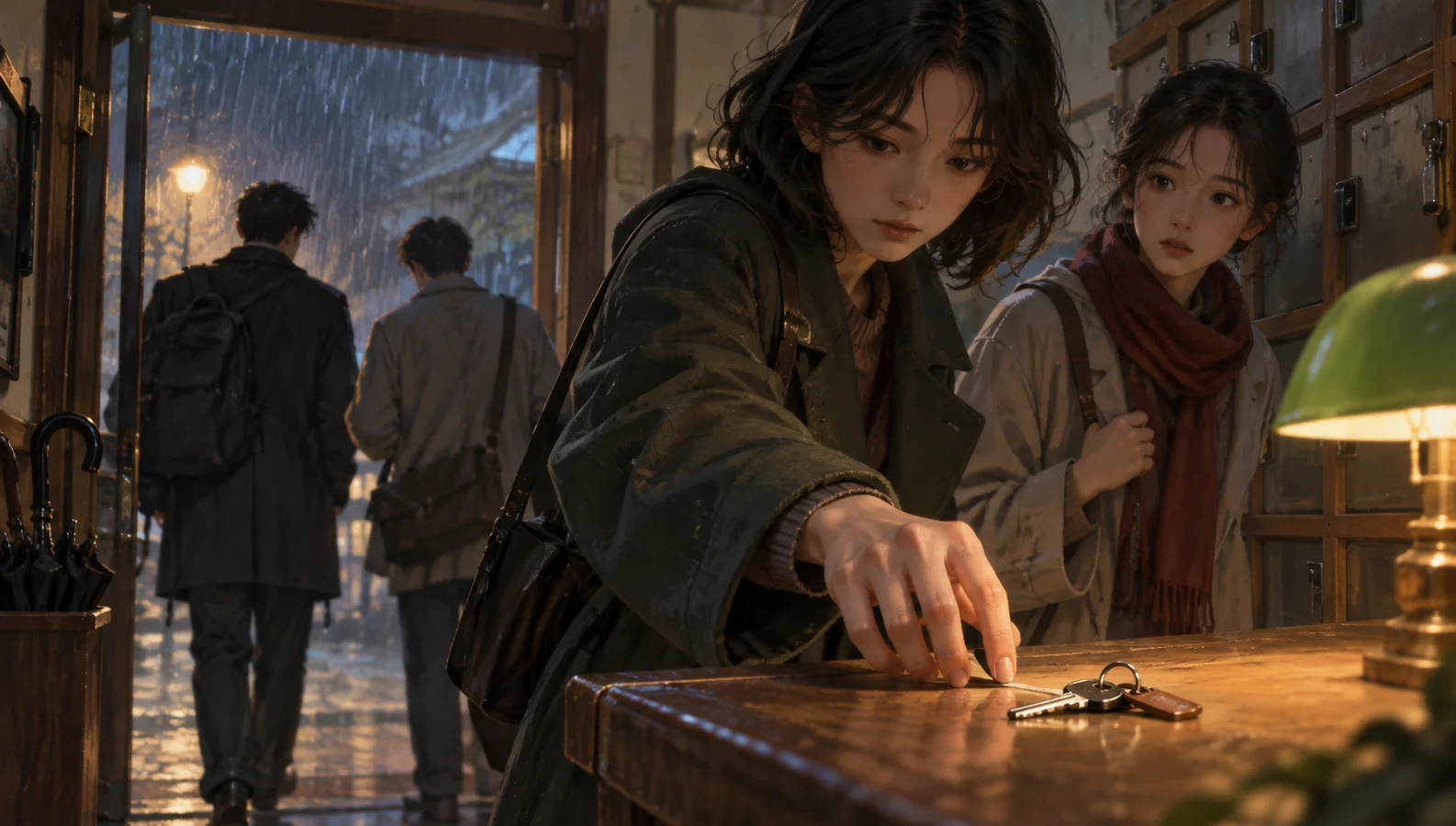
| Key A: front of tag | EV-04→LL-04 | Initials plus fixed number | Check object artwork and the description shown when inspecting it |
| Drawer A: blue-area label | EV-04→LL-04 | The same file label | Check text in distant and close-up views |
| Attendant’s dialogue: hint passage | Find the EV compartment→Find the LL compartment | File initials | Check subtitles and recording script |
| Puzzle A: answer and reveal | EV-04→LL-04 | Full drawer label | Update accepted answer forms and explanation |
When reusing the checklist, retain five types of information: stable object identifier, occurrence location, old value, new value, and the basis for the dependency. Add a status column with “To change,” “Changed,” and “Checked.” Do not mark an entire object complete just because the lettering in one image has been replaced.
The table’s arrows show old-to-new replacements. Check the dependencies in this order: Character A’s name determines the initials; the initials and number form the label; objects and dialogue reference that label; and it ultimately becomes the answer. Record 04 separately as an unchanged value to prevent accidental changes during bulk editing.
Follow the reader’s path from start to finish
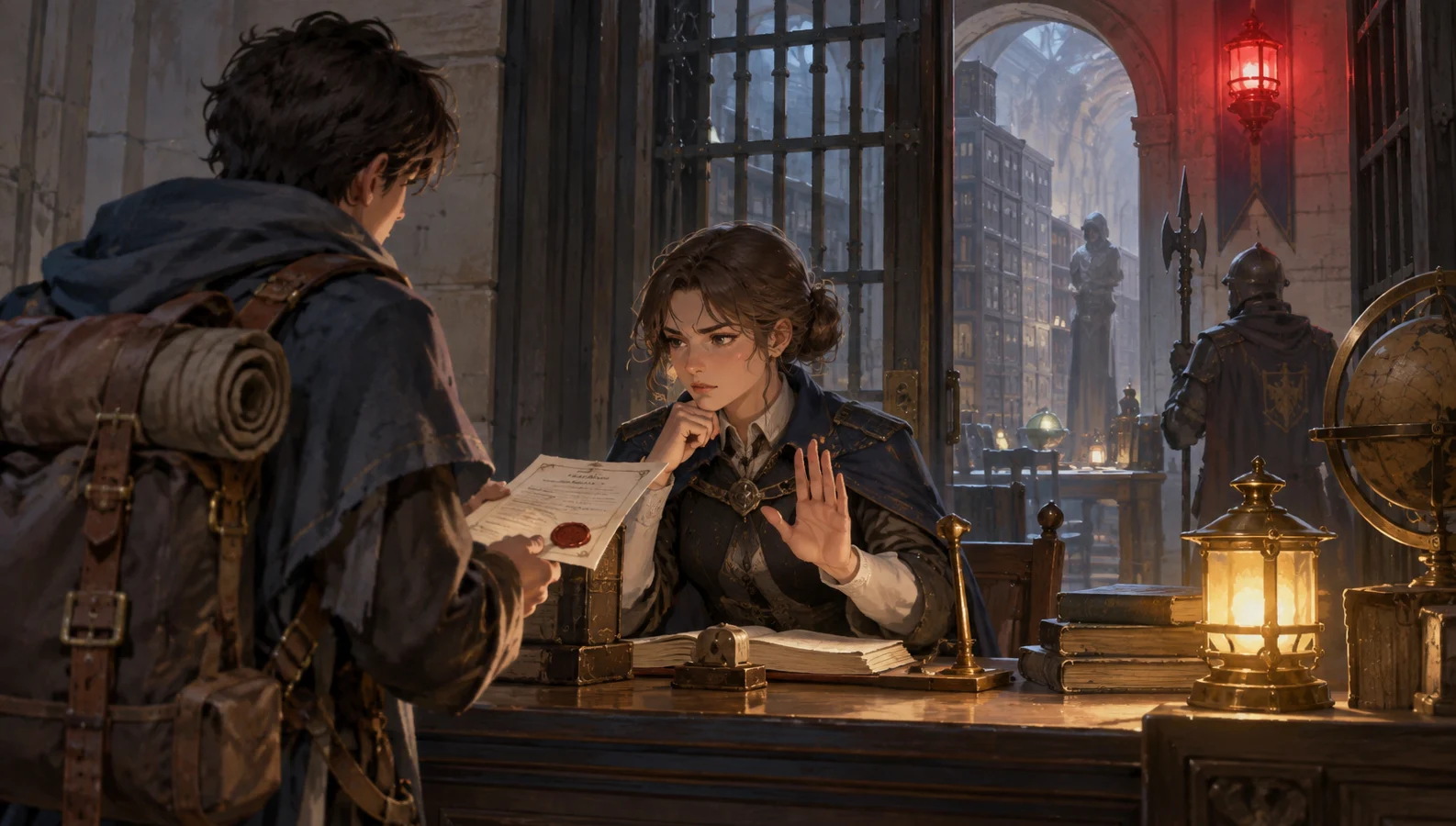
At the beginning of the new version, readers first see the character card, “林岚, pinyin: Lin Lan,” then read the rule for deriving initials at the entrance. The borrowing slip reads “林岚, blue area, 04.” These details provide the name, search area, and number respectively, without requiring readers to know the old translated name.
Following the rule, readers take the first letter of Lin and of Lan to obtain LL, then combine it with 04 from the borrowing slip to form LL-04. They next inspect the key, whose tag also reads LL-04, and go to the blue area to find the drawer with the matching label. Here, the key confirms which object it belongs to, while the borrowing slip narrows the search area. The two serve different purposes.
Suppose the author decides to accept differences in letter case and allow the hyphen to be omitted. The answer record should then explicitly list LL-04, ll-04, LL04, and ll04. Entering only LL does not identify the file sufficiently; entering “林岚” answers only who the person is. Neither should directly count as the full label.
The reveal could read: “The tag matches the drawer label, and 04 on the borrowing slip refers to this blue file.” This explanation should use evidence from the current version. If it still says “You recognized Vale’s English initials,” the solution explanation remains disconnected even if the answer record is correct.
The process above is the expected sequence inferred from the fictional setup. A reviewer should hide the old draft, retrace this path using only the new materials, then check for any unexplained remnants of EV or the old name.
Decide what to do when initials collide or lettering cannot be changed
If the proposed localized name becomes “林薇,” its initials become LW, but another character in the same area, “陆文,” also produces LW. The design can no longer simply assume that initials uniquely identify a person. First check whether the puzzle allows file numbers to distinguish them. If the task originally requires identity to be established from initials alone, the naming approach must change or the identification rule must be redesigned, followed by another pass through the entire checklist.
Another possibility is that a tag filmed in live action cannot be replaced. In that case, EV can remain, but the new character card must explicitly show a registered foreign-language name from which readers can derive it, and explain that the archive uses the registered name’s initials. The tradeoff is that readers must understand the relationship between two names. Quietly retaining EV only in the answer would leave the new clues unable to support the solution on their own.
The label could also be changed to a file code unrelated to the name, reducing the impact of future name changes. However, this removes the step of extracting initials from a name. It is a puzzle rewrite and cannot be described as merely updating a translated name.
If old initials are deliberately retained as a historical marker within the story, list them separately as an exception and record where readers learn the relationship between the old and new forms. Otherwise, an intentionally preserved old object looks exactly like an asset someone forgot to update.
Before delivery, confirm each item: every new value has a source; every place it appears has a check record; every old value has been removed or its purpose explained; and readers can derive the new answer from information already provided. This checklist helps people track changes manually. It does not automatically modify images, recordings, or answer-validation rules, and it cannot replace reviewing the specific work.