What to Do When Players Miss a Key Clue: Designing a Second Discovery Entry for Text Adventures
A key clue cannot exist in just one line of dialogue. A more reliable approach is: first write it as a "necessary fact," then arrange two or more entries for this fact with different sources and different trigger conditions, and make the player pay a visible cost for choosing a certain entry. Below, a fictional teaching example, the "Stargazing Club dinner list," illustrates the specific method. The characters, numbers, and lines in the example are all fabricated and are only used to demonstrate structure.

Introduction
A key clue cannot exist in just one line of dialogue. A more reliable approach is: first write it as a "necessary fact," then arrange two or more entries for this fact with different sources and different trigger conditions, and make the player pay a visible cost for choosing a certain entry. Below, a fictional teaching example, the "Stargazing Club dinner list," illustrates the specific method. The characters, numbers, and lines in the example are all fabricated and are only used to demonstrate structure.
First write the necessary fact, not the dialogue
Many authors put clues in dialogue, for example the porter says: "On last night's dinner list, there was one extra person who should not have appeared." The problem is that if the player does not talk to the porter, this information disappears forever. The fix is to extract the information behind the dialogue and write it as a checkable necessary fact:
On the sign-in list for the Stargazing Club dinner, there were eleven names, but only ten people were present that night.
This sentence is what the player must know. Dialogue, letters, and item descriptions are only its shell. The shell can change; the fact cannot. After writing the necessary fact clearly, ask: which elements does the player need to know at minimum? In the example above, they are "the list," "eleven people," and "ten present." As long as an alternative entry covers these three points, it has completed the transmission.
When rewriting dialogue into a necessary fact, you can also delete the judgment words from the original dialogue. For example, in "one extra person who should not have appeared," "should not have appeared" is the character's evaluation, not a fact. The evaluation can be left for the player to say after piecing together the conclusion; the fact sentence should retain only the verifiable quantities and objects. In this way, the second entry will not change the information itself just because the speaker has changed.
The two entries must have different sources
Different sources means different acquisition methods and scene locations, not the same sentence spoken by two different people. Still taking the Stargazing Club as an example:
| Entry | Acquisition method | Trigger scene | Cost |
|---|---|---|---|
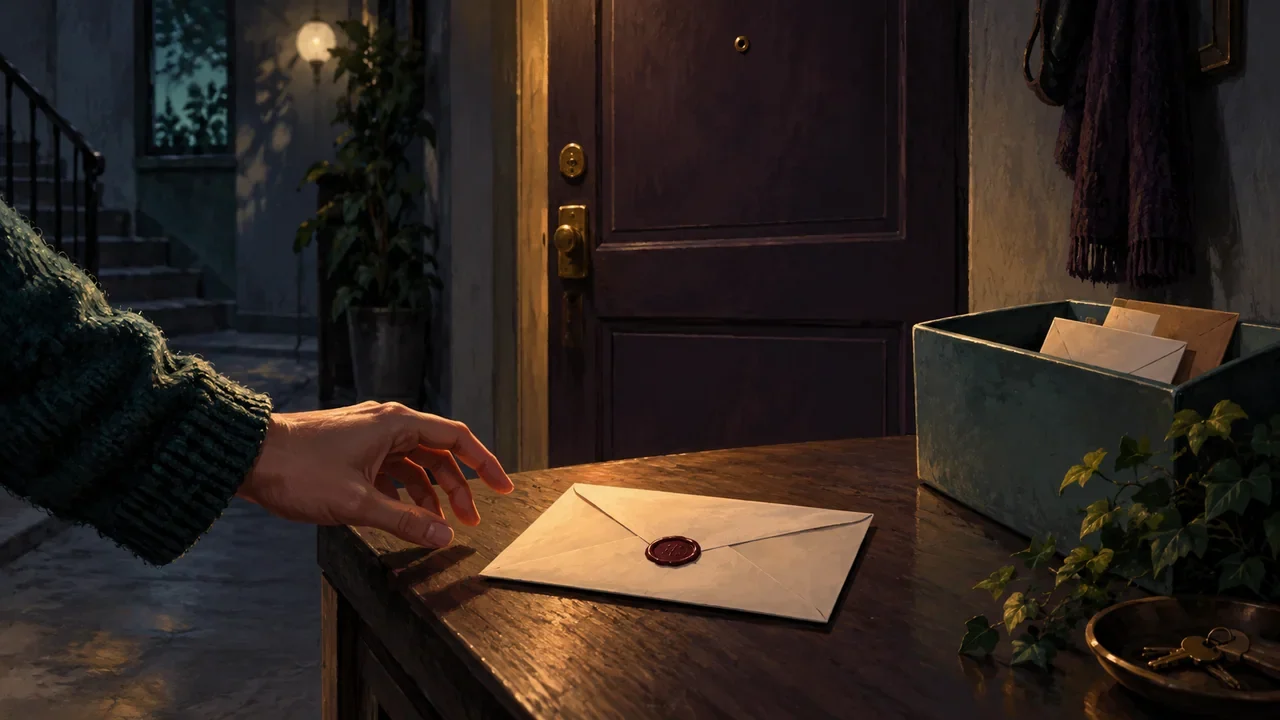
| Invitation letter | Check the back of the invitation letter you received | Before the dinner, the player is at their residence | Spend one opportunity to "organize luggage," missing a private conversation with a companion |
| Porter | Ask the porter about the sign-in situation | During the dinner, the player is in the entrance hall | The porter remembers that the player was asking about the list, and afterward becomes more guarded toward the player |
The invitation letter entry is quieter and suits players who like to observe before acting; the porter entry is more direct and suits players who have already decided to intervene in the investigation. Both paths can obtain the necessary fact, but the atmosphere, relationships, and subsequent reactions are different. This is what it means to preserve the cost of choice: an entry is not a free backup; choosing one means losing something in the other scene.
Different sources can also be reflected in "who possesses this information." The invitation letter is physical evidence in the player's own hands, while the porter is an external witness. Physical evidence does not require the player to speak, while a witness requires the player to actively ask. If you separate entries along the two dimensions of "active/passive" and "person/object," it becomes harder to write two entries that are essentially the same. If both entries rely on the same person speaking, then once the player's relationship with this person breaks down, both paths will be cut off at the same time, so this does not count as a true alternative entry.
Alternative entries are not forcibly giving the answer
The difference between remediation and giving the answer lies in whether the player still needs to make a judgment. Suppose the player misses both entries; then a third entry can be arranged after the event ends: the player picks up a crumpled seat card in the corridor, printed with "the eleventh." This still requires the player to compare it with the number of attendees seen earlier before concluding that there is a problem with the list. If instead the narration directly says, "You discover that there is one extra person on the list," the player has no room for reasoning, and this counts as forcibly giving the answer.
The criterion can be simplified into one sentence: an alternative entry provides raw material, not the conclusion. The raw material can be the list, the seat card, the porter's complaint, or a casual remark from a companion; the conclusion is still pieced together by the player.
The step between raw material and conclusion is where the player's sense of participation lies. With the same seat card, if the narration adds, "This shows that someone signed in but did not come," the player is only passively receiving; if the narration only describes that the card was crumpled and its edge stained with wine, the player will wonder on their own why it fell here. The "sense of discovery" of a clue comes from this step of comparison, not from how hidden the information itself is.
Latest appearance position
A necessary fact cannot be postponed indefinitely. It is recommended to set a "latest appearance position" for each key clue, meaning that before the plot advances to a certain node, the player must already be able to come into contact with it. In the Stargazing Club example, the latest position can be set before "the second roll call." This is because the second roll call will lead to subsequent conflict; if the player still does not know that there is a problem with the list, the later confrontation loses its basis.
When setting the latest position, first find the first node in the plot that depends on this fact, then move one scene earlier. In the example above, the first dependency point is "the player questions the club president," which occurs after the second roll call, so the latest entry only needs to be placed before the roll call. If the player still has not obtained the fact by the latest position, trigger a fallback entry, for example a companion brings it up on their own, or the player sees the invitation letter again while organizing items. The fallback entry should also retain a bit of cost, for example the companion therefore thinks the player is not careful enough, and the relationship value drops slightly.
The fallback entry should not be triggered repeatedly. You can give it a flag in the script so that after it is triggered once, it no longer appears, avoiding repeatedly reminding the player because they have been avoiding the investigation. The specific form of the flag is up to the author; what matters is that it records "this fact has already been given to the player," not whether the player understands it. Whether they understand it is still reflected by subsequent choices.
Completion check
After designing, use this table for self-check:
| Check item | Stargazing Club example | Passed |
|---|---|---|
| Is the necessary fact written as a checkable sentence | The list has eleven people, ten present | Yes |
| Are there two entries with different sources | Invitation letter, porter | Yes |
| Does each entry have a cost | Missed conversation, porter becomes guarded | Yes |
| Does the alternative entry provide only raw material | The seat card only prints "the eleventh" | Yes |
| Is a latest appearance position set | Before the second roll call | Yes |
| Does the fallback entry still preserve judgment | After the companion brings it up, the player still needs to compare the number of people | Yes |
If a clue can only be obtained through one conversation, first rewrite it as a necessary fact, then add a second entry. When AI-generated text is involved, prompt constraints do not guarantee that every output is accurate, so necessary facts are best fixed by the author at the script level rather than left to the model to improvise on the spot. Next, you can pick the most fragile clue you currently have, write out its necessary fact sentence, then list two entries with different sources and the latest appearance position.