How a Letter That Should Not Be Opened Becomes a Choice: Knowledge, Responsibility, and Relationship Each Settle Consequences Separately
Writing "should it be opened" as a choice depends not on what is written in the letter, but on which clues the author has already placed on the table before the player acts. Players can only act on clues they have seen, so relationship costs must be planted before the letter is opened: which words are visible on the envelope, who has handled the letter, and what the recipient has said before. Below, a fictional teaching example, "Letter from the Old Address," illustrates a repeatable approach. The characters, numbers, and quoted words in the example are fictional and are not test data.
Introduction
Writing "should it be opened" as a choice depends not on what is written in the letter, but on which clues the author has already placed on the table before the player acts. Players can only act on clues they have seen, so relationship costs must be planted before the letter is opened: which words are visible on the envelope, who has handled the letter, and what the recipient has said before. Below, a fictional teaching example, "Letter from the Old Address," illustrates a repeatable approach. The characters, numbers, and quoted words in the example are fictional and are not test data.
First Fix the Public Information on the Envelope
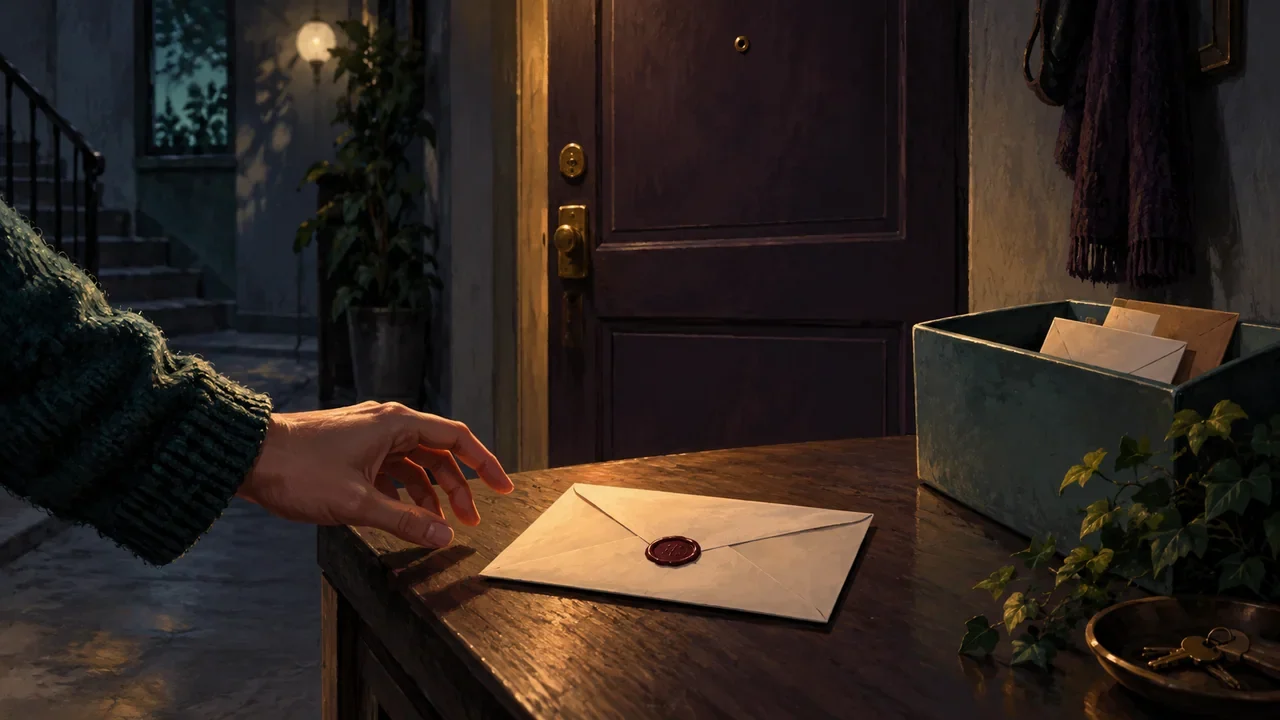
Set a closed scene: the lobby of an old apartment building, where the player plays a temporary resident running an errand for someone else. On the table is a letter addressed to the neighbor "Shen Yan," the postmark is blurry, and the front of the envelope has only three lines of text: the recipient's name, an old address that has been crossed out and written over, and, at the sender's place, the words "no reply necessary." The letter is sealed and undamaged.
These three lines appear first, so the player knows what they are facing. If the author wants "ask for authorization" to become a weighty choice, the player must first see the recipient's name and the unusual sentence "no reply necessary"; if the author wants "return it" to hold, the old address and postmark must first be given. Clues precede inference; the player will not know out of thin air that the letter matters.
Public information can be layered further. On the lower right corner of the back of the envelope is a faded post office stamp, with only the month exposed in the date; on the lobby mailbox, Shen Yan's name is half covered by a sticker. These can only raise questions about the letter's timing and the state of residence; they cannot prove that he has moved away. This example also establishes in advance: Shen Yan has said, "Just deliver it, don't make decisions for me; if you don't want to pass it on, put it in the lobby return box." The return box is collected by the building manager and passed on to the sender; this is a fictional rule of this work.
Three Preset Actions, Each with a Different Cost
Under the conventions of this example, the player has three ways to act without opening the letter without permission. The following responses are the specific reactions of the character Shen Yan and do not mean that asking for authorization will generally damage a relationship.
| Action | Information the player already knows | Recipient's response | Relationship cost |
|---|---|---|---|
| Deliver | Only the three lines on the envelope | Accepts it, does not ask why | Trust is maintained, but the player never learns the contents |
| Ask for authorization | The three lines on the envelope plus the player's own doubts | After hesitating, says, "Don't open it yet" | A crack appears in the relationship; the player is classified as "a meddlesome person" |
| Return | Has likewise seen the three lines on the envelope | Accepts the return, but no longer asks the player to receive things on his behalf | The relationship becomes distant; the letter is not handed to him personally |
None of the three paths rewards the relationship through prying. If the player forcibly opens the letter outside the options, this example writes only the act of opening it and does not yet show the contents of the letter paper; after Shen Yan learns of it, he refuses to continue entrusting the player. This consequence must be connected by the process of the character discovering the opening; he cannot immediately turn hostile while knowing nothing. It is also possible to let the player see the contents but bear the already-declared consequences; the key is not to write unauthorized prying as the only way to advance.
Dialogue Drafts for the Three Actions
Writing the options as specific lines controls the player's expectations better than writing the three words "deliver/ask/return." The following are fictional drafts and can be rewritten as needed.
When delivering, the player says: "Shen Yan, there's a letter for you. I brought it up from the lobby." Shen Yan opens the door, takes the letter, says, "Just put it here," and does not invite the player in. The player has no chance to ask who sent the letter.
When asking for authorization, the player says: "This letter says no reply is necessary, and the address has been changed. Can I open it?" Shen Yan pauses for two seconds and says: "Don't open it yet." Then he adds: "This has nothing to do with you." The player is still holding the letter, and the relationship has already changed.
When returning, the player says: "I won't handle it for you. I'll put it in the return box as you said." Shen Yan does not open the door and only says from inside: "As you like. I'll get it myself from now on." The player puts it in the return box, and the building manager registers and takes it away. What is confirmed here is the return process; no extra consequences such as moving away are invented.
None of the three dialogue sections contains the contents of the letter paper. Shen Yan previously said, "Don't make decisions for me," so asking for authorization is what touches the attitude he has already expressed. If the author adds "don't receive things for me lately," then it is necessary to recheck why the temporary resident still takes on the forwarding task; one cannot fight the premise just to strengthen the conflict.
Knowledge, Responsibility, and Relationship Must Be Settled Separately
Many relationship dramas mix the three together: the more the player knows, the greater the responsibility, and the better the relationship. Writing it this way makes prying the optimal solution. A steadier approach is to let the three settle independently.
Knowledge: all three paths know the same old address and envelope text before acting; after the choice, they respectively add "he accepted it," "he refused authorization," and "he no longer entrusts receipt on his behalf." The information gap comes from the action response; the address already seen at the start cannot be counted only for the return route.
Responsibility: on the delivery route, the player bears responsibility for "whether the letter is delivered"; on the ask-for-authorization route, the player bears responsibility for "disturbing the other person"; on the return route, the player bears responsibility for "the letter may never be delivered." Responsibility is not automatically reduced because one knows more.
Relationship: delivery maintains surface trust, asking for authorization exposes the player's intervention, and returning ends this arrangement for receiving things. All three results can become the starting point of the next scene; it does not mean that after withdrawing from the errand, the two sides can never speak again.
The benefit of settling separately is that the player cannot exchange knowing a little more information for a better relationship. If the author directly converts "knowing more" into "a better relationship," prying becomes the rational choice, and all the authorization clues planted earlier are nullified.
Use Closing Promises to Close Off the Choice
At the end of each action, give the player a clear closing line. The delivery route can read: "Shen Yan took the letter into the room, and the door closed." The ask-for-authorization route can read: "He closed the door as soon as he finished speaking, and you were still holding the letter." The return route can read: "The building manager took the letter from the return box, and the registration slip was left beside the box." Respectively confirm that it was handed to him personally, is still pending, and has entered the return process.
These closing lines do not explain right or wrong; they only confirm what the player did and where the relationship stopped. The next scene can continue from this stopping point, rather than going back to add, "Actually, you should have..."
Check Authorization First, Then Record the Delivery Result
At the close, it is still necessary to record who is keeping the letter. After the request is refused, the letter is still in the player's hands, and later it needs to be delivered or returned; refusal of authorization does not mean the task is automatically complete. Write clearly the four things: the envelope's public information, the action permission, the recipient's response, and the final holder. Then it is possible to check both the information boundary and the unfinished responsibility, rather than settling only with the sentence "the relationship worsened."
Completion Check
After writing a scene, check item by item: whether all the public information on the envelope appears before the player acts; whether all three preset actions have corresponding responses; whether the consequence of opening the letter has a process by which a character learns of it; whether knowledge, responsibility, and relationship are recorded separately; and whether each action confirms the final holder. If something is missing, go back to the corresponding action and fill it in; do not use a new secret to cover up an unhandled delivery responsibility.
Next, pick a relationship scene you are writing, replace the "letter" with any object that should not be handled without permission, rearrange the order of clues according to the four items above, and then decide which action appears first.