2026 Interactive Narrative Genre Map: Detective, Romance, Apocalypse, Horror—Which Works Best for Branching?
Compare the most natural state variables, choice types, and common branching pitfalls in detective, romance, apocalypse, and horror stories.
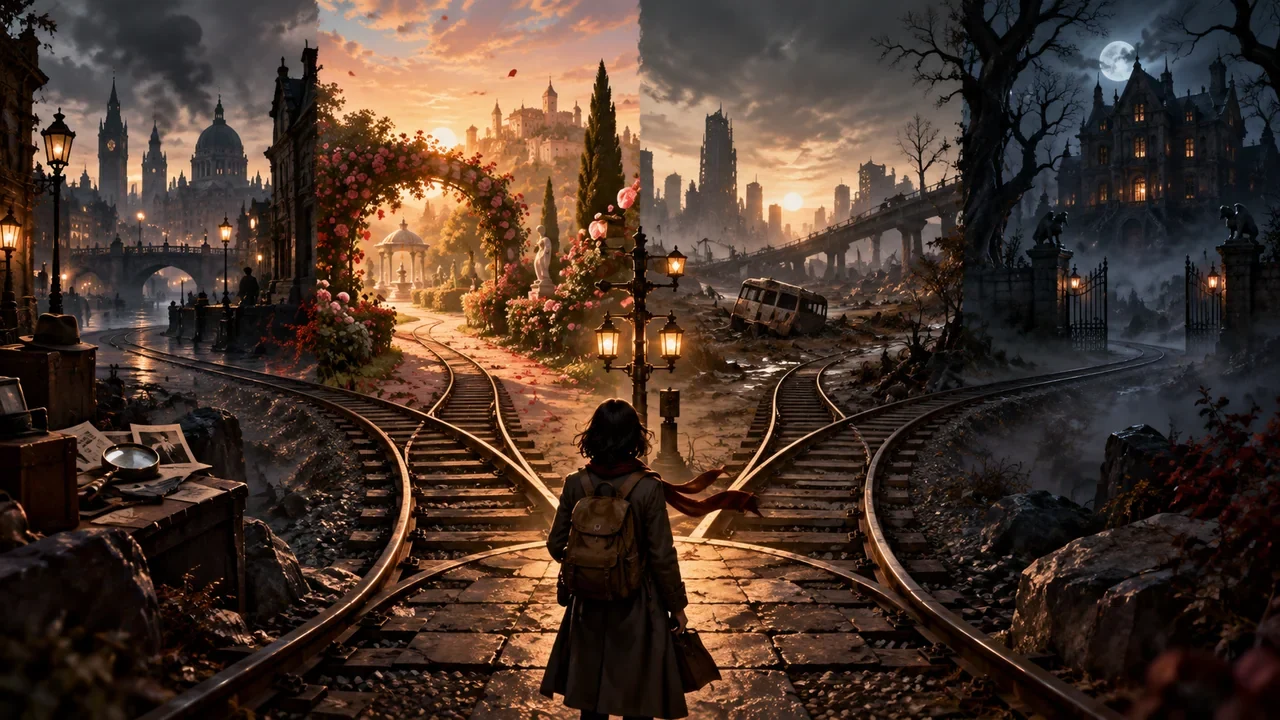
Introduction
No genre is inherently best suited to interactivity. Detective stories suit information, romance suits relationships, apocalypse stories suit resources, and horror suits time and risk. Choose the right states, and branching feels like part of the genre itself; choose the wrong states, and you are merely layering buttons onto a story.
| Genre | Natural States | Strong Choices | Common Pitfalls |
|---|---|---|---|
| Detective | Clues, suspicion, timelines | Whom to investigate, what to disclose | Simply guessing the culprit at the end |
| Romance | Trust, boundaries, commitment | Conflicts between honesty and protection | A single affection scale |
| Apocalypse | Resources, injuries, team relationships | Whom to save, what to expend | Every choice becomes a moral test |
| Horror | Time, location, threats | Flee, hide, investigate | Instant death without warning |
Let Information Change Actions in Detective Stories
Different investigation orders should change access, characters’ alertness, and the credibility of evidence, rather than merely having players guess a name after collecting everything.
Romance Should Go Beyond Adding and Subtracting Points
Intimacy, trust, respect, and desire can move in different directions. A character may like the player more yet trust them less to keep a secret.
Use Resources to Show Costs in Apocalypse Stories
When food, time, and medicine are limited, helping one person naturally comes at the expense of another value. Designers should avoid repeatedly portraying vulnerable people as the “optimal sacrifice.”
Pressure in Horror Must Be Fair
Time limits and QTEs can intensify fear, but danger must be signaled, inputs must be reliable, and failure should allow players to learn.
When evaluating a project proposal, score state observability, the ability of branches to reconverge, and new information on a second playthrough separately, from 1–5 each. Chart popularity only reflects a particular platform and time; the final decision must still return to target players, asset production capabilities, and testable hypotheses.
First Find the Genre’s Natural Verbs
To judge whether a genre suits interactivity, start with what players can do. The natural verbs of detective stories are observe, question, compare, and disclose; for romance, approach, confess, set boundaries, and commit; for apocalypse stories, allocate, rescue, retreat, and form alliances; for horror, investigate, hide, take risks, and escape. If a concept offers only “keep watching” and “choose a different line of dialogue,” even a popular genre label does not justify building extensive branches.
Each verb also needs an object and a cost. “Investigating” must consume time and change a suspect’s alertness; “confessing” must expose secrets and affect trust; “rescuing” must consume medicine or mean missing a window of opportunity. Only when action, object, and cost are all present does a choice become a story decision rather than a vote on preferences.
How the Four Genres Can Reconverge
Detective stories can bring different investigation routes together in the same interrogation scene, while giving players different evidence and follow-up questions. Romance can return to the same date or crisis while expressing relationship differences through forms of address, physical distance, and the information characters are willing to share. Apocalypse stories can reconverge at the same shelter with different team members, resources, and injuries. Horror can return to the same exit while varying the monster’s location, escape tools, or the rules the player knows.
Reconvergence is not a reset. Preserve at least one visible trace of prior choices: new options, character reactions, resource differences, camera changes, or ending conditions. If every route returns to exactly the same content, players will quickly recognize that choices are merely decorative.
Use Small Prototypes to Assess Team Fit
First write a fifteen-minute prototype for each candidate genre, containing only two choices, one reconvergence, and two endings. Count the additional scripts, shots, states, and test paths, then have target players try it. Ask whether they could predict the risks, noticed the consequences, wanted to explore another route, and which interaction disrupted the pacing.
A genre that scores highly but has uncontrolled production costs is also unsuitable for the current team. For example, apocalypse stories require many settings and continuity across an ensemble cast; a team with limited resources could instead focus on a single shelter. Romance requires nuanced performances; if character consistency is still unstable, start with text, voice, and a few key shots. Choosing a genre is fundamentally about matching narrative mechanics, asset production capabilities, and validation cycles.
Common Misjudgments and Corrections
“Detective stories naturally offer choices” does not mean guessing the culprit at the end is enough; the investigation process should change what players can know. “Romance audiences enjoy taking sides” does not mean more affection points are always better; portray boundaries and conflicts of values. “Apocalypse stories have resources” does not mean every choice must sacrifice a life; players can also weigh time, location, and long-term risk. “Horror suits QTEs” does not mean sudden instant death is fair; danger must still be readable.
The final genre selection sheet should record target users, core verbs, key states, the minimum asset set, reconvergence methods, second-playthrough rewards, and stopping conditions together. This lets the team explain why they are making it, rather than merely saying, “This genre is popular lately.”
Criteria for Passing a Project Proposal Review
The team should explain in one sentence the verbs players repeatedly perform, then demonstrate one signal before a choice, two real costs, one low-cost reconvergence, and one new discovery on a second playthrough. If any item can only be promised verbally and cannot be shown in the prototype, narrow the concept first. Genre labels attract attention; evidence of the mechanics determines whether to invest.
After prototype testing, record comprehension rates, choice distribution, willingness to replay, production hours, and defect counts together. Players all choosing the same option does not necessarily mean failure; it may reflect a clear stance on values. But if there is no reasonable rationale for the other option, it needs rewriting. Putting user judgments and team costs in the same table is how you select a genre with both narrative potential and the ability to be delivered consistently.