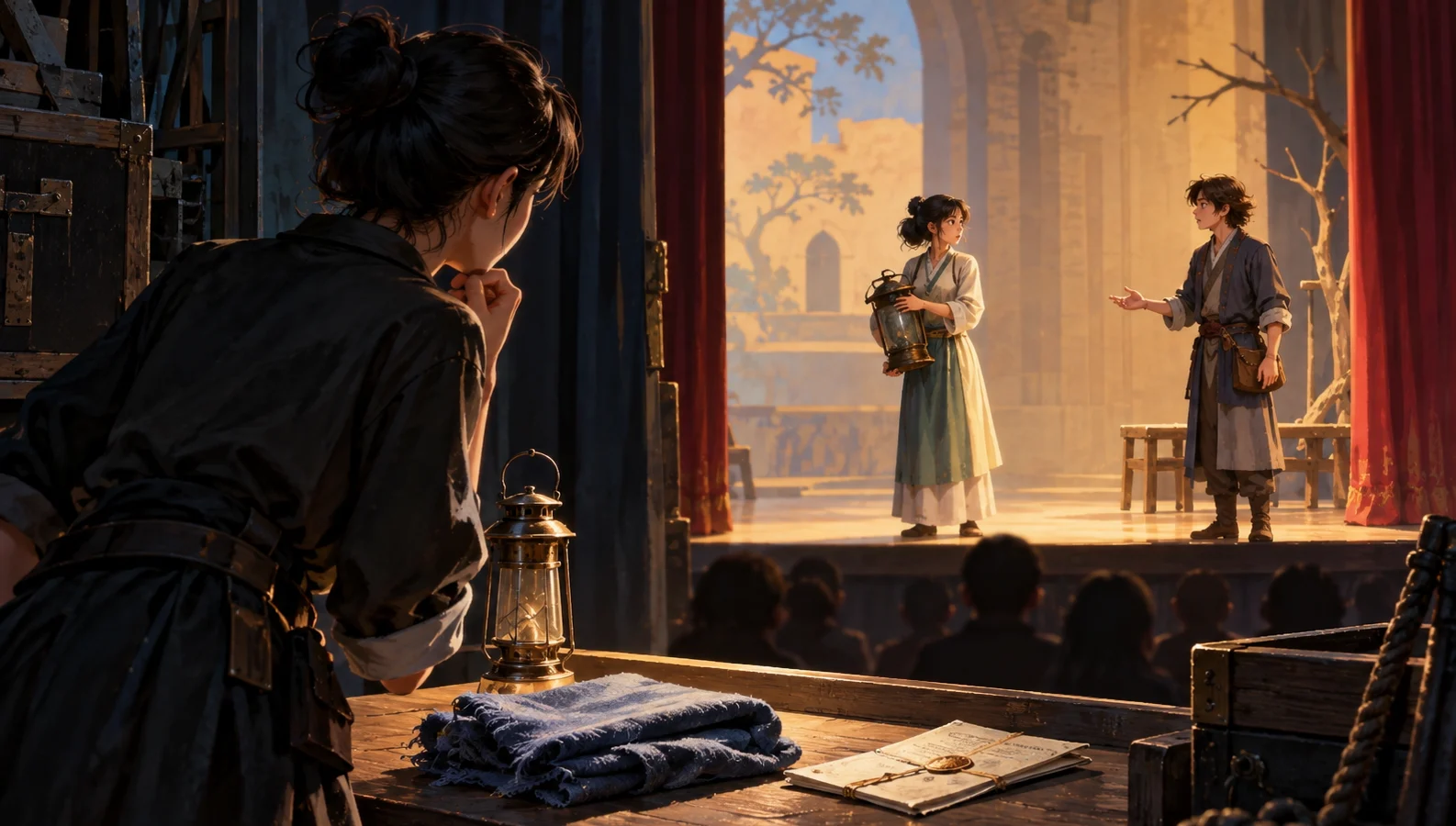
Turning an Abandoned Garden into a Text Adventure: How Maintenance Order Shapes the Experience
Restoring the path or the basin first need not determine success or failure. Use a task-order comparison table to make the first action change whom the player meets and how they interpret information, then recover essential clues through follow-up materials before reaching a shared ending with a different meaning.
Let the order change the encounter, then bring both routes together
To make maintenance order meaningful, tie the first completed task to a character encounter and the second to a follow-up clue. Both routes prepare the garden to open, but players hear from different people first and interpret later discoveries differently. A shared ending concludes the task, while the differences along the way remain part of the player's memory of the experience.
“Evening Bell Garden” below is an original fictional teaching example. It is not a real user case, a tested result, or a representation of any product feature. The path and basin are simply narrative task objects; this article provides no practical gardening or repair advice.
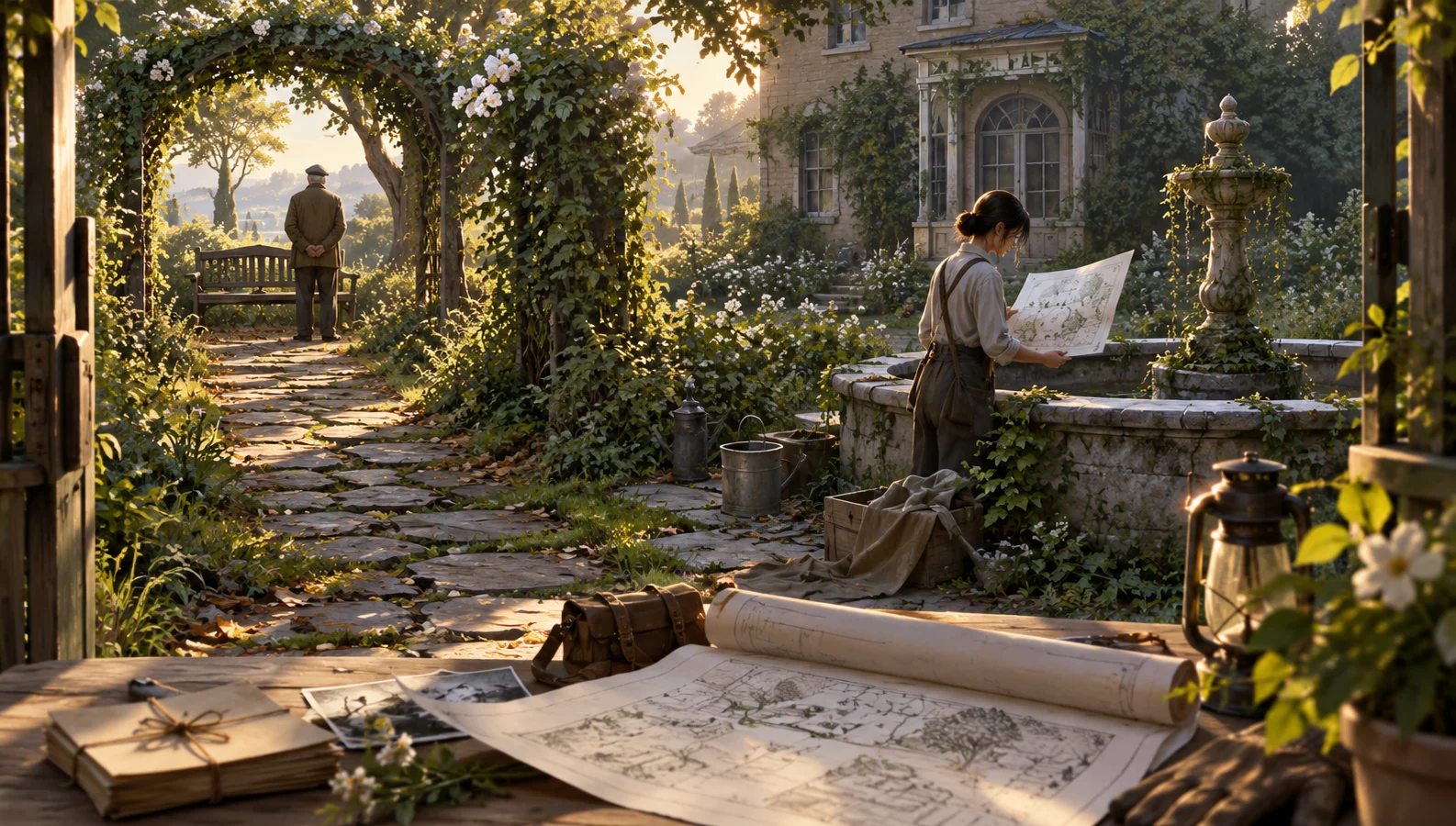
The player is asked to put a garden that has been closed for years back in order. After making the path passable and restoring the basin, they hang an open sign on the porch. The former caretaker, Mr. Shen, and a draftsperson, Aran, have both come to collect things. Each can stay only until the first task is finished. Mr. Shen is at the end of the path; Aran is beside the basin. Whichever task the player finishes first determines whom they speak with there. The other person departs, leaving materials behind.
There is no best order. Players who start with the path come to understand the garden through a story of waiting; those who start with the basin understand it through a revision to a renovation plan. Both characters discuss the same past, but each holds a different part of it.
Put the encounter conditions into a task-order comparison table
Show two notes at the start: “Once the path is clear, I’ll be waiting at the end. —Mr. Shen” and “Once the basin is restored, I’ll show you the old drawing. —Aran.” A notice at the entrance adds: “Both visitors can stay only until the first task is finished. The person you don’t meet will leave their materials on the porch, available to read after the second task is complete.” Players know they are choosing a chance to meet someone, rather than guessing which task might become locked out.
Time advances only when a maintenance task is completed. Looking at notes, checking tasks, reading materials, and talking do not advance time. When the first task ends, resolve its associated encounter first, and have the other person leave. Once the conversation ends, the visitor the player met also leaves. Record these rules in the node descriptions so that a longer conversation cannot inadvertently consume the time allotted to the other route.
| First task | Direct encounter | First information received | Follow-up materials available after the second task | Difference retained at the end |
|---|---|---|---|---|
| Path | Mr. Shen | He used to come every week to wait for an old friend | The old drawing and explanation left by Aran | The player heard firsthand why he kept waiting |
| Basin | Aran | The old drawing proposed moving the bench at the end of the path | The note and explanation left by Mr. Shen | The player watched her compare the drawings and heard her explain the changes she made back then |
You can adapt this table into your own writing template. The first two columns describe the encounter produced by an action, the middle two arrange how facts are obtained, and the last preserves differences in experience. If swapping the characters’ names makes no difference to the story, the characters and locations still lack a necessary connection.
Authors should also record whether the path and basin are complete, which task came first, whom the player actually met, and whether both sets of information have been obtained. Recording task completion alone loses the encounter history; recording only the order can put unread information into the protagonist’s dialogue too early. Mark in-person conversations and written materials as separate information sources.
Walk through the path-first route, then compare the basin-first route
On the path-first route, the player meets Mr. Shen after finishing the task. Touching the bench, he says, “I used to come every week to wait for an old friend.” His hand rests on the back of the bench. After a moment’s hesitation, he continues: “Later, I learned he wouldn’t be coming anymore. But by then, making this trip every week had become a habit.” The player receives a personal memory first, without yet knowing that moving the bench had once been proposed.
The player then completes the basin task. Aran has already left, and Mr. Shen departed after the earlier conversation. On the porch, the player opens the drawing bag. The old drawing marks the bench for relocation. An attached sheet reads: “When I heard someone kept coming here, I changed this part back.” His waiting had seemed to go unnoticed; now the player discovers that someone knew about his visits and responded. After reading the materials, the protagonist quietly says to themself, “So she kept a place for Mr. Shen.”
On the basin-first route, Aran unfolds the old drawing in front of the player. She points out why she once thought the bench obstructed the route through the garden, then lays the version she revised back then over it and compares the two. “When I heard someone kept coming here, I changed this part back. I drew the route first and only later asked who would come.” The player sees her present and compare the drawings and hears her explain a past revision; she does not revise a drawing on the spot. The player still does not know whom that visitor was waiting for.
After completing the path task, the player finds that Mr. Shen has gone. His note reads: “Thank you for reconnecting the path. I used to come this way every week to wait for an old friend. Later, all that remained was the habit.” The bench changes from an exception on a drawing into a place where a particular person once spent time. The protagonist might say, “So that change she made was for someone waiting like this.”
Once all the materials have been read, both routes provide the same essential facts: Mr. Shen used to wait for an old friend, and Aran kept the bench because of that. On the path route, Mr. Shen’s conversation identifies whom he waited for, and Aran’s attached sheet explains why the bench stayed. On the basin route, the player first hears why the drawing changed, then learns whom Mr. Shen waited for from his note. The firsthand experiences also differ: on the path route, the player sees Mr. Shen’s hand rest on the bench back as he hesitates before speaking again; on the basin route, they watch Aran compare two drawings and hear her acknowledge her earlier oversight.
Information can be recovered; that meeting cannot
The porch’s materials rack is the place to recover missed information. After the second task, the narration explicitly points out where the drawing bag or note is. Players may read it immediately or leave it for later. Before they hang the open sign, offer another “Read the materials left behind” option. This opportunity to catch up should be visible, without requiring repeated clicks on an empty scene in the hope of finding it.
Skipping the materials does not undo completed tasks. Players can still hang the open sign, but the ending refers only to what they know. The materials rack remains accessible in the epilogue; after the player finishes reading, add a passage about their new understanding of the past. Missing information thus has a recovery path; overlooking something need not be punished with a restart.
Follow-up reading has limits, too. Reading Aran’s explanation does not justify writing, “You remember how she compared the two drawings.” Reading Mr. Shen’s note cannot establish that the player heard his pause. Even seeing Aran present the drawings in person does not mean witnessing her make the revisions back then. Text can convey facts; it cannot fabricate shared experiences.
Keep the action at the shared ending the same: with both tasks complete, the player hangs the open sign on the porch. If all the information has been obtained, the path-first route could end with, “You remember Mr. Shen’s hand resting on the back of the bench, and now understand why the old drawing was revised.” The basin-first route could say, “You remember the two drawings Aran compared in front of you, and finally know whom she kept that place for.” The task outcome is the same; the starting point for looking back is different.
Use alternatives to check whether this choice is worth keeping
For a very short piece, both characters could leave materials, with only the reading order changing. This reduces character scenes but loses the irreplaceable quality of meeting someone. If the focus is on getting things done at the same time, both characters could wait throughout. In that version, the difference should lie in how the first information changes the questions asked in the second scene; you can no longer claim that missing an encounter has a cost.
Three common failures are changing only the scenery descriptions, making essential facts permanently unavailable when one character is missed, and assuming after the routes merge that the player experienced both conversations. These respectively call for differences in character action, a visible way to recover missed information, and endings written from records of what the player actually read and whom they met.
Before handing over the manuscript, work through both task orders step by step, then run each again while choosing not to read the materials yet. At every point, ask: What does the protagonist know now? Where did this line come from? Where can the missing information be obtained? Check verbs that imply firsthand experience, too: a pause recalled later must be acted out in the scene, and showing an old drawing must not become revising it on the spot. If you cannot answer these questions, repair the connections between nodes first. This is a paper-based review method, not an already validated conclusion about the experience.
Finally, replace the maintenance objects in the comparison table with tasks from your own story, retaining the three relationships: encounter, information recovery, and convergence. Whether the order choice works depends on whether players can identify how the thing they did first shaped the way they came to know this place.