How Can a Shared Travel Journal Preserve Each Writer’s Voice?
Record shared facts, personal impressions, and editorial decisions separately, then let players choose which voices enter the main text and which remain in sidebars. An attribution and preservation sheet helps keep a three-person trip from ending up in the editor’s voice alone.

Establish What Happened Together, Then Decide Whose Telling to Keep
A shared travel journal can preserve different writers’ voices through a clear agreement: shared facts record only confirmed actions; individual drafts retain each writer’s focus, judgments, and tone. The player decides where those drafts belong in the finished page, and editorial changes are documented. Do not blend three drafts into one and simply add three names at the end.
The player’s role here is to select and arrange material. They can choose whose experience opens the page, but cannot use that choice to declare how the other two felt or treat the experiences described in an omitted account as though they never happened.
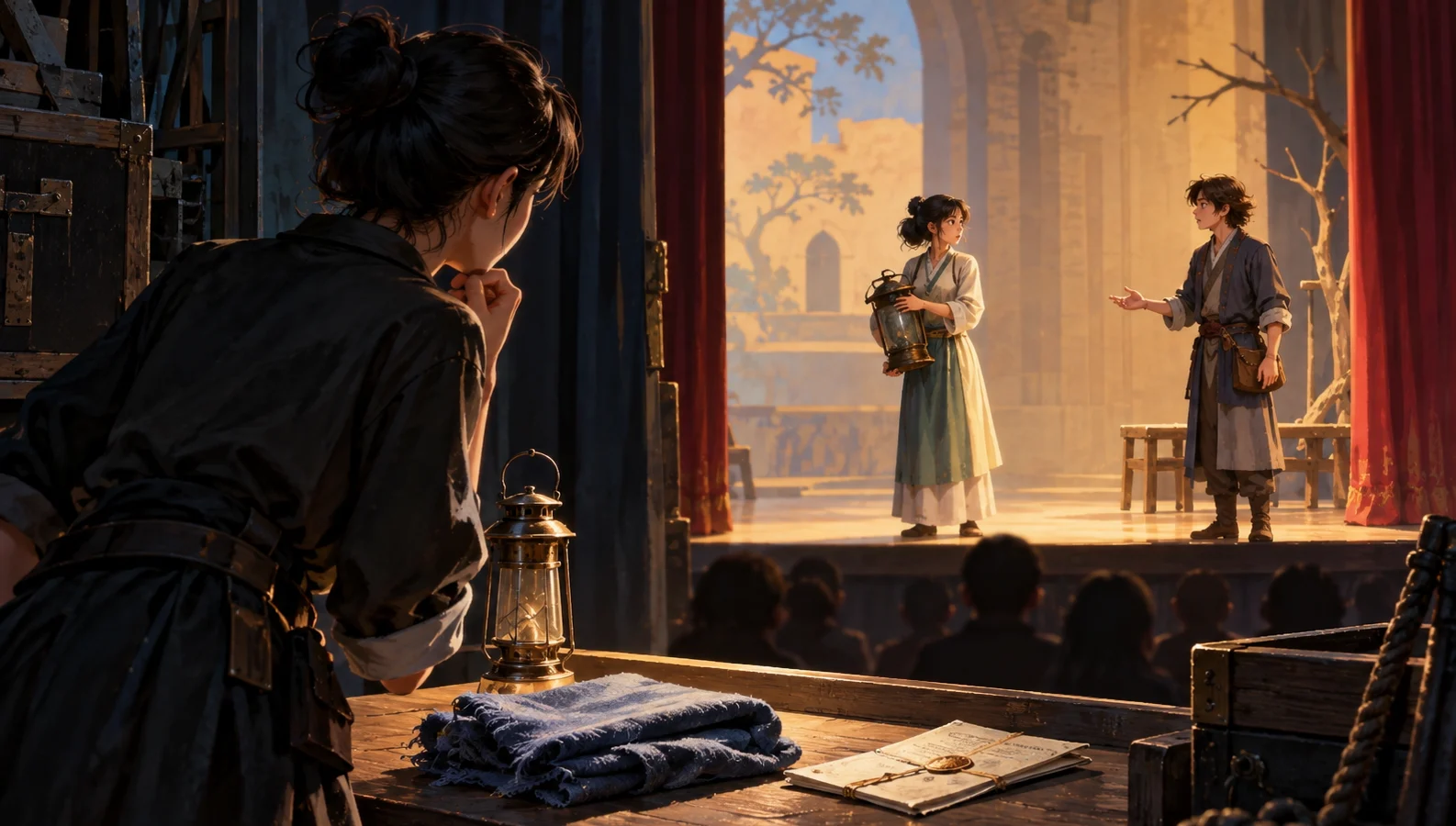
“Before the Rain Stops at the Ferry Landing” below is an original fictional teaching example, not a real user case, a tested outcome, or a DramaFork product feature. Three travelers—Xu Lan, A-He, and Zhou Xu—record their shared experience of missing a ferry. The player edits that day’s journal entry.
The example assumes that all three have confirmed the following: they arrived at the ferry landing at 16:10, after the scheduled boat had departed; while they waited in the rain, Zhou Xu bought three cups of hot tea; at 17:00, they left by bus instead. Whether missing the ferry was regrettable or the wait worthwhile has no shared answer.
Three Perspective Drafts: Let Differences Emerge Through Observation
Xu Lan handles the itinerary. She tends to record the time before acknowledging her emotions. She writes: “16:10. The boat had already left. The next leg needed replanning. Only after I finished copying down the service schedule did I notice I was still holding the tea. I hadn’t drunk any.” Her voice comes from the order in which she deals with practical matters and then notices her own state. Not every sentence needs a precise number.
A-He sketches throughout the trip, noticing shapes and movements first. She writes: “The stern shrank into a gray button in the rain. Xu Lan was bent over, writing things down. I didn’t call out to her. If we hadn’t missed the boat, I probably wouldn’t have finished drawing that row of dripping eaves.” This benefit belongs to A-He; it cannot be expanded into “We were glad we missed the boat.”
Zhou Xu dislikes explaining his concern for others and often ends on an understated note. He writes: “Bought three teas. One went untouched. The owner asked if we were still waiting. I said we’d warm our hands first. We took the bus in the end. The tea didn’t go to waste, though. We took it all with us.” He records acts of care without claiming to have rescued everyone’s mood.
All three drafts concern the same wait, but show different things: disrupted plans, unexpected time to observe, and companionship expressed through action. When distinguishing voices, asking what each writer notices, avoids, and chooses as their stopping point is more useful than assigning everyone a catchphrase.
Allow voices to change temporarily, too. Xu Lan can write a lyrical sentence, and Zhou Xu can offer a serious explanation. A character’s writing has tendencies; every paragraph need not fit a fixed label.
Use an Attribution and Preservation Sheet to Set Editorial Limits
The following sheet can be copied for every shared scene. Enter the original wording and its author before selecting material, rather than assigning credit after producing a polished composite.
| Field | How to Fill It In | Entry for This Example |
|---|---|---|
| Shared facts | Record only actions jointly confirmed within this example | The boat had left when they reached the landing; they later took a bus instead |
| Draft attribution | Identify the author of each passage; joint credit is no substitute | Keep Xu Lan’s, A-He’s, and Zhou Xu’s drafts separately |
| Essential sentences | Mark sentences whose removal would change the writer’s stance | A-He’s “I probably wouldn’t have…finished drawing” |
| What may be shortened | Specify the permitted scope of cuts | Sentences repeating the time may be omitted |
| Placement | Main text, sidebar, or not included on this page | Xu Lan in the main text; the other two drafts in sidebars |
| Change notes | Record cuts and who wrote any additions | The editor removed repeated times without changing anyone’s feelings |
| Items to check | Do not promote uncertain details to facts | Whose tea was left untouched |
“Essential” here means preserving a draft’s indispensable meaning when using it, not requiring every draft to enter the main text. If the available space cannot accommodate the full meaning, move the passage to a sidebar or mark it as not included. Do not extract half a sentence and turn the writer into someone holding the opposite view.
Joint credit is reserved for the jointly confirmed facts section. Main-text contributions receive individual credit even when published side by side; connecting sentences written by the editor are labeled as editorial notes. If someone is to change their position, write a separate scene in which they confirm that change. Do not quietly attribute the edited sentence to their original draft.
Let Players Choose a Page and See the Specific Trade-Offs
Before the choice appears, players read the three short drafts and the arrangement rules. Phrase the options as concrete editing actions: “Open with the change of plans,” “Open with the sketch of the eaves,” and “Open with the three cups of hot tea.” Each option explains which draft enters the main text and where the other two go, so players do not mistake this for merely choosing a title.
This demonstration selects “Open with the change of plans,” producing the following page:
Shared facts: At 16:10, when we reached the ferry landing, the boat had already left. At 17:00, we took a bus instead.
Xu Lan|Main text: The next leg needed replanning. Only after I finished copying down the service schedule did I notice I was still holding the tea. I hadn’t drunk any.
A-He|Sidebar: If we hadn’t missed the boat, I probably wouldn’t have finished drawing that row of dripping eaves.
Zhou Xu|Sidebar: The owner asked if we were still waiting. I said we’d warm our hands first.
Editor’s note: The main text omits times already given in the facts section. The sidebars are excerpts; all three original drafts are retained on a separate page.
This page first brings Xu Lan’s burden into view, while A-He’s gain and Zhou Xu’s companionship remain visible. The trade-off is also clear: A-He’s image of the stern and Zhou Xu’s ending about taking the tea along do not appear on this page, reducing the scene’s visual detail and humor. Preserving voices does not mean preserving every word.
If the sketch opens the page, A-He’s complete draft can serve as the main text, but the sidebar must still retain Xu Lan’s sentence about replanning the itinerary. Otherwise, the pleasure of unexpectedly noticing the scenery can obscure the trouble someone else had to handle. Opening with the hot tea shifts the focus to how the travelers relate to one another. It cannot justify adding “Everyone finally made up,” because the existing material establishes neither an argument nor a reconciliation.
Three Ways This Can Fail, and the Method’s Limits
The first failure is treating a factual conflict as a stylistic difference. If a new draft says, “We caught the 16:00 boat,” it conflicts with the shared facts and should be temporarily marked for checking. It cannot enter the main text merely because its tone is moving. By contrast, “The wait felt endless” and “The time flew by” can coexist: they describe experience.
The second failure is keeping the names while flattening the voices. Rewrite all three drafts as “Waiting in the rain taught us to appreciate what we have,” and the credits remain, but the observations and stances disappear. During review, identify an action or judgment distinctive to the original author in each passage. If only a collective lesson remains, return to the originals and select again.
The third failure is claiming to preserve everything while hiding disagreement where nobody can find it. If drafts are stored on another page, clearly direct readers to them beside the finished text. If the work can display only one page, state directly which passages were omitted. Do not turn an editorial promise into a behind-the-scenes setting readers cannot see.
If all three drafts are very short, publishing them in full side by side is more suitable than creating complex branches. If the focus is the journey’s chronology, divide the text by event and rotate writers between sections. This attribution and preservation sheet supports selection within individual scenes; it cannot, on its own, resolve who leads the journal over the long term.
To begin, choose one shared event, complete the attribution and preservation sheet, and produce one finished page. Then check three questions: Do readers know who said each sentence? Have any cuts changed the writer’s meaning? Can players identify what this arrangement highlights and leaves out? Only when all three answers can be tied to specific sentences does the choice have a clear editorial meaning.