After a Text Adventure Action Fails, How Do You Give Players New Usable Information?
After an action fails, players need to get something that can change their judgment for the next step. The method is to first break the failure into "who is blocking, what condition is missing, what can be tried next," then make losses correspond one-to-one with clues: the player loses time, tools, or someone's trust, and at the same time gains a fact that was previously unavailable. Below, we walk through the fictional teaching example "Observatory Tower Antenna Repair." All characters and numbers are made up and are only used to demonstrate structure.

Introduction
After an action fails, players need to get something that can change their judgment for the next step. The method is to first break the failure into "who is blocking, what condition is missing, what can be tried next," then make losses correspond one-to-one with clues: the player loses time, tools, or someone's trust, and at the same time gains a fact that was previously unavailable. Below, we walk through the fictional teaching example "Observatory Tower Antenna Repair." All characters and numbers are made up and are only used to demonstrate structure.
First Decide Which Type of Problem the Failure Should Expose
The same repair can fail for three reasons, and each one exposes only one main clue. Do not reveal power, location, and permission all at once.
| Failure reason | Player loss | New information | Next available actions |
|---|---|---|---|
| Insufficient power | Backup battery drained | The antenna interface reverse-draws power when disconnected | Go find an alternative power source, or first disconnect the grounding copper strip |
| Wrong location | Wastes one climbing window | The calibration mark is blocked by the tower's shadow and must be seen from the east platform | Go around to the east side, or use a reflective sheet to read the mark |
| Insufficient permission | Gets recorded once by the guard | The control box requires a level-two maintenance badge; the guard only recognizes the badge, not the person | Go exchange for a badge, find a badge holder to accompany you, or switch to the manual release lever |
The three clues each point to different resources, so players will not feel that "it failed but the goal was still given away for free."
Key Clues Must Appear Before the Failure
If players first hear about the "level-two maintenance badge" only after failing, they will feel that the author added the setting on the spot. A more stable order is: first give observable signs, then let the failure turn them into actionable information.
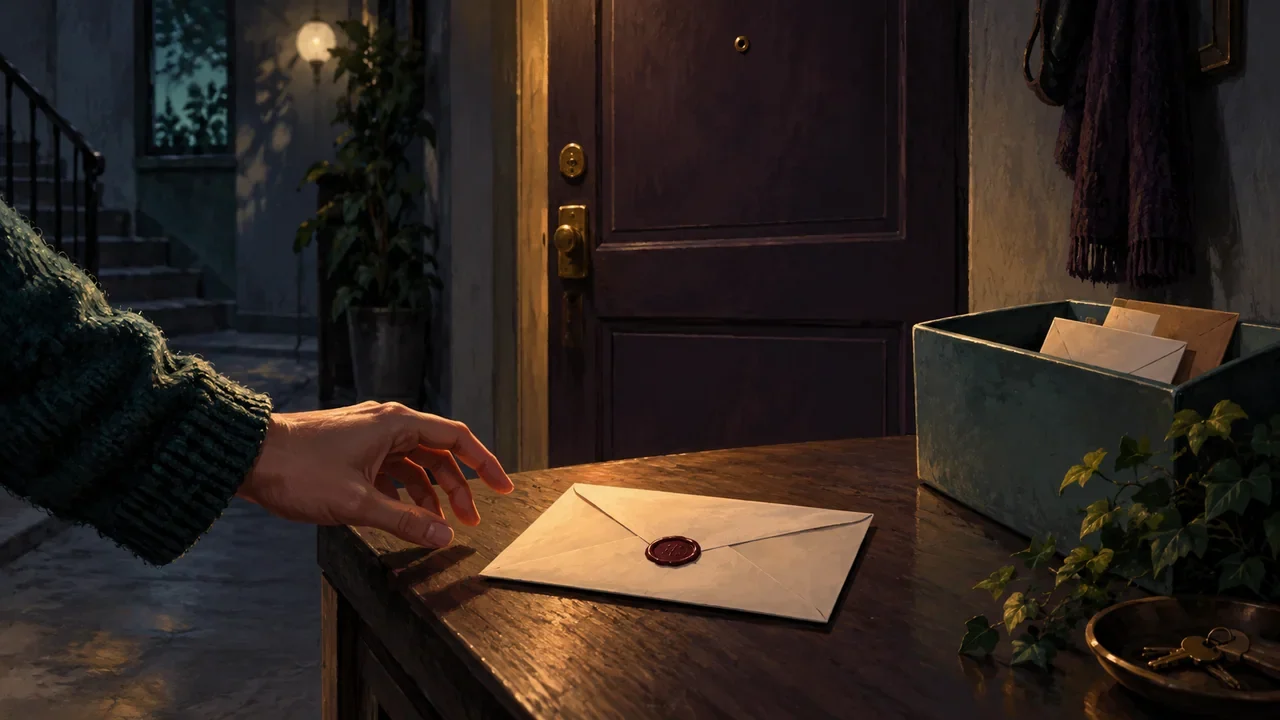
For example, when the player first approaches the control box, the narration says: "There is a fresh scratch along the edge of the box lid, and half a blue wax seal is pressed beside the keyhole." This is a sign, and the player may ignore it. After the repair fails, the guard says: "Without a level-two maintenance badge, every time you touch it I record it once." Only then is the wax seal explained as a permission mark. The clue appears first; the inference happens later.
When a character makes up an excuse, clearly mark that it is only the character's claim, not a world fact. The guard says, "This tower was inspected only last week." This can be written as the player's judgment: "He says it was inspected last week, but the rust on the box lid does not look like it." Do not directly treat the guard's words as setting.
Feedback Sentences and Continue-Able Actions for Three Kinds of Failure
Feedback sentences should be short and include "what happened" and "what the player now knows." Do not just write "You failed."
Power failure
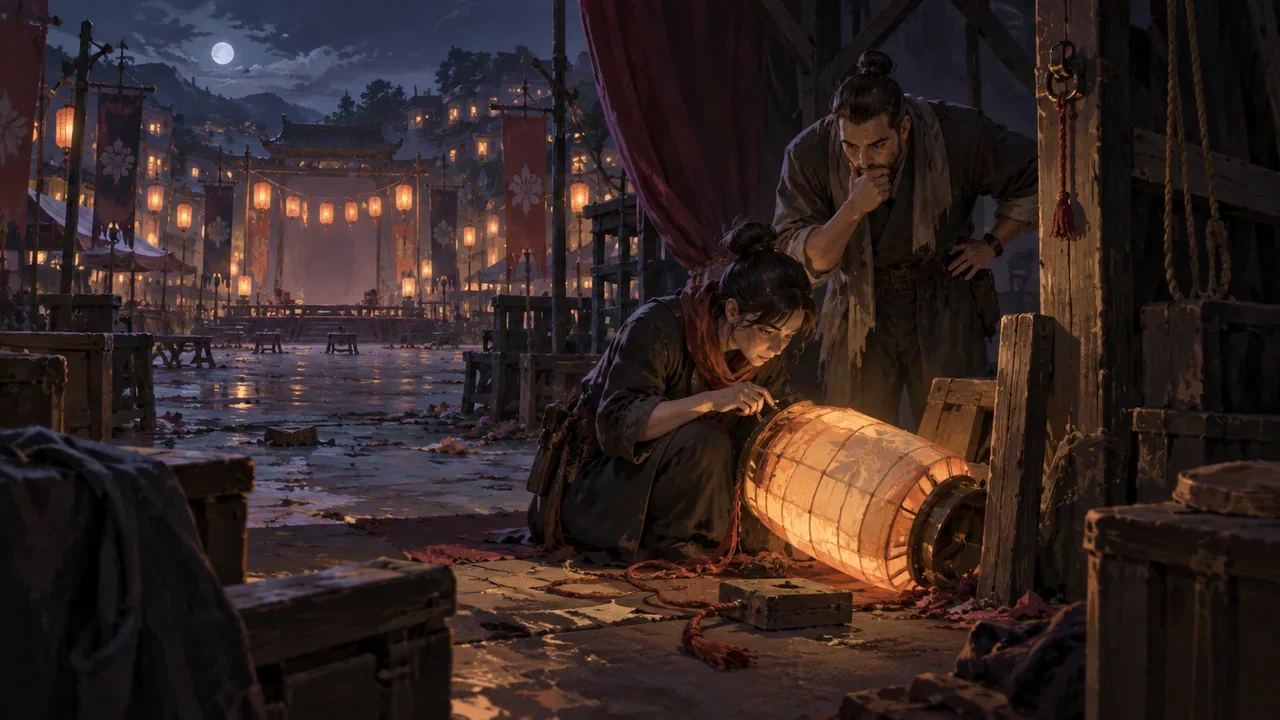
Narration: You connect the backup battery, and the needle jumps halfway before falling back to zero. When you disconnect it, the interface gives a soft sound, as if something is drawing power back. Feedback sentence: The battery is drained, and you discover that the antenna interface reverse-draws power at the moment of disconnection. Continue-able actions: Find an alternative power source; first remove the grounding copper strip and try again; go ask the night watchman how this was handled during the last blackout.
Location failure
Narration: You stand on the west platform from memory, and in the calibration mirror there is only the dark shadow cast by the tower. By the time you climb down, clouds from the east have already covered the mark. Feedback sentence: You missed one climbing window, and you also confirm that the calibration mark is only visible from the east platform. Continue-able actions: Go around to the east side and wait for the clouds to clear; use the copper strip's reflection to read the mark; ask someone at the top of the tower to report an angle once.
Permission failure
Narration: Just as you touch the control box, the guard speaks from the stairway entrance. He does not move to stop you, and only writes something in his notebook. Feedback sentence: You are recorded once, and you learn that the control box only recognizes a level-two maintenance badge. Continue-able actions: Go to the storeroom to exchange for a badge; find a licensed maintenance worker to accompany you; switch to the manual release lever at the bottom of the tower.
None of the three actions equals directly completing the repair, but each can give the next turn a clear objective.
Rewrite the Failed Turn as a Table
When writing a failed turn, you can fill in the table below, with only one sentence per cell. If you cannot fill it in, it means the clue or the loss is still too vague.
| Item | Content to fill in |
|---|---|
| What the player originally wanted to do | Repair the antenna and restore the signal |
| What actually happened | After connecting power, the needle fell back, and the interface reverse-drew power |
| Player loss | The backup battery is drained, and the same method cannot be tried again tonight |
| New information | The interface reverse-draws power at the moment of disconnection |
| Who knows this information | The player observed it personally; the night watchman may know the old method |
| Next optional actions | Find an alternative power source / first remove the grounding copper strip / ask the night watchman |
| What cannot be given for free | The antenna is still not repaired, and the signal is still not restored |
The key point of this table is the last cell: failure can give clues, but it cannot give away the goal itself.
Avoid Repeating "It Did Not Succeed" and Giving Away the Goal for Free
Repeated failure commonly appears in two ways of writing. One is that every failure says "You still did not repair it," and players lose patience after reading it three times. The other is that after failure a character suddenly says, "Forget it, I will repair it for you," and the goal is completely given away for free.
When rewriting, first ask: which condition did this failure make clearer? If the answer is "none," delete it or merge it. Then ask: does the price the player paid affect the next step? If the battery is drained but they can still retry infinitely, the loss is fake. Finally ask: must the new information be obtained through failure? If yes, the failure has a reason to exist; if not, it can be given earlier, and the failure can be saved for a more critical branch.
Completion Check
After writing the failed turn, check item by item:
- Before the failure, has at least one observable sign already appeared?
- Does the failure expose only one main clue, rather than explaining power, location, and permission all at once?
- Does the player pay a concrete loss, and does the loss affect the next turn?
- Does the new information point to at least two different actions?
- Is the goal itself still incomplete?
- Is the character's excuse marked as the character's claim, rather than a world fact?
- Can the feedback sentence let the player say in one sentence "what I now know"?
If all seven pass, the failed turn is no longer a repetition of "it did not succeed," but a advance with a cost.
Next, you can take a failure you are currently writing and fill in only the two cells "player loss" and "new information"; if the two cells can correspond to each other, then add the feedback sentence and continue-able actions.