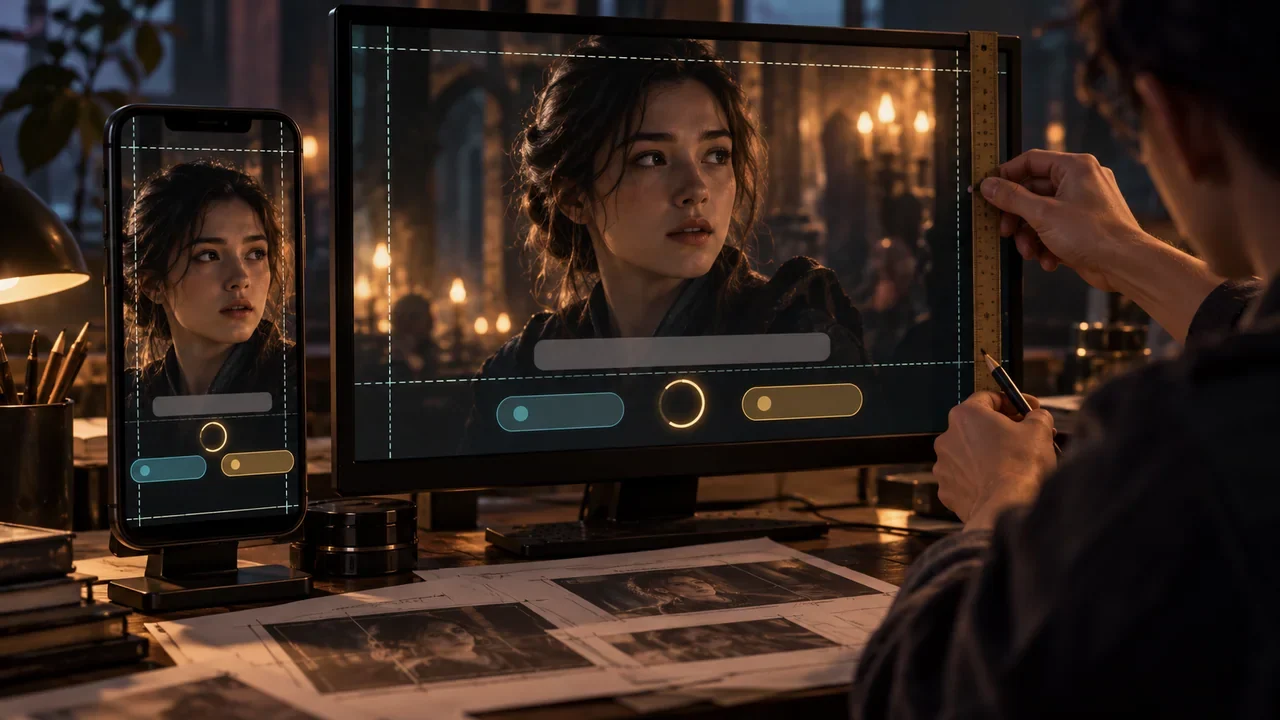
Interactive Film Names: Match Subtitles, Buttons, and Voices
Consistent translated names do not guarantee that players choose the right person. A three-media name identification card links first appearances, subtitle names, button wording, and voices to locate where confusion starts.
Introduction
When names are similar in an interactive film, first help players connect the name they hear, the person they see, and the person a button refers to. Decide whether to rename anyone afterward. One practical approach is to create a joint three-media name identification card for the easily confused pair, give each a separate introduction, and retain an already established identity cue at the first person-selection choice. Consistent terminology is only the starting point. The review asks whether players can correctly identify the intended recipient of an action.
1. Distinguish failure to identify from reluctance to choose
The following Last-Shift Signal is entirely fictional. Its names, dialogue, and review records illustrate a method, not real user cases, measured results, or product features. Suppose two supporting characters in a target-language version have Chinese placeholder names rendered here as “Mila” and “Mina.” These examples make no claim about pronunciation patterns in any actual language.
Mila is a dispatcher; Mina is a maintenance worker. The protagonist must give a recording to one of them. An earlier scene establishes their positions, so the player should judge who deserves more trust, rather than also guess which face belongs to each button’s name.
The original draft has both introduce themselves consecutively in one wide shot, then shows only “Give it to Mila” and “Give it to Mina.” Even names that match the glossary exactly can fail at three points: the subtitle is legible but not linked to a person; the voice is heard but the names are remembered backward; or the people are remembered but a button is misread. Each needs a different repair. Do not call all of them “inaccurate translation.”
Write this node’s task first: “I want to give the recording to the maintenance worker, and I can identify the button that means her.” This separates identity recognition from trust. If the person is identified correctly but trusting her is difficult, return to narrative evidence instead of adding more name hints.
2. Expand the glossary into a three-media identification card
The glossary answers “What do we consistently call this person?” The card answers “How do we know it is her now?” Make it for an easily confused pair and attach it to the specific person-selection node. Names that look correct separately may be hard to distinguish together.
| Review item | Mila | Mina |
|---|---|---|
| Stable character identifier | Character A, dispatcher | Character B, maintenance worker |
| First subtitle introduction | I’m Mila, responsible for dispatch | I’m Mina, responsible for maintenance |
| Visual association | Checks the dispatch schedule in a solo shot | Puts away maintenance tools in a solo shot |
| First person-selection button | Give it to Mila (dispatcher) | Give it to Mina (maintenance worker) |
| Voice review | Says the name separately; record the actual pronunciation | Says the name separately; compare by listening after the other name |
| Permitted later forms of address | Mila; Mila the dispatcher | Mina; Mina the maintenance worker |
| No ad hoc substitutions | Unexplained nicknames or abbreviations | Unexplained nicknames or abbreviations |
When reusing the card, add the node, subtitle version, dub version, and unresolved issues. Stable identifiers are for the production team to associate assets; players need not see them. The voice column cannot merely say “same as glossary.” Locate the actual recording and listen for background masking or connected speech that removes the distinction.
The key constraint is traceability across all three media. Before “maintenance worker” appears on a button, the film must link that role to Mina. If the dub uses a nickname, subtitles and the introduction must explain it too. Do not make the button perform the entire first introduction.
3. Establish two clear associations during the introductions
Replace the example with two short shots. Mila looks at the dispatch schedule and says, “I’m Mila. I handle dispatch.” Later cut to Mina, who puts away her tools and says, “Mina. Maintenance is my responsibility.” Name, person, and role connect within an understandable performance, without asking viewers to guess the speaker in a two-person wide shot.
Then repeat the name naturally. The protagonist asks the maintenance worker, “Mina, have you seen this recording?” She responds. This does not repeat her biography; it points the name back to the same person already introduced. Repeat it before the choice, not after a mistaken selection.
At the recording handover, use the card’s parallel button wording. Do not write “Give it to reliable maintenance worker Mina” on one button and only a name on the other. “Reliable” decides for the player. A role is an identification cue; trustworthiness still belongs to narrative evidence.
After submission, the proposed storyboard can show the selected person taking the recording while the protagonist addresses them by name. That expresses the action’s recipient but cannot repair earlier missing information. If players cannot distinguish the pair before submitting, the receiving shot merely reveals the mistake afterward.
4. Review with a specific identification task and retain revisable records
Do not ask only “Are the two names clear?” Play from the introductions to the person-selection node, then give a task unrelated to story preferences: “Point to the button that gives the recording to the maintenance worker, and explain your evidence.” Record the identified person, selected wording, and cited cue without explaining the answer yet.
A hypothetical teaching record might say: “Wanted the maintenance worker; pointed to Mila; remembered the sound at the name’s end.” This does not prove a particular pronunciation is faulty. It suggests an investigation: review the introduction and recording for a mistaken name association. If the person is identified correctly but similar button text is read backward, prioritize the identity cue on the buttons.
Check three conditions separately: subtitles with sound off, to observe text-to-person association; normal picture and sound with subtitles hidden, to observe spoken introductions; and buttons alone, asking who each means. The last checks only retained memory and cannot replace a review of the complete scene.
Change one main issue per round and retain “failure point before revision—change—task awaiting recheck.” For example, add a role cue first, then see whether the people are still remembered backward. This is a review plan without implementation records. Do not claim the cue works or the identification problem is solved.
5. If cues fail, choose alternatives within the story’s constraints
If both roles are the same, do not invent different jobs. Use full names or forms of address already established in the story, or have each person clearly addressed before the choice. Clothing colors and left/right positions can change between shots; use them as support rather than the sole identity basis.
If buttons cannot fit names and roles, adjust line breaks or rewrite the shared action wording while retaining the text that distinguishes people. Shortening both to “Mi” removes the difference. Adding portraits alone cannot resolve confusion in the audio. The three media can support one another, but each failure point still needs separate treatment.
Renaming is a later option, provided the creative design permits it. Review recorded lines, subtitles, address forms, and subsequent plot together. If similar names serve an intentional mistaken-identity plot, specify when viewers may be confused and when they must identify people. Do not let unintended confusion displace the intended narrative effect.
A completed card is not completed validation. List unchecked language pronunciations, recording versions, and special display states at delivery. Whether the first-choice cue can later be removed remains a question for subsequent identification tasks. If a character returns after a long absence, a short reminder is generally easier to review than assuming viewers always remember.