Interactive Film Silent Review: Follow Two Complete Routes
Mute the film and follow each of two routes from the opening to its ending, checking information available before every choice. A route-level checklist records what sound contributes, where substitutes appear, why information is missing, and proposed fixes.
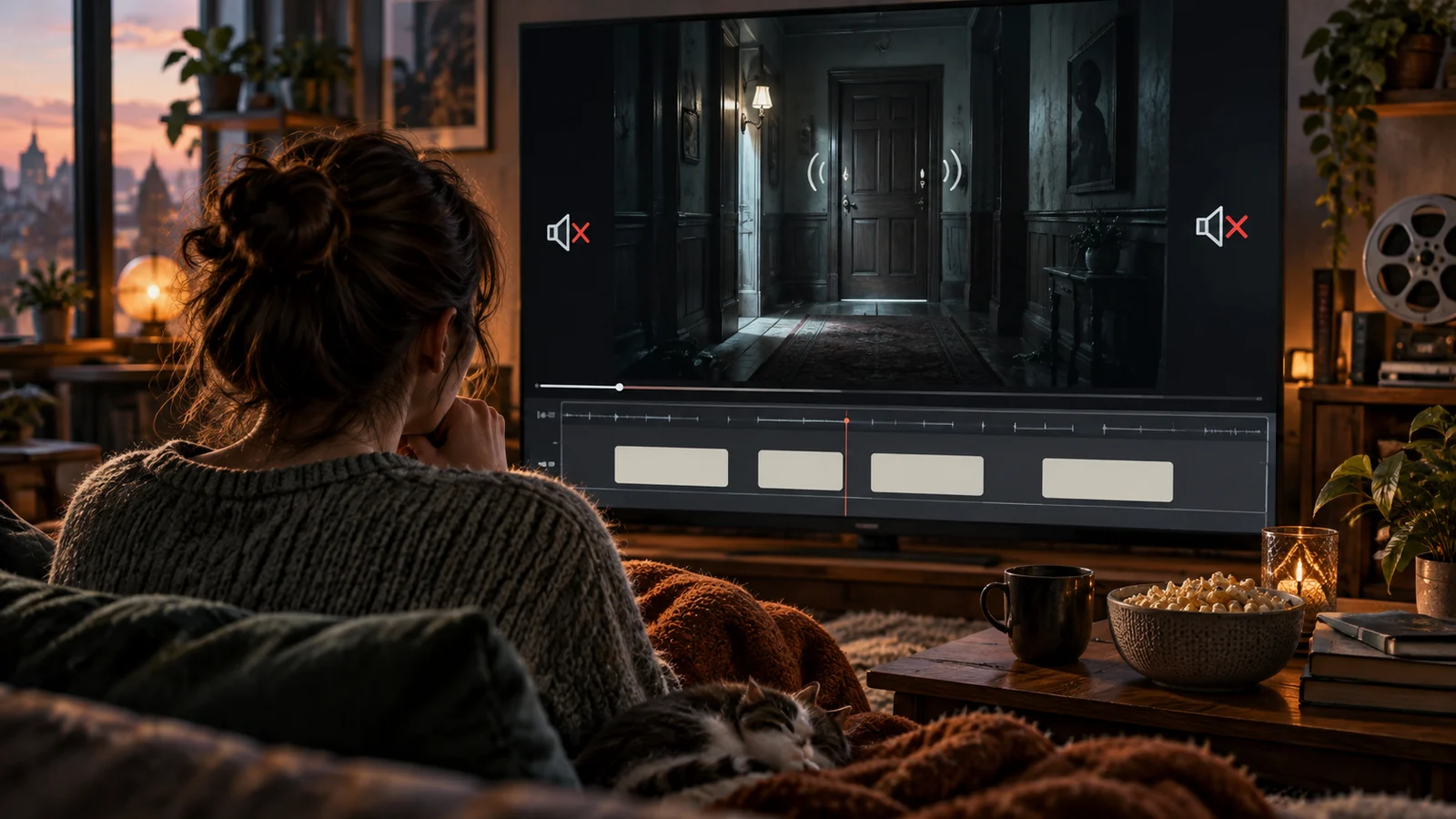
Follow complete routes before judging whether sound has substitutes
A silent review of an interactive film should follow two routes separately from the same opening. Before every decision, check whether picture and text provide the necessary information carried by sound. Deliver a sound-information checklist for each route and a proposed fix for every gap. Accurate subtitles for one sentence do not make an entire route understandable: a cue may arrive late or appear only on another branch.
At each choice, first record “What do I know now, and what supports my choice?”, then continue. Do not fill gaps from memory of the original audio or count an ending revelation as evidence already available at the decision. The review checks whether information supports judgment, not whether all viewers choose the same answer.
The Envelope on the Last Ferry below is an original fictional teaching case. Its characters, sounds, routes, and revisions are not real user cases, measured outcomes, or DramaFork features. This is an editorial review method, not accessibility certification.
Fix the two routes and their information starting points
At the opening, a letter carrier arrives at the ferry landing. The attendant announces, “The last ferry is at the north pier. The south pier is closed to passage.” The image shows only two walkways without written labels. The player then chooses to look for the recipient in the waiting room or check the envelope’s cargo number in the cargo shed.
In the waiting-room route, two short knocks and one long knock come through a partition. An earlier contact note gives the same rhythm, so the player can approach the partition or ask the attendant first. Approaching reveals the recipient; asking leads the attendant to guide the carrier. Both actions end with handing over the envelope and going to the north pier to board.
In the cargo-shed route, someone behind the player shouts, “Wait, that letter is going to the wrong person!” Looking back reveals only an indistinct figure. The player chooses to stop and check or continue delivering. Stopping reveals a mismatched cargo number; the carrier takes the correct letter and leaves from the north pier. The shout itself does not establish the speaker’s identity.
Fix two complete paths for this review: waiting room, approach partition, hand over letter, board; and cargo shed, stop to check, exchange letter, board. List other choices as uncovered. Start both runs at the opening rather than resume halfway through the shed. Otherwise the announcement remembered from the first run may be mistaken for information conveyed on the second route.
Use a route-level checklist to separate what is missing from why
First walk through muted and record doubts, then compare the sound script to confirm the intended meaning. Retain at least the route, node, information conveyed by sound, judgment affected, existing substitute and timing, reason for the gap, proposed fix, and recheck status. Log key sounds without gaps too, so the checklist does not become a set of isolated problems.
| Route and node | Information carried by sound | Existing substitute and reason for gap | Proposed addition |
|---|---|---|---|
| Both openings | Boarding at the north pier; south side closed | Only an image of the announcement sounding; content missing | Show announcement text with its speaking source before departure |
| Before waiting-room choice | Two short knocks and one long, matching the note | Subtitle says only “knocking”; insufficient detail | State that two short knocks and one long come through the partition |
| Before cargo-shed choice | Someone behind questions the intended recipient | Shout subtitle appears after the options; too late | Place the complete shout before the choice |
| After cargo-shed check | Letter exchange is complete | Image shows old/new cargo numbers and exchange action | Retain; recheck text legibility |
| Before boarding on both routes | Reason for going to the north pier | Ending says only “You follow the cue and board”; unclear reference | Link to the opening cue; provide reviewable text if needed |
Every row is proposed, not a completed revision. In practice add identifiable shot or node numbers, the responsible person, and items awaiting review. “Subtitle problem” is not a single cause. Missing content needs content; lateness needs reordering; information confined to another route needs an entry on this route.
One announcement can be linked to two route records, but it cannot be reviewed just once. Appearing at the opening does not guarantee “follow the cue” remains understandable when either route returns to the landing.
Work through both complete paths
On the first muted run, go from the opening to the waiting room. At the route choice, write: “I know there are two places, but not where to board.” At the partition, “knocking” alone yields: “Cannot compare rhythm with the note; approaching is a guess.” After handover, the ending’s “follow the cue” still has no specific referent. The opening omission and ending reference now form one problem.
After the proposed additions, start again: announcement text gives the north pier; the partition cue retains direction and rhythm; the ending shows a north-pier sign. Record where each piece of information appears. Even if the editor considers the chain complete, write only “this editorial recheck can locate the corresponding information,” rather than claim viewer understanding is validated.
For the second run, clear previously known story information from the record and follow the shed route from the opening. Pause when “stop / continue” appears and copy the evidence already on screen. If the shout has not appeared, even complete subtitles later cannot restore evidence for this decision. Move the shout before the choice, then keep checking the cargo number, exchange, and boarding so the repair covers more than the first half.
Write “someone shouts from behind,” not “the true recipient shouts.” The first substitutes for an audible event; the second confirms identity too early. Viewers need to know someone objects while retaining room to judge that objection’s credibility.
Choose additions and retain the review’s limits
If the decision depends on words, rhythm, or direction, text can retain those differences directly. If it depends on an object changing, clear imagery can also supply the information. For example, legible cargo numbers and the exchange action already convey the letter swap, so a redundant explanatory line is unnecessary. Choose according to the missing information rather than put a parenthesis around every sound.
A review log can recover earlier cues, but should not be the sole place to obtain essential evidence for the first time. If it cannot be opened during a choice, present necessary content beforehand. A vibration alone cannot communicate what was shouted. Do not close an issue merely because “another cue exists.”
Avoid three failed repairs: too much explanation revealing the solution; text present but unreadable under options; and improved rhythm in the waiting room while the shed still uses late subtitles. If music only sets the atmosphere, record why it does not affect judgments in this review. If a melody identifies a person, include it again among the critical cues.
Deliver the two actual paths reviewed, item-by-item treatment records, and the uncovered list. This example does not cover asking the attendant or continuing the delivery, nor validate different devices, reading speeds, or timed choices. A muted walkthrough exposes route information gaps. It does not represent deaf or hard-of-hearing viewers’ actual experience or replace later review with the intended audience.