The Second Opening of an Interactive Film: Skip Familiar Background and Set Up a New Route
Write a replay opening as an explicit narrative handoff: retain prerequisites for the current decision, identify old scenes that can be skipped and show route differences through new action. Includes a reusable table and complete fictional script.

Start a replay opening by saying where this run begins
A second-play opening should first tell viewers which moment the story returns to, which earlier-run actions have not yet happened and what will change this time. Supply the prerequisites for the current choice next, then enter the new scene. Remembering the world’s background should not be the threshold for understanding the new route.
The writer can define the deliverable as a “replay-opening handoff script”: required prerequisites, skippable content, new-route differences and the first choice immediately afterward. It governs how the script connects, not whether playback software can recognize history, jump automatically or restore state.
The easiest thing to miss is not background but impressions left by the old route. Viewers remember someone betraying them, while the current character may not yet have witnessed it. They remember handing a key to a companion, while this run returns to before that handoff. State the current facts clearly, or memory from the previous run will wrongly fill in the minutes skipped.
Use one fictional story to define the replay starting point
The Final Ferry below is a fictional teaching example, not a real user case, tested result or product feature. Characters, routes and conditions are original demonstration settings for this article.
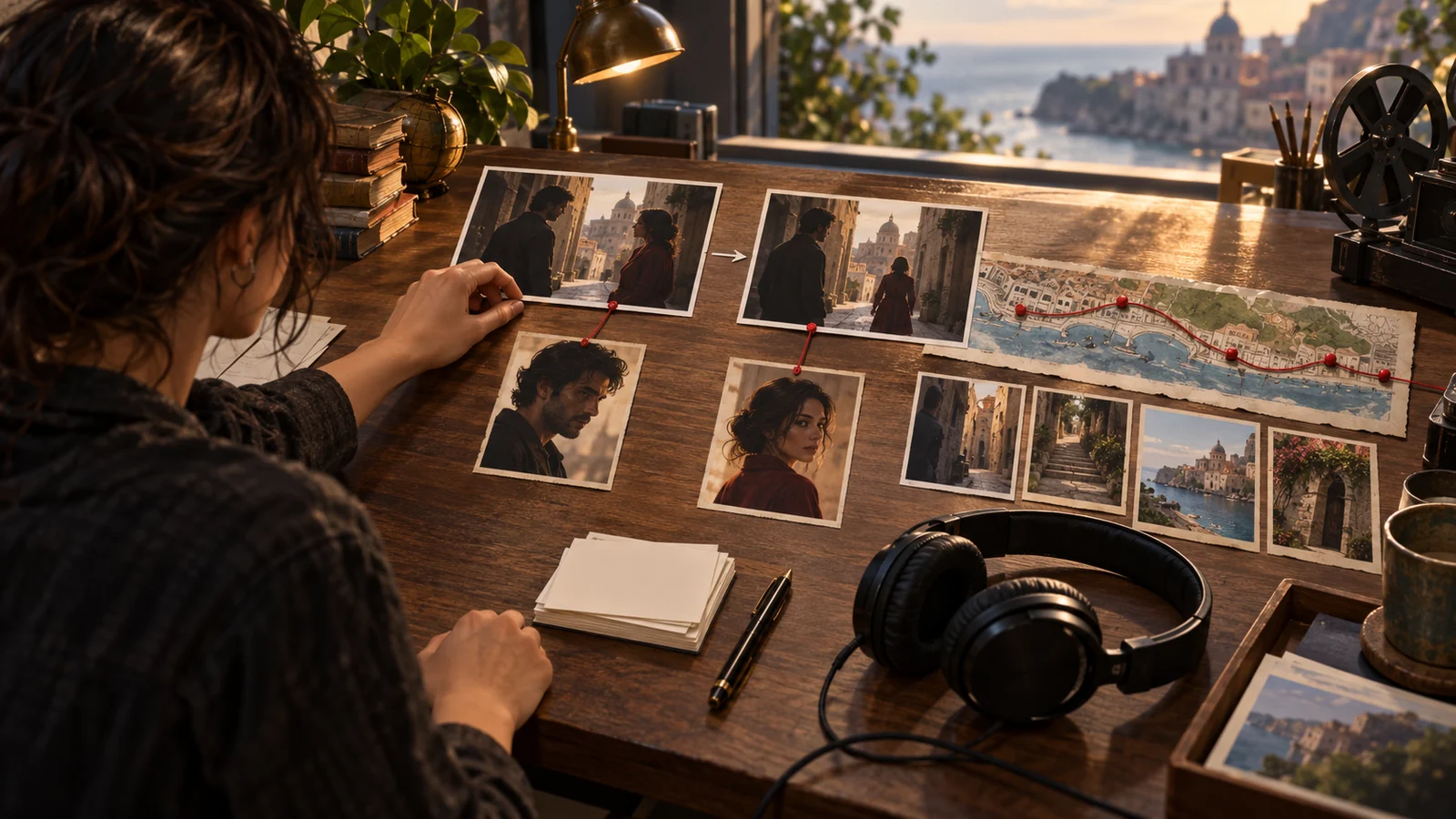
Watch repairer Lin Yao must take the pocket watch his father left behind to his older sister across the water before the final ferry leaves. The first opening introduces his father’s old shop, the siblings’ argument and the pier layout in sequence. A branch follows: entrust the watch to a crew member for delivery or find his sister himself. Here, the previous run is assumed to have chosen delivery; the new opening prepares an entry for finding her personally.
The replay begins at the pier, “before giving the pocket watch to the crew member.” Lin Yao still has it, has not met his sister, and the argument following delegated delivery has not happened. This does not continue the previous ending; it makes the decision again from before this handoff.
The first new choice is to search the waiting hall or ask the ticket inspector about the number on the watch. Viewers must know that his sister arranged to meet in the hall, that inquiries use boarding time and where the number comes from. Why his father opened a watch shop can be omitted; the number inside the watch cover cannot disappear with the old-shop scene.
Fill in the handoff table before choosing which shots to remove
When copying the table, write the replay starting point and first choice before filling each row. “Placement” must refer to actual dialogue, visuals or entry copy, not merely “viewers should remember.”
| Handoff item | Filled example | Placement |
|---|---|---|
| Starting point and reset scope | Return to before the watch handoff; delivery route has not happened | One opening explanation |
| Required prerequisites | Lin Yao brings the watch to the meeting; sister arranged to meet in the waiting hall | Note and character action |
| Current possession | Watch in hand; number inside its cover | Cover close-up |
| Skippable content | Old-shop introduction, full argument, pier establishing view | Remove from replay script |
| New-route difference | Find her personally this time, without delegating to the crew member | Action pulling the watch back |
| First-choice conditions | Search the hall or check the number; asking takes time | Dialogue before the choice |
| Do not reveal yet | Whether the sister is still in the hall and what the number refers to | Leave for later scenes |
This table separates the old shots by facts. The long shop scene can be skipped, but its number information must move into the new opening. The siblings’ argument can become “his sister asked to meet him,” without repeating every grievance. If a later choice requires understanding a hurtful remark, list that remark as a required prerequisite again.
Express the route difference as a change visible now. “Explore another destiny” does not help connect the scene; “Lin Yao pulls back the watch he was extending toward the crew member” identifies the changed action. If the previous run already involved finding her personally, this script does not apply. Write the corresponding entry instead of treating this example’s play order as everyone’s experience.
A replay-opening script you can adapt directly
The entry explanation below is proposed copy. The actual work must implement how it is presented separately. Parenthetical text gives production directions and is not spoken by characters.
Entry explanation: Restart from before the watch handoff at the pier. Lin Yao still has the watch, and events after delegated delivery have not happened.
(A ferry horn sounds. Lin Yao approaches the crew member and reaches into his pocket, but does not take out the watch.)
Crew member: Still want me to deliver it for you?
Lin Yao: I’ll find her myself.
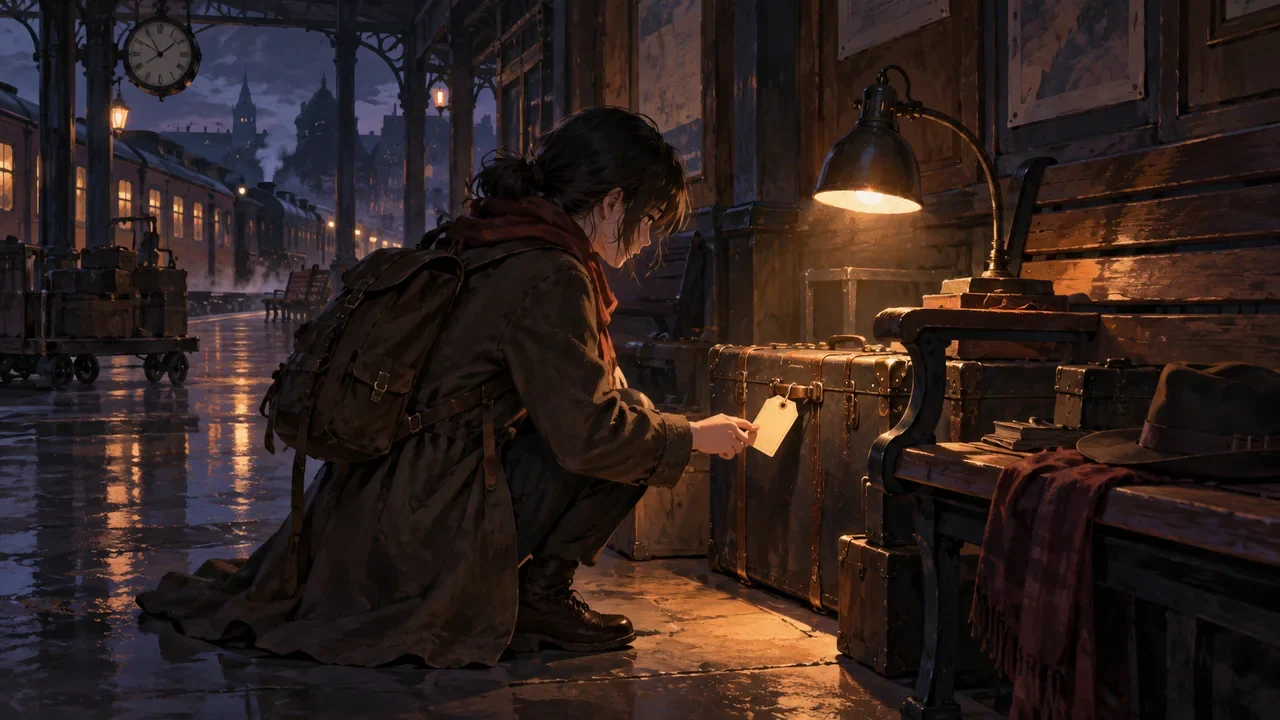
(He unfolds a note: “Meet me in the waiting hall. Your sister.” Its corner is tucked into the watch cover, with a number engraved on the inside.)
Lin Yao: She said to meet in the waiting hall. Do you recognize this number?
Crew member: The ticket inspector can check. But if you ask and come back, you’ll have even less time to board.
(Lin Yao looks toward the waiting hall, then the ticket window.)
Choice one: Search the waiting hall for his sister first.
Choice two: Ask the ticket inspector about the pocket-watch number first; this uses boarding time.
This script takes viewers familiar with the old background straight into new action, while giving those who forgot details the note, watch and time constraint. Whether the sister is there remains unknown, and the number’s answer is not revealed early. The opening restores the conditions for judgment without summarizing the new route as a preview of its outcome.
To retain the siblings’ emotions, Lin Yao can pause over “meet” on the note before closing the cover. This action conveys hesitation but cannot alone establish that his sister arranged to meet in the waiting hall. Emotional shots can be understated; information needed for the first choice must be clear.
Compare failed drafts to decide what to condense and what to retain
For a check, take only the entry explanation and new opening, without reading the old route, and try to answer: What moment is this? Who has the watch? What does Lin Yao know? How do the two actions differ? This is a script-review method; the article contains no actual audience-test results.
The first failure says only “skip scenes already seen,” then has the character suddenly produce the watch sent away in the previous run. Fix the starting-point explanation: clearly return to before the handoff. If the work actually carries forward the old state, rewrite the scene rather than hiding the contradiction behind a replay prompt.
The second failure uses ending knowledge to explain a new motive, such as “This time I won’t trust that liar.” This Lin Yao has not experienced the delivery events, so change it to “I’ll find her myself.” Unless the work explicitly gives characters memory of previous runs, viewers’ knowledge cannot directly become character evidence.
The third failure lets the summary grow until it retells the shop and argument. Use an object cue plus one line instead; if accumulated emotion directly determines the new choice’s meaning, retain that key conversation. The opening need not be as short as possible. Remove repeated explanation while retaining enough motivation.
When entry must inherit several previous choices, another option is separate short scripts for confirmed states. If state cannot be confirmed, use a fixed starting point with explicit prerequisites. A summary crammed with conditions may indicate that entry is too late; move the opening earlier to a scene where the conditions can be introduced naturally.
At handoff, keep the table, opening script and two first-choice options together. Whenever the starting point or possession changes, check all three. Only when they describe the same current situation can the omitted old content avoid becoming a gap in understanding the new route.