How to Keep Imagined Outcomes Before a Choice from Looking Like Facts in an Interactive Film Game
An imagined sequence before a choice needs to establish whose thoughts we are seeing, what they are based on, and which consequences remain uncertain, then end with a clear return to the present scene. A fictional storyboard involving an old letter and a companion walking away shows how to fill out a reusable imagined-sequence boundary card.
Introduction
To keep an imagined sequence before a choice from being mistaken for fact, first establish it as one character’s fear under a particular assumption. Then show the audience that, when the imagining ends, the action has not been taken: the people and objects are still in their pre-choice state. Soft focus, a color shift, or an abrupt change in music cannot establish all of these boundaries on their own.
This article provides an “imagined-sequence boundary card” for writers and directors to use during narrative storyboarding. The old-letter scene below is entirely fictional and serves only as a teaching example. It is not a real user case, an empirical finding, a record of hands-on testing, or a DramaFork product feature.
Separate three things that are easy to confuse
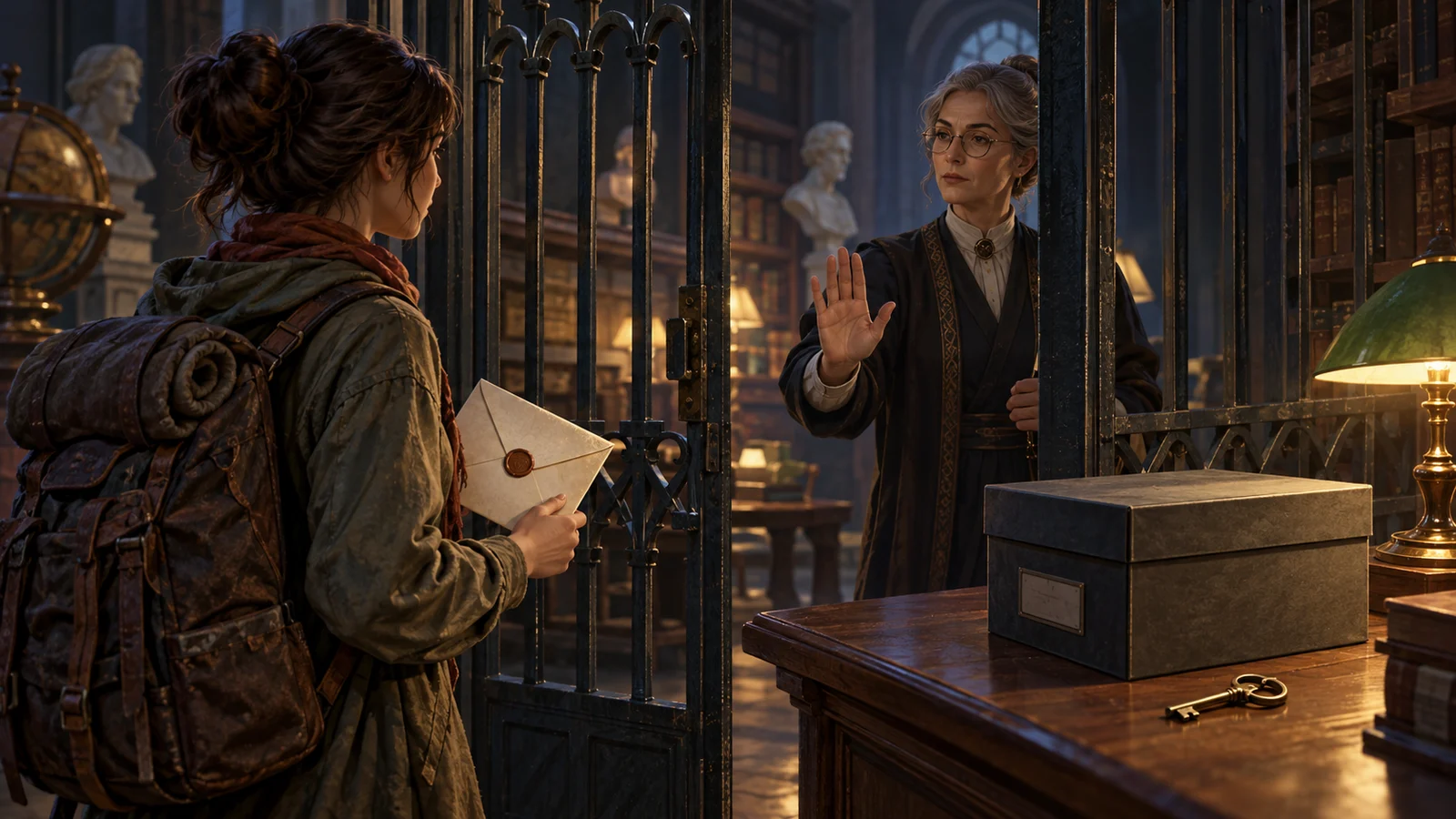
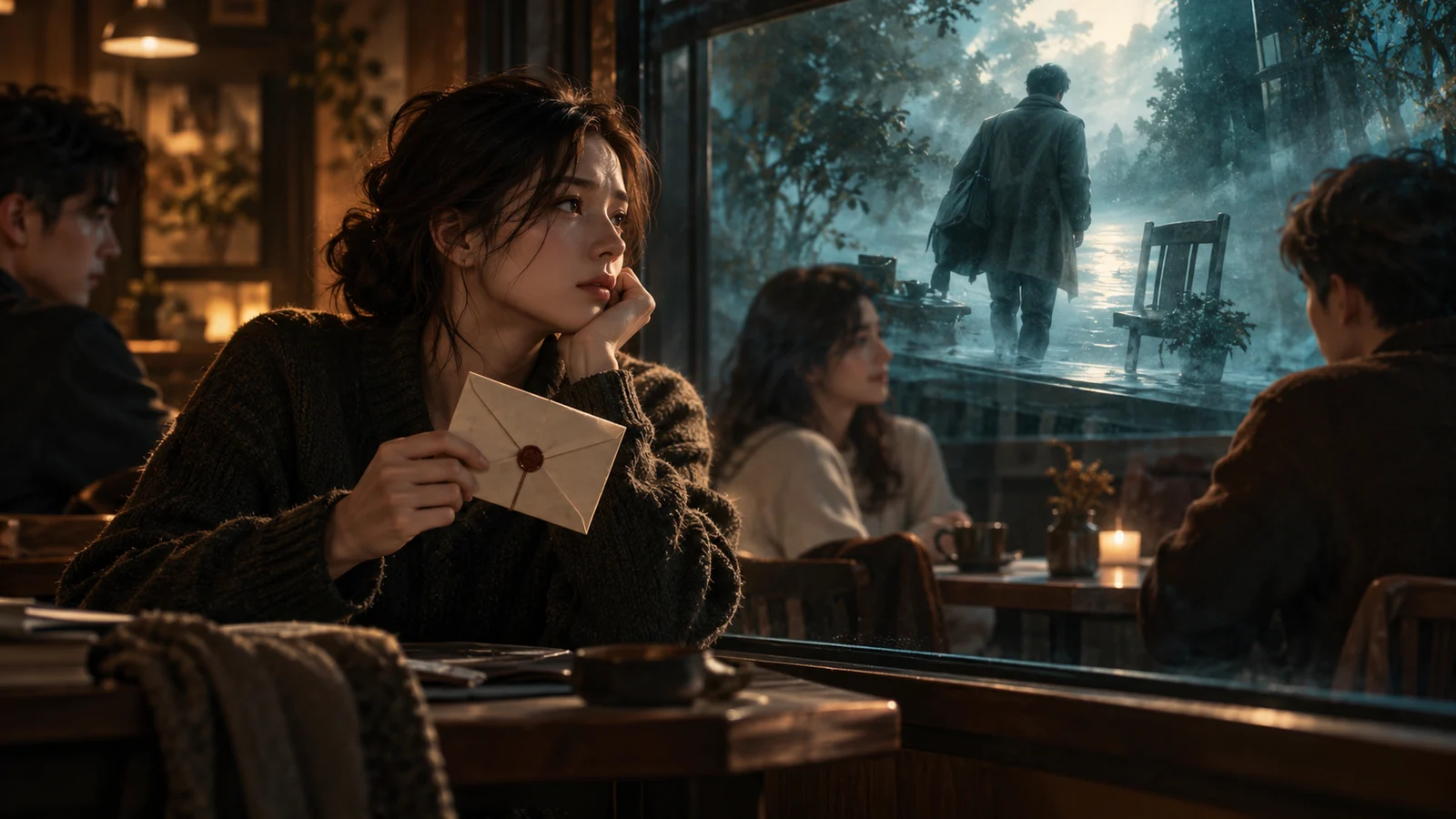
The protagonist, Lin Yao, holds an unopened old letter while her companion, Zhou Cen, sits at the table. She considers opening the letter in front of everyone and reading it aloud. An image flashes through her mind: Zhou Cen pushes back his chair and leaves. At this point, the only established story facts are that the letter is unopened, her companion is seated, and the public disclosure has not happened. “He might leave if I read it aloud” is Lin Yao’s prediction. The chair moving, his turning away, and the empty seat are the visual expression of that prediction.
These three things are not interchangeable. A vividly depicted outcome is not necessarily a certain one; a character’s conviction does not mean the narrator vouches for it. Beside the storyboard, label “present facts,” “character prediction,” and “imagined content” separately. Do not collapse them into a vague label such as “preview.”
The basis for the prediction also needs to be clear. In this example, Lin Yao remembers Zhou Cen saying, “I don’t want to talk about that again,” and fears that opening the letter will anger him. That line is also part of the fictional story. It explains where her fear comes from, but does not prove that Zhou Cen will leave. If the imagined sequence includes a secret conversation Lin Yao could not know about, audiences are more likely to read it as reliable information supplied by the work itself. Remove it or explicitly establish that it, too, is conjecture.
Fill out the boundary card before choosing a visual style
The boundary card does more than attach an “imaginary” label to the footage. It defines what the sequence can communicate. Here is a completed example; replace the entries to use it for another scene.
| Field | Entry for this sequence |
|---|---|
| Who is imagining? | Lin Yao; this is her fear, not a representation of Zhou Cen’s thoughts |
| Present facts | The old envelope is still sealed and in Lin Yao’s hand; Zhou Cen remains seated opposite her |
| Basis | Lin Yao remembers that Zhou Cen does not want to revisit the past, and assumes the letter’s contents will anger him |
| Hypothetical action | Lin Yao opens the letter in front of everyone now and reads it aloud |
| Imagined content | Zhou Cen pushes back his chair, stands, and leaves the table, leaving an empty seat |
| What is not guaranteed? | What the letter actually says, how Zhou Cen interprets it, whether he leaves, or whether their relationship changes |
| Entry cue | First show Lin Yao looking at the envelope, followed by her inner thought: “If I read this aloud now…” |
| Return anchor | Return to the same camera position at the table: the seal is untouched, the letter is still in her hand, and Zhou Cen is still seated |
| Available actions afterward | “Open the letter in front of everyone and read it aloud” or “Put the letter away for now” |
The order matters: establish facts and conjecture first, design the entry and return next, then check the choices. Otherwise, it is easy to edit an elegant departure sequence first and hastily add “she was only imagining it” afterward, without repairing the continuity of the actions around it.
The card also makes trade-offs visible. Keeping the empty seat can intensify her fear of losing her companion, but it cannot serve as the first shot back in the present scene. If the team insists on that edit, it must find another sufficiently clear way to establish the return.
Compare the same scene with and without clear boundaries
The version without clear boundaries runs like this: Lin Yao looks down at the letter; cut to her unfolding the paper; Zhou Cen’s expression changes, and he pushes back his chair and leaves; cut back to a close-up of Lin Yao; the option “Reveal the old letter and make Zhou Cen leave” appears. Nothing identifies whose imagining this is, and nothing restores the letter to its unopened state. Audiences may think the disclosure has already happened, or that the work has guaranteed the choice’s outcome in advance.
The version with clear boundaries keeps the same emotional content but reorganizes the transitions. The first shot frames both characters at the table, establishing that Zhou Cen is seated and the envelope is still sealed. The second moves in on Lin Yao’s hand and gaze, followed by her inner thought: “If I read this aloud now, would he just leave?” Only the third shot enters the imagined space, with a different quality of light, showing the unfolded paper, the chair being pushed back, and his retreating figure.
The fourth shot ends the imagining and returns to the composition of the first shot. The envelope is still intact, and Zhou Cen’s hand is still resting by the table’s edge. In the fifth shot, Zhou Cen grounds us in the present with a line of dialogue: “What do you want to show me?” Before Lin Yao answers, the choices appear. The present-scene dialogue thus continues from her hesitation over the letter. It does not acknowledge the imagined argument as something that has happened.
Here, the entry cue is carried jointly by her gaze, the conditional sentence, and the visual change. The light creates atmosphere, the conditional sentence states the premise, and the return shot reestablishes the facts. If the inner thought is removed, replace it with another cue that clearly shows Lin Yao is imagining. Do not assume a particular color palette inherently means “imaginary.”
Check actions when returning to the present, not just faces
The return shot needs to answer at least two questions: What is the current state of the object that changed in the imagining? Where is the person who left in the imagining? In this example, the most important evidence is the unbroken seal and the still-occupied chair. A startled, waking-from-a-dream expression on Lin Yao’s face alone proves neither that the letter has not been read nor that Zhou Cen has not left.
Sound needs checking too. If the departing footsteps continue into an unoccupied shot of the present scene, the two sequences may be understood as one continuous event. You can resume the current conversation at the table on the return, aligning sound with visible action. If you intentionally retain an echo, make sure the image clearly shows that the character is still there, so both cues do not become ambiguous at once.
The choices must also stop promising an outcome. “Reveal the old letter and make him leave” turns a fear into an inevitable consequence. “Open the letter in front of everyone and read it aloud” promises only the action the player authorizes. Nor should the choices become “Bravely reveal it” and “Cowardly conceal it”: those add value judgments that crowd out the hesitation the scene is meant to convey.
Once the player actually chooses disclosure, the opening of the letter and Zhou Cen’s real response must be shown separately. Even if he does ultimately leave, the earlier imagining merely happens to align with the later event. It cannot replace the depiction of the actual action.
Look for misreadings in storyboard review without claiming validation
During review, first cover the storyboard notes and read only the shots and dialogue. Then separately recount “what has already happened,” “who thinks what might happen,” and “what choices are still available.” If the departure is listed as an event that has already happened, prioritize revising the return anchor. If disclosure is understood to guarantee his departure, revise the hypothetical premise and the choice wording. If no one can say who is imagining, revise the entry cue.
Next, try removing one kind of cue. Without the color difference, can you still identify whose imagining it is and the facts reestablished on return? Without relying on inner speech, are the visual transitions still clear? If removing a single cue makes the whole sequence look like continuous action in the present, retain it or rewrite the transitions. This is a review method; the article does not claim that audience testing has been conducted or that misreadings have been proved to be eliminated.
Clear boundaries will reduce some forms of suspense, but uncertainty about how Zhou Cen will actually respond can remain. This method suits choice points where audiences need to understand the scope of an action while also seeing a character’s fears. It cannot be applied directly to a work that deliberately blurs hallucination and reality, or establishes that a character has reliable precognition. First define how much the audience is meant to believe in that sequence, then decide which facts must be reestablished before the choice.