Manual Dialogue-Level Review for an Interactive Film: Avoid Repeated Volume Adjustments Between Branches
Keep the device, playback settings and volume fixed, then listen continuously along actual routes. Record missed words, background events and the urge to adjust volume separately to distinguish weak dialogue, masking and abrupt joins.
Fix the volume first, then find what makes you want to change it
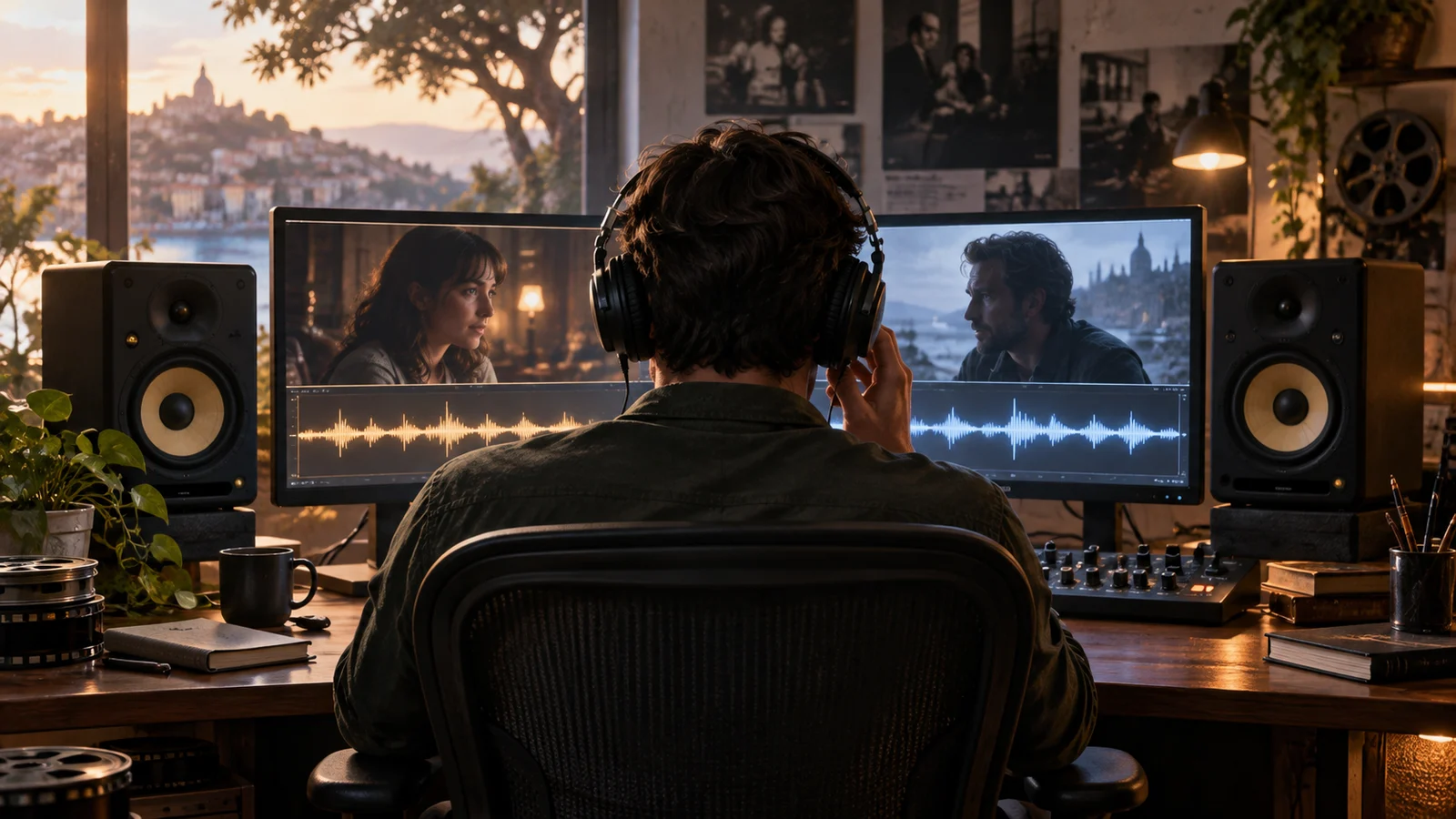
To review adjoining dialogue segments manually, first listen to them continuously under the same playback conditions. Note where you want to turn the volume up or down and which words you cannot make out. Then check the dialogue and background sound separately before returning to the full mix for confirmation. Do not readjust each segment until it sounds comfortable: that erases the difference you are trying to find.
The deliverable is a listening-conditions card plus a dialogue-intelligibility log. It should let another editor find the same file and join and listen again under the same conditions, rather than receive only a comment such as “the second segment is too quiet.”
The Last Ferry, its dialogue, issue logs and proposed edits below are fictional teaching examples, not a real user case, tested outcomes or representations of product features. This article has no evidence from actual audio tests and makes no claim of compliance with any platform’s loudness requirements.
In the story, viewers can ask for directions indoors or under a rain shelter; both routes then join the boarding segment. The indoor line is “Bring the blue ferry ticket,” the shelter line is “Don’t take the blue ferry ticket,” and the shared segment says “Give me the ticket.” This round focuses on the shelter-to-boarding join, while the indoor route checks whether the shared segment feels abrupt only from one entry.
Freeze the listening conditions and the route joins together
The conditions card should include at least the audio filename and revision, playback software, output device, system and player volume positions, audio-processing switches, listening environment, subtitle status, listener and date. For a device with only a knob, record its marking or position. These records reproduce conditions; they are not acoustic measurements.
Use an ordinary dialogue passage from the work to set the volume for this round, then leave it unchanged. Designate that reference passage in advance rather than repeatedly swapping it to make the material under review sound suitable. If you change the volume during the session, note where, restore the original setting and compare that group of joins again.
Each listening unit includes the preceding segment’s last line, the actual pause or sound during the choice wait, and the following segment’s first line. Extracting only the middle of sentences misses sudden rain dropouts, music entries or clipped opening words. If the choice interface keeps background sound playing, include it in the planned playback manner too.
Listen first from the shelter to boarding, then from indoors to boarding. A direct switch between the mutually exclusive routes can assist comparison, but it is not a join viewers actually experience. Start a separate round of conditions records when changing headphones or speakers, rather than merging impressions from different devices into one conclusion.
Separate missed words, excessive level and guesses about causes
On the first pass, do not read the script or subtitles; write what you actually hear. Then compare with the original and mark omissions or misheard words. If the editor already knows the dialogue, mark “familiar with the text.” Words supplied from memory cannot count as clearly heard. You can ask a collaborator who has not read the script to listen too, but retain their independent log.
The following table can be copied. Its contents only demonstrate how to fill it in; they are not listening results.
| Join and version | Heard or missed on first pass | Urge to adjust volume | Background event and position | Next step and status |
|---|---|---|---|---|
| Shelter v2 → boarding v2 | Heard “take the blue ferry ticket”; missed “don’t” | Wanted shelter louder and boarding quieter | Impact on the shelter at “don’t” | Listen to dialogue and background separately; awaiting investigation |
| Indoor v2 → boarding v2 | Could repeat both lines | No clear urge to adjust | Indoor ambience continues into the pause | Retain as a join comparison; awaiting review |
For the working log, also add segment start and end times, conditions-card ID, edits made, reviewer and reviewed version. Describe dialogue intelligibility as “can repeat on first pass,” “needs another listen” or “still misheard.” Record volume impressions separately as “too quiet,” “too loud” or “no clear difference,” rather than combining them in one score.
“Missed ‘don’t’ when the impact occurred” is an observation. “The impact masked ‘don’t’” is still a cause to verify. The opening word might instead be clipped, the performance unclear or the dialogue itself too weak. Separate those statements to avoid reducing all the rain sound before checking.
Follow one hypothesis through editing and review
Following the table’s hypothesis, first listen to the shelter dialogue track alone at the original playback settings. If “don’t” remains indistinguishable, inspect the source and edit first; lowering the background alone may not solve it. If it is clear in isolation, restore the background and compare before and after the impact to judge whether this spot deserves priority.
Suppose the editor decides first to reduce the impact’s presence near the opening word. Save this as version three and document the edited range. Do not simultaneously raise all dialogue, lower all music and change the join. The clearer the scope of a change, the easier it is to explain the next comparison. That does not mean each edit may involve only one parameter.
The review order remains the full shelter segment into boarding, followed by indoors into boarding. Besides checking whether “don’t” is clear, note whether you still want to turn the volume up and then down, whether the background change feels sudden, and whether the opening boarding line introduces a new sense of pressure.
If the new log says “‘Don’t’ is now clear, but the opening boarding line still feels too loud,” the issue is only partly resolved. Next compare the shared segment with both entries; restoring one key word does not finish the job. If the difference occurs only from the shelter, keep checking the shelter’s final line and pause. If the shared segment feels abrupt from both entries, then consider the shared segment itself.
Enter review results only after actually listening again. This example remains a walkthrough of the method, so version three should still be marked awaiting review, not prefilled as passed.
Choose an edit and define the limits of manual judgment
If dialogue is generally too weak, try a local dialogue adjustment. If one background event interferes, address that event first. If the key word is already unclear in the source, consider another recording or rerecording it. With only a complete mix and no separate tracks, document that limitation rather than treating a guess as an established cause.
Quiet speech, distant shouting and sudden proximity can be narrative choices; every line need not be equally loud. Specify in advance which differences may remain and which information viewers must understand. Here, “don’t” changes the action’s meaning. “The character is keeping their voice low” cannot by itself explain away the omission.
Looping until you know the lines by heart, judging intelligibility with subtitles on and adjusting each segment’s volume individually all weaken this comparison. A louder overall mix does not necessarily make the dialogue clearer, and similar-looking waveforms cannot replace continuous listening.
You can agree on these completion conditions: every specified join has a log; key action words are identifiable under the recorded conditions; no unexplained urge to adjust volume remains; and the edited background and joins have also been heard again. Keep an owner and next step for unresolved items. The conclusion covers only the recorded versions, routes, devices and listeners. It does not prove that all viewers have the same experience or amount to a measurement against any platform loudness standard.