Can You Stay Friends with Other Characters After a Galgame Route Locks? Making Later Encounters Clear
Old friends can still work alongside the protagonist after a route locks. A six-field scene card connects their existing friendship, current agreements, and actions in the scene, preserving their closeness without hinting at a route change the story will never deliver.
Introduction
You can keep writing friendships between the protagonist and other characters after a romance route locks. Whether an encounter fits depends on the relationship agreements the characters have established, why they are meeting now, and how the scene frames their actions. Being on a particular route cannot declare on the characters’ behalf that they must never be alone with an old friend again. The writer’s job is to give this return appearance a clear purpose and make the ending fulfill it.
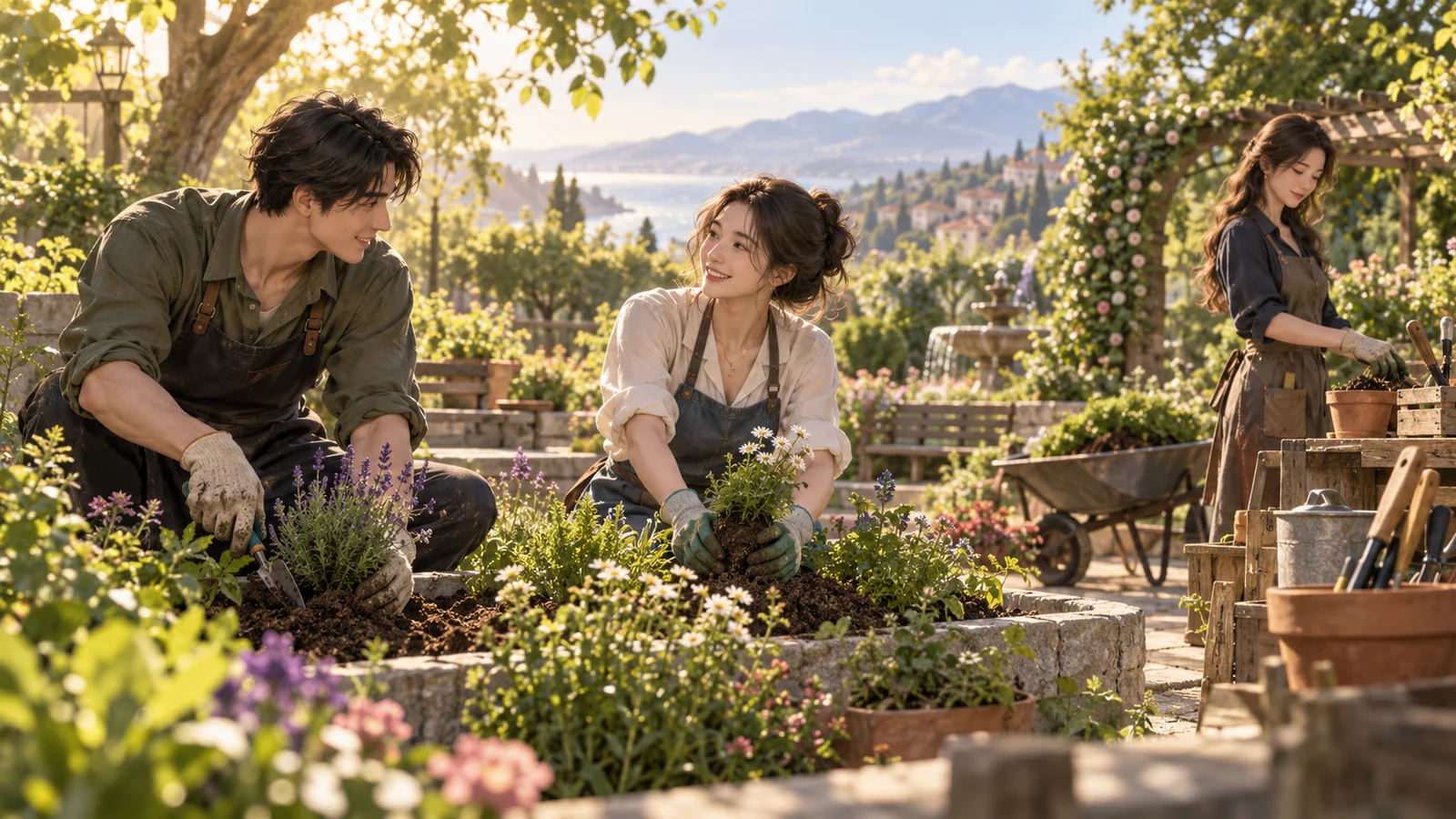
Below, we use a “post-route-lock interaction scene card” to rewrite an old friend’s return in a community garden. The characters, agreements, and dialogue are original fictional teaching examples. They are not real user cases, actual test results, or DramaFork product features, nor do they suggest that every intimate relationship should follow the same agreements.
First, identify the established relationship facts
The protagonist Lin Che, his partner Xu Ning, and his longtime friend Zhou Yao are all adults. Lin Che and Xu Ning are in an established romantic relationship. Earlier scenes have shown that they both maintain their own friendships and do not treat ordinary shared work as a date. If someone explicitly pursues either of them romantically, the person receiving that attention will explain that they already have a partner. If a last-minute arrangement affects their shared plans, they will discuss it promptly.
Lin Che and Zhou Yao used to tend the community garden together and know each other’s working habits. This return appearance involves filling empty spots with flower seedlings. Xu Ning is also in the garden, sorting tools. The partner’s presence is simply part of that day’s arrangements, not a necessary condition for proving the friendship harmless.
Before drafting, locate the existing dialogue or events that establish each of these facts. If the script has only stated that the player has “entered Xu Ning’s route” without establishing the couple’s agreements, the route label cannot imply obligations to report one’s plans, maintain exclusivity, or have a partner accompany one. First add any agreements relevant to this scene at an appropriate earlier point, or acknowledge that the characters have not yet talked things through and preserve the resulting uncertainty.
Fill out the six-field scene card so it can guide revision
This card is for the writer’s review; it need not appear verbatim to players. Each field should point to specific people, words, or actions. Avoid filling it with conclusions such as “friendship” or “normal interaction.”
| Field | Entry for this return appearance |
|---|---|
| Existing relationship | Lin Che and Zhou Yao have been friends for years and have maintained the garden together. This scene does not add a past romance between them. |
| Current agreements | Lin Che and Xu Ning allow each other to maintain friendships. Whoever receives an explicit romantic advance will state that they already have a partner, and they will discuss anything that affects their shared plans. |
| Purpose of the encounter | Lin Che and Zhou Yao finish planting the empty spots and hand over next week’s watering duties. |
| Possible misreading | Memories framed solely as “a secret between the two of us” may suggest a rekindled romance. An additional invitation without a stated purpose may also sound like a date. |
| Clarifying details | The memory concerns a previous planting mishap. The follow-up invitation specifies the watering handover, without secrecy or testing romantic interest. |
| Scene outcome | The seedlings are planted, and Zhou Yao takes on next week’s watering. Lin Che leaves with Xu Ning as planned, and the friendship continues. |
You can start with “purpose” and “outcome,” then check the relationship facts. This makes it easier to spot a mismatch: the writer wants a warm reunion but has used dialogue that only works by creating romantic expectations. The card does not require a conversation about boundaries every time. When the established facts are sufficient, let the actions follow naturally from them.
Compare two drafts and remove unsupported romantic ambiguity
First, consider a draft that does not serve the purpose on this card:
Zhou Yao brushed Lin Che’s hand. “Do you still remember that afternoon that belonged only to us?” Lin Che glanced toward Xu Ning in the distance and lowered his voice. “Some things have never changed. Next time, let’s come alone.” Zhou Yao said nothing, simply putting their gloves away side by side.
The problem is not the touch or meeting alone in itself. “Belonged only to us” suggests exclusivity; lowering his voice after looking toward his partner introduces secrecy; and “have never changed” never specifies what has stayed the same. Together, these meanings make the next meeting carry an expectation that the relationship will change direction. Putting away the gloves consequently feels like a closing gesture for unspoken feelings.
Rewriting with the card preserves their familiarity while resolving the ambiguity through a shared experience:
Zhou Yao steadied a leaning seedling. “Remember last time? You planted them so shallow they all toppled over when we watered them.” Lin Che scooped soil across the flower bed. “I remember. So this time, you check the depth and I’ll fill in the soil.” Zhou Yao smiled and took the watering can being handed over. “I’m on duty next week. Where are you putting the remaining seedlings?” “Left side of the tool shed. The handover notes are in the notebook. Ask me if anything’s unclear.” Nearby, Xu Ning finished putting the tools away and asked whether they still needed the cart. Zhou Yao set down the watering can and pushed the empty cart over.
The new version still has jokes, shared memories, and an easy rapport. Their familiarity comes through in their experience of working together, their next contact has a concrete purpose in the handover, and the partner has something of their own to do. There is no need to insert a declaration that “we’re just friends,” or to have Xu Ning validate the friendship with a smile and a nod.
Make the choices and ending reflect the same kind of interaction
If the scene needs a choice, players might decide between “Help Zhou Yao steady the seedlings” and “Fetch supports from the tool shed.” Both help complete the planting, but they offer different details of cooperation. The first builds on the old friends’ rapport; the second lets the protagonist assess which tools are needed. When the branches merge, establish that the seedlings are secure before moving on to the watering handover.
Do not frame the same choice as “Stay by Zhou Yao’s side” versus “Return to Xu Ning’s side” unless the scene genuinely needs to address whom the protagonist chooses to spend time with at that moment. That contrast turns a division of work into a declaration of romantic allegiance. Nor should a friendship branch end with “Perhaps everything could begin again” if nothing later in the story follows through on it.
The ending might show Zhou Yao taking the duty notebook, while Lin Che washes his hands and leaves with Xu Ning for their previously arranged evening plans. The friend’s next steps and the couple’s shared plans coexist. What this scene adds is another experience of working together. If no one has expressed romantic interest or renegotiated the romantic relationship, the scene should not reward the player with a teaser for switching routes.
Revise according to the source of misunderstanding, preserving necessary complexity
On review, first circle every word or phrase that signals exclusivity, secrecy, romantic pursuit, or future possibilities. Ask which relationship fact supports each one. Revise those without a basis; do not erase those with a basis merely by labeling the characters “just friends.” For example, if Zhou Yao previously made an explicit confession of romantic feelings, an invitation to meet alone now needs to acknowledge it. Lin Che might say directly, “I’d like to keep tending the garden together, but I won’t treat this as a date.” The story must then also allow Zhou Yao to adjust how they take part.
Next, check whether the partner’s response addresses specific information. If Xu Ning is upset because their planned dinner has been delayed, address the timing. Do not automatically turn it into “Who else do you still care about?” Conversely, if Lin Che has genuinely broken an established agreement, the goodwill involved in tending the garden cannot excuse him from explaining himself.
Finally, examine the cost of what you cut. Remove every laugh, caring gesture, and shared memory, and the old friend becomes little more than a plot device. Explain every movement, and ordinary time together starts to feel like an interrogation. Prioritize details that establish the history of the friendship, and clarify only ambiguities that materially change the reading. If the scene is meant to explore an attempt to rekindle romance, a conflict over agreements, or a renegotiation of the relationship, give it the corresponding purpose and outcome. Do not use a friendship card to conceal that change.