Where to Branch a Galgame’s Common Route: Check Whether the Relationship Has a Reason to Develop on Its Own
Introducing every character does not mean the common route is ready to end. Use a common-route exit readiness table to check shared experiences, unfinished business, and each character’s reasons for continuing together, then carry those foundations into the character route’s opening scene.
Introduction
A galgame’s common route is ready to branch when a shared experience has shown each character something specific about the other, something remains worth pursuing, and both are willing to choose the other person’s involvement. Introducing the entire cast only completes the introductions. It does not establish that a particular relationship can sustain its own story outside the ensemble. First work out why the character route’s opening scene happens, then check whether the common route supplies the premises that scene needs.
Branching Needs a Reason for the Next Meeting
A relationship sustaining its own story does not require the two characters to be in love already, or the rest of the cast to leave the story. It means the narrative can keep exploring questions between these two people without relying on a group activity to bring them together every time.
A shared task can create an opportunity to meet, but opportunity and willingness need separate checks. “There are still things to return” explains why someone needs to come. “I want to return them with you” begins to explain why it should be these two people. Their reasons can differ, and either person can have reservations, as long as the choice they make now has a basis.
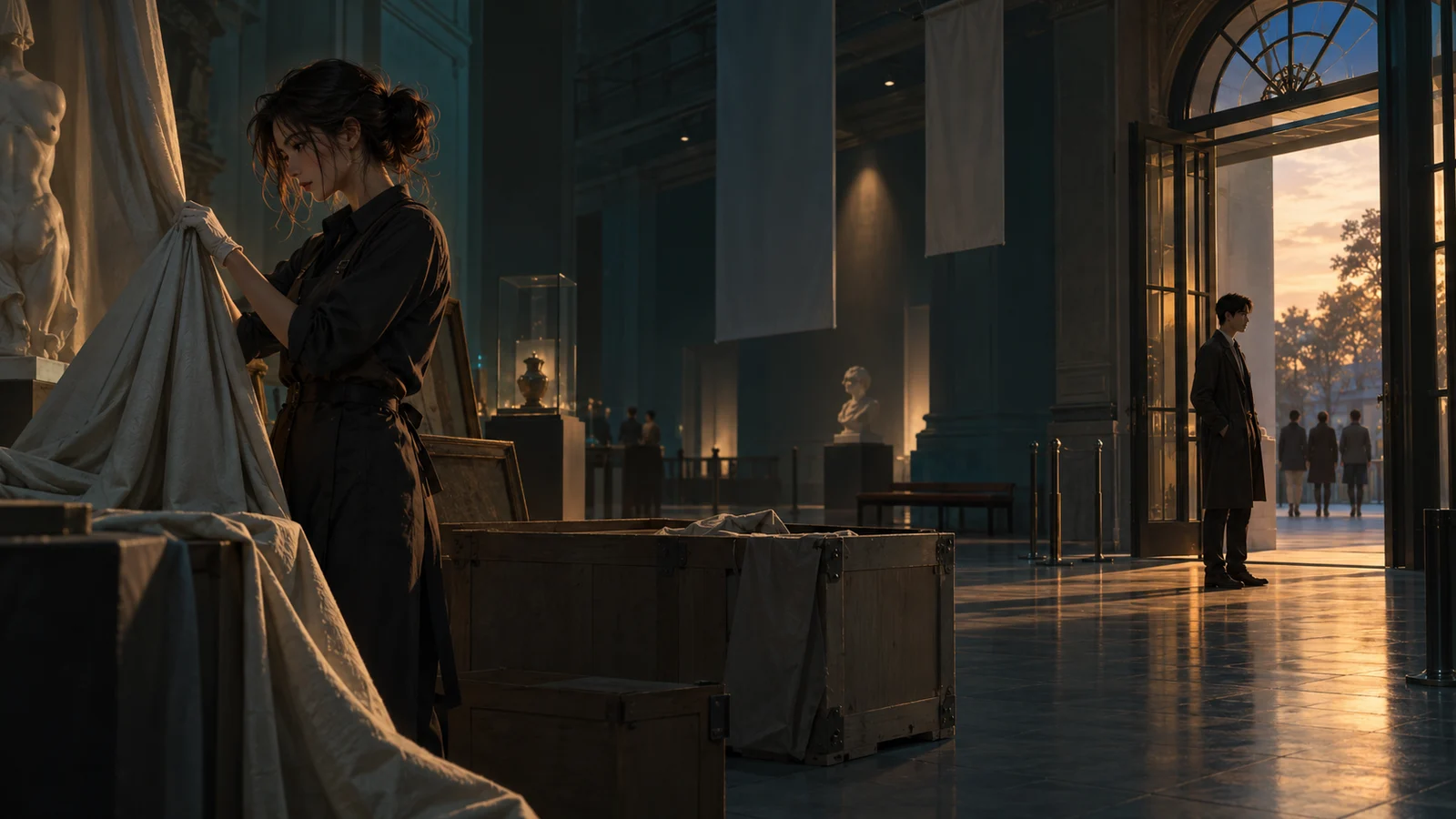
The following is an original fictional teaching example. Lin Cen and Zhou Yao, both adult community volunteers, have finished preparing an exhibition and are helping with the closing cleanup. The characters, dialogue, and events were created for this explanation. They are not a real user case, measured results, or DramaFork product features.
The proposed branching point is the evening the exhibition closes. The other volunteers have left, and one box of exhibits remains in the hall, still awaiting return. In the original draft, Lin Cen says, “Let’s deliver them together tomorrow.” Zhou Yao immediately agrees, and the character route then gives them a series of meetings. The problem is that the draft establishes leftover work without explaining why they want to keep working together.
Fill Out a Common-Route Exit Readiness Table
In each cell, write an action that has already happened or that you plan to add. Avoid conclusions such as “trust grows” or “there is romantic tension.” The final column must connect to the character route’s opening scene, giving the earlier material a specific purpose.
| Check | Entry for This Example | Opening-Scene Dependency and Revision |
|---|---|---|
| Shared experience | During preparations, they discover a mismatch between an exhibit label and the loan records, check with the lender together, and correct it | The opening can build on their habit of checking things together; show the actual verification process |
| Unfinished business | The return time for one box of exhibits is unconfirmed; the record only says “awaiting reply” | Confirm the time in the opening scene first; do not write as though delivery has already been arranged |
| Lin Cen’s reason to continue | Zhou Yao previously listened carefully to the lender’s full explanation; Lin Cen wants him involved in the communication again | Have her name the specific behavior she values when she invites him |
| Zhou Yao’s reason to continue | After finding the mistake, Lin Cen did not pass it off to someone else and was willing to help fix it; Zhou Yao wants to keep working with her | Have Zhou Yao volunteer for a specific part of the work |
| Missing setup | The draft only says preparations went smoothly; it shows neither how they handled a disagreement nor that the task could be handed over | Add a short scene checking the exhibit label, and establish that the cleanup team could take over |
| Connection to the character route’s opening | The next morning, they check the return list as agreed and wait for the lender to confirm the time | Begin by following through on the agreement, then introduce a new question in their relationship |
This table does not produce a total score. Even a rich shared history cannot compensate for one person having no desire to continue. Urgent unfinished business does not automatically establish that both are participating willingly. An empty cell reveals a specific gap; it does not mean the common route needs an entire extra chapter.
To distinguish background information from the basis for a relationship choice, ask: “If I removed this, would accepting the invitation still make sense?” Why Zhou Yao likes old objects can unfold gradually in the character route. Why Lin Cen considers him good at communicating needs some evidence before the invitation. The former deepens understanding; the latter supports the immediate decision.
Revise a Scene So Both Characters Actually Choose
Start with the preparation scene. Lin Cen finds an incorrect exhibit label and is about to change it to match the records. Zhou Yao points out that the records themselves could contain a transcription error and suggests asking the lender again. Although worried about the schedule, Lin Cen stays to help verify the details and removes the label she has already attached. Zhou Yao handles the questions and gives her the findings to double-check.
The scene does not have to show perfect harmony. Their disagreement over efficiency and caution is precisely what lets each see how the other takes responsibility. A montage of them carrying boxes together tells readers they have spent time together, but may not explain why that time is worth extending.
At closing, Lin Cen points to the box awaiting return. “We haven’t heard back about the time. We could hand this over to the cleanup team. If you’re willing, we could start by checking the list together tomorrow. You were thorough with your questions last time. I’d like to work with you again.”
Instead of simply saying “Okay,” Zhou Yao replies, “I’d like that too. You were willing to stay and redo the work last time. That mattered to me. I’ll get in touch, and you can check the list. We won’t move anything until the time is confirmed.” They then agree to meet in the hall the following morning.
The option to hand the work over makes staying a choice. The specific behavior each mentions gives that choice a basis. This exchange takes more space than a one-line invitation. You can tighten the wording, but do not remove the other person’s response altogether.
The character route can then open with Zhou Yao bringing a list of items still awaiting confirmation. Lin Cen has already left blank columns, but finds that he has listed even the unanswered items one by one. She asks whether that is necessary. He explains that he does not want to miss a single item. The earlier agreement is fulfilled, and a new relationship question emerges: how will they negotiate their different working rhythms?
Compare Three Exits to Decide Which Scenes to Move
The same story can branch at different points. Judge each exit by what it has established.
If the route branches immediately after the opening group photo, the two characters have only appeared in the same setting. If the character route’s opening nevertheless requires them to actively choose to meet one-on-one, look back before the photo: have they already had an interaction that gives each a reason to appreciate the other? If not, move the label-checking scene earlier or postpone the branch. A sudden familiarity in the opening scene cannot be expected to fill the gap.
If the route branches after their agreement at closing, the shared experience, unfinished task, and both responses are already in place. Their meeting the next day follows directly. This is the position used in the example. It leaves room for the relationship to change further and lets the character route begin with action.
If the route branches only after all the exhibits have been returned and the two have met alone several times, examine the scenes between closing and the exit. If those scenes serve only the questions between Lin Cen and Zhou Yao, and the group task is over, consider moving them into the character route. Branching too late may mean the earliest changes in this particular relationship have already played out in the common route.
However, if several characters are still working together on the central conflict, there is no need to break up their scenes just to branch earlier. The table assesses whether one relationship can sustain the next part of its own story. It does not dictate the chapter in which the whole work must change structure.
Remove the Setup to See Whether the Reasons Hold
Finally, run a paper exercise. Hide the earlier setup one piece at a time, read only the closing invitation and the character route’s opening scene, and note which lines lose their basis.
Remove the label-checking experience, and “You were thorough with your questions last time” has nothing to refer to. Remove Zhou Yao’s appreciation of Lin Cen, and his acceptance can slip back into ordinary cooperation on a volunteer shift. Remove the “time awaiting confirmation” note, and waiting for a reply in the opening scene feels like a newly invented delay. Restore or rewrite the relevant parts individually; do not have the narration vaguely announce that their relationship has improved.
Then hide the return task itself. If they have no other reason to meet yet, that does not mean the branch has failed. This example only needs to support their next voluntary collaboration. But if they are to keep meeting frequently after the return is complete, the character route needs new invitations and responses. The same unfinished task cannot be stretched out indefinitely.
This also defines the table’s limits. It can check the narrative premises for the next encounter; it cannot establish that the characters are already in love, much less guarantee a stable relationship later. When submitting the draft, keep the completed table and identify the corresponding scene beside each piece of evidence. If the character route’s opening scene changes, check its dependencies on the earlier setup again.