Fictional Old Tape Archive: Who Gets to Decide the Fate of an Unauthorized Recording
Using the fictional case “Night Recording Pending,” this article breaks down the authorization boundaries between internal listening, excerpt editing, and full public release in old tape archiving. It explains how to preserve the unknown, respect the choices of the people involved, and make sure sealed storage, partial authorization, and public-release branches can all stop at any time.

Introduction
First, draw three clear lines: listen once, excerpt a segment, put it in the exhibit case
When old tapes are found while organizing a storage room, each step should use only the permission that has a basis for that step. Internal listening, editing material, and public exhibition are three separate actions. The fact that something was recorded does not mean it can be played; the fact that someone is no longer alive does not mean later generations can answer for them; and the passage of many years does not automatically lift restrictions.
This article uses the fictional teaching case “Night Recording Pending” to demonstrate the writing approach. The characters, recording content, and aftermath are all constructed by the author. They are not real archives, test results, or holdings of any institution. The authorization arrangements serve only the story design and are not real-world privacy or archival processing rules.
An old coastal radio station is about to be demolished and rebuilt. While working in the deepest part of the storage room, intern Xiaoman finds a DAT tape on an iron shelf. The label, written in ballpoint pen, reads “98.7.14 Night Recording Pending.” It does not list a program title, does not name anyone on tape, and has no wording such as “may be made public” or “archive only.” Side A runs for twenty-three minutes. Xiaoman hands it to curator Lao Wei.
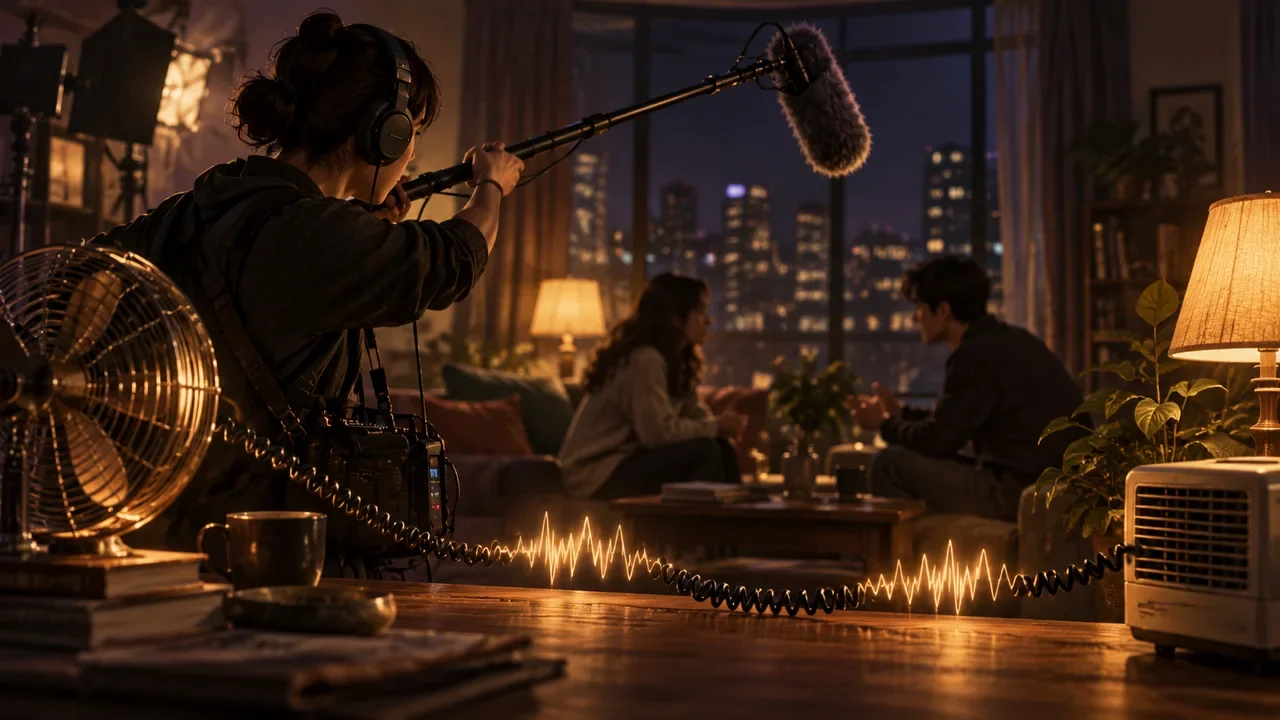
Lao Wei knows it belongs to the final period of the station’s early late-night talk programs. He first checks the broadcast records by archive number: on July 14, 1998, that night’s live broadcast ended at 11 p.m., but the equipment was not powered off until 12:17 a.m. In other words, these twenty-three minutes were recorded after the live broadcast ended, while the microphone had not been turned off.
The recording contains host Wen Yuan and guest Su Qiao. Wen Yuan is putting away his script. Su Qiao leans by the window, and the two chat intermittently. The first ten minutes are station trivia: who is being transferred, next month’s advertising slots. In the middle seven minutes, Su Qiao reads a poem he has never published, and Wen Yuan does not interrupt. In the final six minutes, Su Qiao talks about the last time he failed to meet someone, his voice lowered. The tape ends there.
Twenty-six years have passed. Wen Yuan retired the year before last and rarely appears in public. Su Qiao died of illness in 2022, leaving behind a daughter who is already working. For the radio station’s sixtieth-anniversary exhibition, there will be a “sound wall,” and Lao Wei wants to include this recording, calling it “something real and unvarnished.”
The difficulty is not deciding whether the recording sounds good. It is this: when no one said back then that “this segment may be kept,” who has the right today to decide whether it may be heard?
Use an action authorization form to break good intentions into checkable actions
The basis for the listening step is storage-room organization, not “we will exhibit it anyway later.” Before any written authorization is found, Xiaoman and Lao Wei may listen once to register it, but they may not copy the digital file onto a work computer. Once it is copied out, the content has been reproduced without a sufficient basis.
Try filling in “put the final six minutes into the sound wall as the finale”: there is no basis for public release, the audience is the entire public, and once it is played it cannot be taken back. It should be deleted from the plan. It cannot be cleared just because “Su Qiao read it so movingly back then.”
Lao Wei says, “Isn’t the whole point of the sixtieth anniversary to preserve things like this?” Xiaoman answers, “What we are completing is registration, not agreeing on their behalf.” The conflict arises from the action itself; no extra lecture is needed.
Independent verification must preserve the unknown; do not present the content to the other party first
Lao Wei first finds Wen Yuan. On the phone, he says only: “While organizing the storage room, we found a tape labeled July 1998, and it contains your voice. Are you willing for us to continue registering it?” He does not say that Su Qiao is also on it, does not mention the final segment, and does not play even one second. Wen Yuan says he remembers sitting there for a while after the program ended that day and agrees to continued registration, but adds one condition: “Do not use this for promotion.”
Next is Su Qiao’s daughter, Su Xiao. Lao Wei likewise does not play the recording. He only explains: “We found a recording in which your father was present. The program had already ended at the time, and the microphone may not have been turned off. We would like to confirm two things: did he ever mention during his lifetime that this kind of material could be used? And would your family be willing to first listen to the excerpt we are preparing to use for the exhibition?” Su Xiao says her father never kept private recordings and never mentioned that night. She is willing to listen to the excerpt first and then decide.
These verification steps support only “they know this tape exists,” not “they agree to public release.” Wen Yuan’s “do not use this for promotion” is a restriction. Lao Wei cannot translate it into “he agrees to the exhibition.” Su Xiao’s willingness to listen to an excerpt does not mean she authorizes the full recording to be played. Nor is there any prior basis for saying “of course the radio station has the right to keep something it recorded.” The portion after the live broadcast ended was outside the scope of broadcast authorization.
The verification scope should be recorded separately for both sides: Lao Wei cuts only the proposed exhibition excerpt, the seven minutes of Su Qiao reading the poem, into a two-minute master and sends it first to both people for confirmation. He does not send any part of the final six minutes, does not relay its content, and does not ask about the relationship between the two people back then. If Su Xiao asks, “What did he say in it?” Lao Wei answers only: “It includes a poem he read. I do not have authorization to relay the rest.”
If he first plays the final six minutes for Su Xiao and says, “Listen, isn’t it moving?” her nod still does not count as authorization. That is a decision made under emotional guidance. If Wen Yuan says, “Handle it however you like,” that still must be tied to specific segments and uses; politeness cannot be treated as approval. What needs to be checked is the scope of authorization, not how many people nodded.
Sealed storage, excerpt, and full release must all leave room for the next scene
The archiving branch ends with registration, not with the unveiling of the “sound wall.”
The sealed-storage branch is used when the basis is insufficient. For example, Su Xiao might listen to the excerpt and say, “Let me think about it,” or Wen Yuan might explicitly say, “Do not play that segment.” Lao Wei confirms with both of them: the tape will remain in its original case and be entered into the storage-room catalog; no digital file will be transferred; it will not be used during the exhibition period and will be returned to its original shelf afterward; the custody record will be reopened only if the parties involved or their family members submit a new decision in writing. The next scene could be Su Xiao writing an email half a year later saying she has changed her mind and wants to hear the complete tape. Or it could be that Wen Yuan never replies, and the tape continues to sit on the iron shelf.
The excerpt branch is used for partial authorization. Wen Yuan agrees to exhibit two minutes from the seven minutes in which Su Qiao reads the poem, and Su Xiao also gives written consent. Lao Wei puts these two minutes into the sound wall. Beside it, he writes only: “July 1998, an unreleased reading after a late-night program.” He does not write the two people’s names, does not describe their relationship at the time, and does not add explanatory narration. Content beyond those two minutes does not enter the exhibition hall or any promotional material. The next scene could be a listener asking afterward, “Who read this?” and Lao Wei answering, “We have not obtained authorization to make the name public.”
The full public-release branch requires written consent from both Wen Yuan and Su Xiao for the complete twenty-three minutes; if either is missing, it cannot proceed. Even if both agree, it is still necessary to confirm whether Su Xiao has the authority to make this decision on Su Qiao’s behalf. If there are other family members, the scope must be checked again. After full public release, either party may submit a written request to take it down. Once it is taken down, people who already heard it cannot be recalled; this residual effect must be written into the confirmation form at the authorization stage. The next scene begins from “this recording is finally heard in full,” not from “everyone is happy.”
Sealed storage waits, excerpts cut, and full public release hands that private late night over to everyone. There is no need to write any one path as the best answer. The shared boundary is that “historical value” must not be written as permission already obtained.
Use failure counterexamples to check whether archiving can still stop
Reversible archiving does not mean “we can apologize after playing it.” Unbroadcast excerpts can be sealed; audio that has already been uploaded cannot have its downloads recalled. At every node, ask: if the person involved now says stop, what can we still stop, and what impact has already been left behind? Even if Su Xiao merely refuses to listen to the excerpt, she has already learned that an unauthorized recording of her father has been uncovered. That residue should be recorded in the authorization form.
Now break the case once: Lao Wei thinks the sixtieth anniversary is a rare opportunity, so he directly edits the final six minutes into a thirty-second trailer and posts it on the official account with the caption “Su Qiao’s unreleased final voice.” Su Xiao sees it and calls. Lao Wei apologizes and takes it down, but the video has already been downloaded and shared. Taking it down cannot make viewers forget. Or Wen Yuan dies, and Lao Wei says, “He is gone anyway; if his daughter says yes, that counts,” skipping the step of contacting Wen Yuan’s family. Or the curatorial team decides that Su Qiao’s poem-reading segment is “too literary,” so they cut forty seconds from the middle and pair it with advertising visuals without informing Su Xiao.
Before submitting the piece, place “refuses excerpt” and “refuses full public release” into their corresponding nodes and check whether what follows changes. If, after refusal, the person is still pressed, edited, or placed in a promotional video, then choice has not been preserved, no matter how respectful the narration sounds. Then place “the two people disagree” into the full public-release node, with Wen Yuan agreeing and Su Xiao disagreeing, and confirm that neither the passage of time nor the scale of the exhibition automatically clears the release.
Finally, check the five fields line by line. Allow the tape to remain on the iron shelf forever: what this example needs to complete is bounded archiving. Listening, excerpting, and public release are three different decisions, and historical value itself does not constitute any one of them.