Where an Interactive Film Demo Should End: Deliver the Consequence
End a demo after viewers make a decision and see a recognizable consequence. A four-part checklist—promise, decision, result, reason to continue—compares two edits to deliver the interaction while leaving a new question open.

Deliver one choice’s consequence before leaving a new question
An interactive film demo should end where a decision has produced a recognizable consequence. Viewers need to know what they just changed before leaving with a new question arising from it. Stopping as choice buttons appear shows only that a choice is possible. Cutting to black immediately after selection still owes an answer to that choice.
A complete consequence need not explain a character’s whole life or reveal every mystery. It must fulfill this segment’s promise. If the opening says you can decide who takes a letter, show who received it and the immediate change caused by that handover before ending. Later secrets can remain; an already submitted decision cannot hang unanswered.
The interactive film Last Ferry below is a fictional teaching example. Characters, shots, and branches are original illustrations, not real user cases, tested results, or DramaFork features. This is a method for editorial judgment, without promises about retention or sharing.
Place a four-part checklist beside each candidate ending
Write the segment’s promise before finding the final shot. Working backward from “Which image is most exciting?” can mistake the strongest conflict for the most complete delivery. Fill in the same table for every candidate ending. Evidence must come from material retained before that point.
| Check | Reusable statement | Sign of failure |
|---|---|---|
| Promise | This segment lets viewers decide __; before the choice, __ explains the difference | Can say only “your choices matter” |
| Decision | Viewers choose __; __ then confirms the action happened | Buttons vanish without showing what was executed |
| Result | Consequently __ changes; the shot or dialogue evidence is __ | Only an emotional reaction, no identifiable change |
| Reason to continue | __ is resolved; the new question arising is __ | Still asking whether the preceding choice worked |
Do not use a total score to compensate for a failed check. A missing result cannot be paid for by a beautiful opening or powerful suspense. The reason to continue need not be a greater danger; viewers may simply want to know how people will get along after their relationship changes.
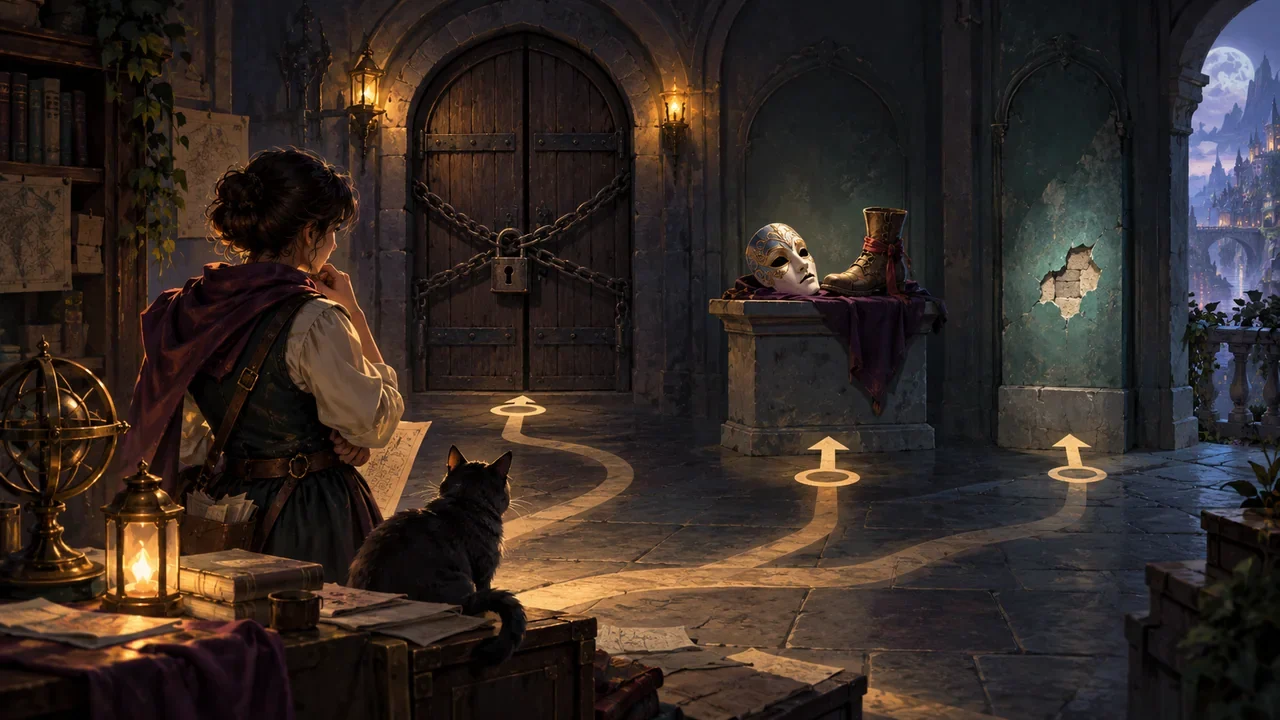
Fill it in separately for every available option. A complete consequence for “give it to the sister” does not make “give it to the boatman” acceptable by default. Do not offer an unfinished branch as an executable choice in the demo.
Complete the checklist with one letter
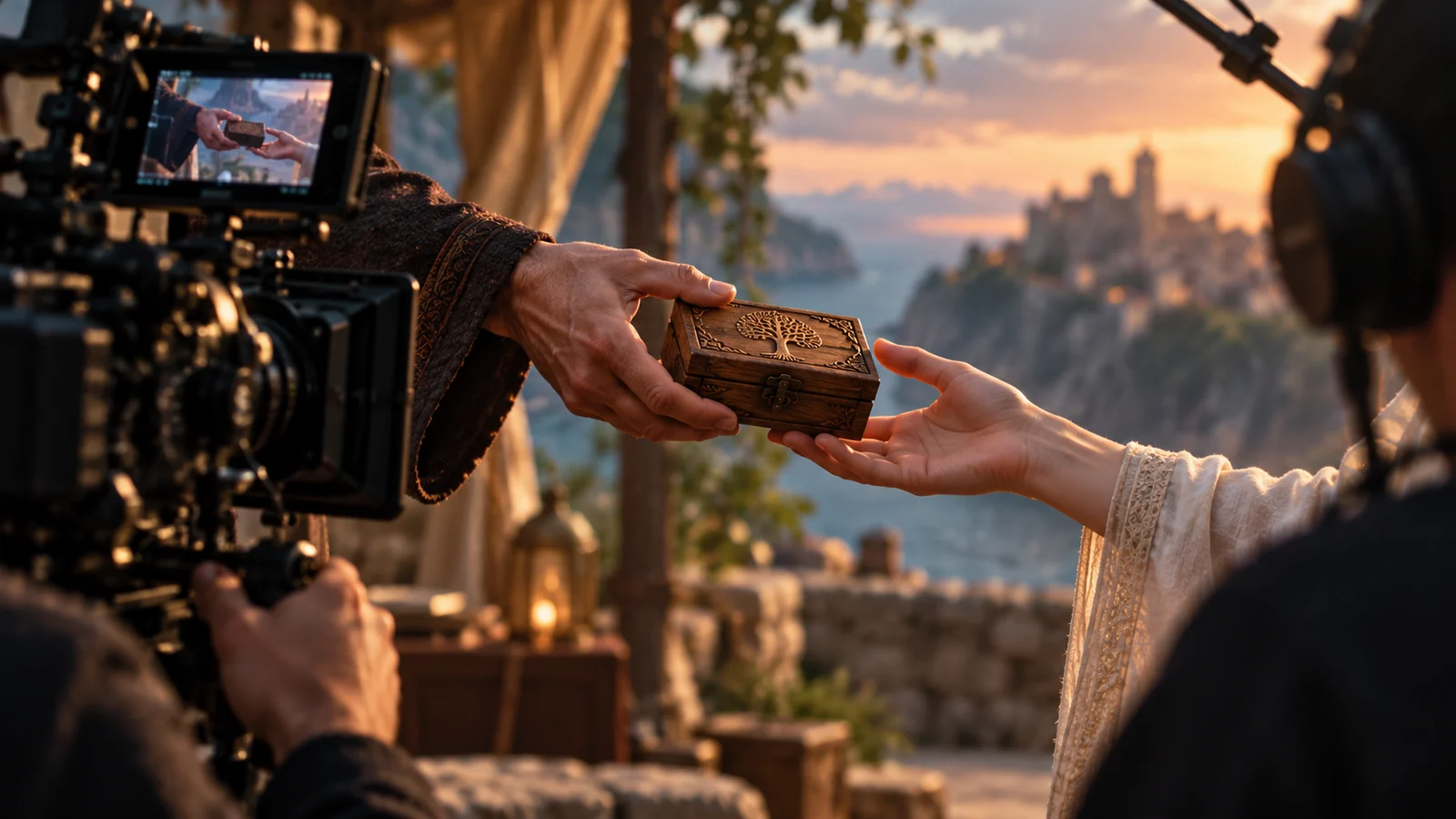
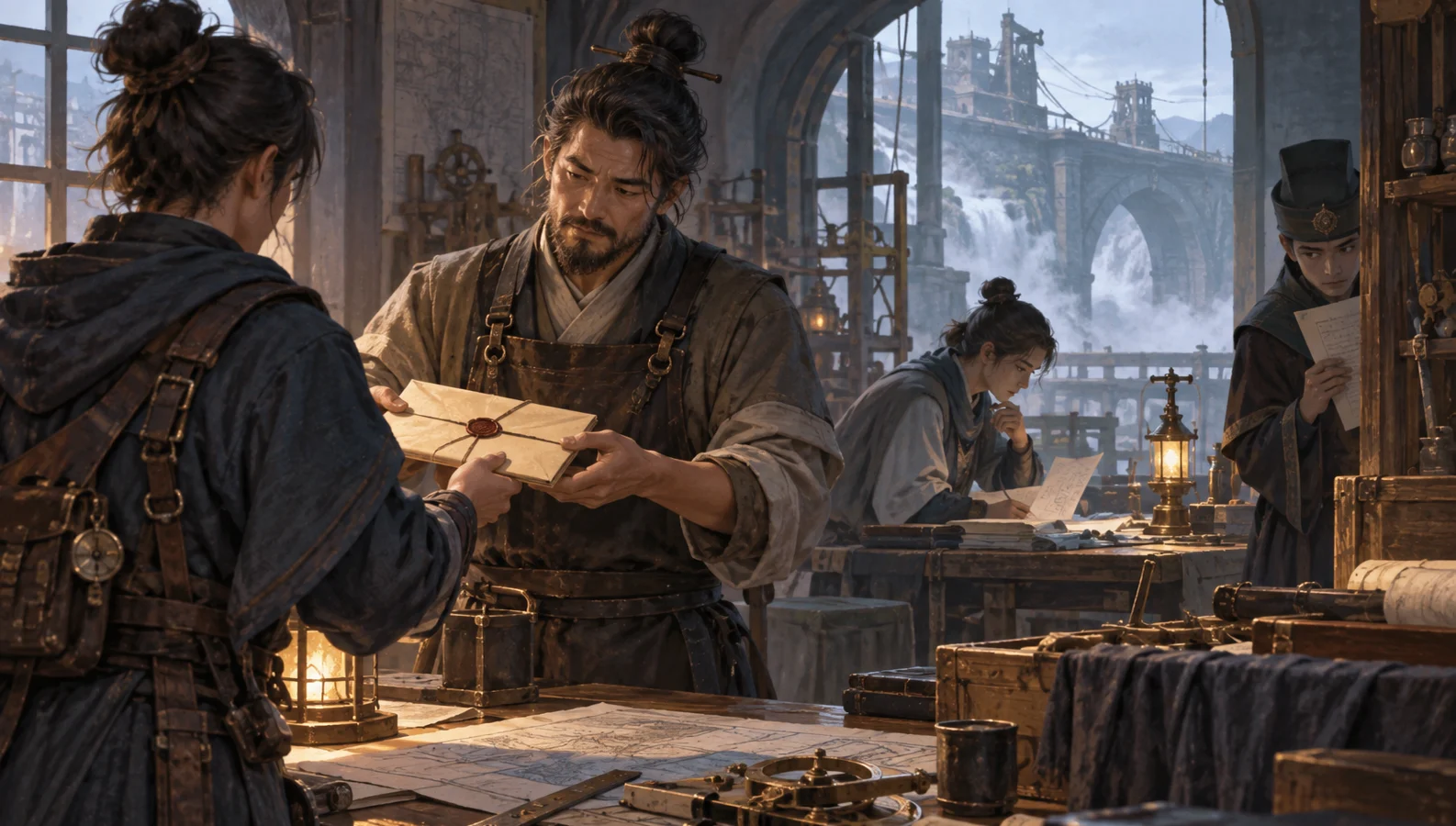
In Last Ferry, courier Xiao Cen arrives at the pier with an old letter. Xiao Cen’s older sister wants it to trace their father’s whereabouts; the boatman offers a place on the boat in exchange. The opening establishes one original, which cannot be recovered within this segment after handover. The options are “Give the letter to the sister” and “Give the letter to the boatman.”
After the sister is chosen, Xiao Cen places the letter in her hand. She opens it and finds a drawing of an abandoned dry dock in an inner layer. Seeing the handover, the boatman withdraws the ticket he had reserved for Xiao Cen. She says, “We’ve missed the boat. Let’s take the shore path.” They turn toward it, then the shot reveals a light in the dry dock window.
This branch’s entries are: promise—decide where the original goes and understand its two uses; decision—confirmed by handover; result—the sister obtains a clue, Xiao Cen loses this boarding opportunity, and both take the shore path; reason to continue—why a light still burns in the abandoned dry dock.
The other branch needs fulfillment too. When the boatman receives the letter, he locks the original in a box, hands over a ticket stub, and opens the boarding barrier. The sister remains empty-handed ashore and does not answer Xiao Cen’s farewell. After departure, Xiao Cen sees the same lit dry dock from a boat window.
The branches can share the distant-light shot, but the preceding changes differ: walking the shore with the sister versus boarding alone. Demo players need not see every route. The current one must still let them connect their decision with its result.
Two edits preserve different layers of consequence
Plan one: end once the immediate consequence is established. Retain the opening explanation of uses, the handover choice, the actual transfer, and the ticket withdrawal and turn or ticket delivery and boarding. End the sister branch after both start along the shore, and the boatman branch after a wide shot of Xiao Cen boarding with the sister left ashore. Use an ending question matching the current route, such as “Your sister has the letter. How will you find the dry dock next?”
This suits a short segment where the handover and changed destination independently show the interaction’s effect. It retains a whole causal unit and compresses the journey to the next location. The cost is that viewers have not seen how the decision affects the next scene, so the ending question cannot exaggerate several layers of relationship change.
Plan two: enter the next scene and show a further consequence. Continue after plan one: on the sister branch, they reach the dry dock exterior, where she takes out the letter’s sketch and points to a side door. On the boatman branch, Xiao Cen asks about the dry dock aboard the boat; the boatman answers from across the locked letter box, “We’ll discuss what’s in the letter after we land.” End both after the next investigation direction becomes clear.
This adds a consequence: who holds the original changes the information and help Xiao Cen can obtain now. It requires more shots but suits work focused on relationships or information access. Still do not open new “push the door / go around” buttons and immediately end.
Choose according to the promise’s scope. If it is only “decide who receives the letter,” plan one can work. If the opening emphasizes “who holds it changes the investigation,” a follow-through such as plan two is needed. With too little time, narrow the opening promise or compress repeated setup. Do not delete the only result shot.
Remove shots to find the earliest workable ending
Work backward from the planned ending, removing one segment at a time and refilling all four checks after each removal. When a check first loses specific evidence, restore the necessary material just removed. This finds the earliest workable ending for the current promise, rather than a number of minutes suitable for every story.
Some cuts readily fail. Keeping only the sister’s surprised close-up after handover may hide the ticket withdrawal; restore the action relationship. Connecting both routes to “Things became complicated” fails to deliver their difference; retain what changes in each. End text saying “trust has changed” cannot replace a result without corresponding behavior.
If long-term effects must come later, the demo can fulfill one immediately visible layer, such as possession of the original and a changed companion, while stating that farther effects have not unfolded. If delayed feedback is the work’s core, choose a segment long enough to include it, or honestly call the deliverable a concept teaser. Do not imply a complete loop was experienced.
Deliver the final ending point, each branch’s result evidence, removed later material, and why the retained question is not an unanswered obligation of this segment. Reviewers can then follow each route and ask: can they explain what they decided, what changed immediately because of it, and what they want to learn next? This is a review method awaiting execution, not a passed demo report.